
Most procurement professionals believe a domestic Certificate of Analysis is the final word on quality, but in the high-volume market, a digital report is often just a placeholder for actual due diligence. You're likely familiar with the frustration of navigating opaque supply chains where domestic resellers inflate prices significantly while providing reused HPLC reports that may not match your specific batch. Sourcing bulk peptides at scale requires moving beyond these retail-level middlemen and understanding the raw operational logic of the synthesis facility itself.
This reference guide provides a professional framework for establishing direct manufacturer-side channels and implementing a verification protocol that doesn't rely on blind trust. We'll examine the economic shift toward Eastern manufacturing, the reality of the July 2026 PCAC reviews, and how to structure a wholesale procurement strategy that prioritizes traceability. By positioning Peptides From China as a transparency-focused B2B bridge, you can access manufacturer-side channels with a $600 minimum order. This approach helps you reduce supply chain uncertainty through independent verification and direct logistical oversight rather than relying on the static claims of a reseller.
Key Takeaways
Identify why the "domestic warehouse" model often conceals higher margins and learn to transition from retail-centric purchases to industrial-scale synthesis.
Understand why Certificates of Analysis (COAs) serve only as baseline reference material and how to implement independent verification protocols to mitigate batch-to-batch inconsistency.
Navigate the complexities of international logistics, including the use of neutral packaging and tracking protocols that help reduce supply chain uncertainty.
Discover how to access manufacturer-side channels for bulk peptides through a transparency-focused sourcing bridge, utilizing a $600 minimum order to eliminate redundant reseller layers.
Establish a realistic procurement framework that prioritizes operational consistency and direct-to-factory routing for sequences like BPC-157, Semaglutide, and Tirzepatide.
Table of Contents
Understanding the Landscape of Bulk Peptide Sourcing
Manufacturing vs. Reselling: Evaluating Your Supply Chain
Verification Protocols: Beyond the Certificate of Analysis
Logistics and Procurement of Large-Scale Peptide Orders
Peptides From China: A Transparency-First Sourcing Bridge
Understanding the Landscape of Bulk Peptide Sourcing
Bulk sourcing is an operational pivot from the retail-centric model of single-vial purchases toward industrial-scale synthesis. In a professional B2B context, bulk peptides aren't simply large quantities of retail stock. Instead, they represent specific production runs where the buyer engages with the manufacturer-side supply chain. Many domestic providers offer "wholesale" accounts, but these are frequently just tiered pricing models for the same inventory sold to retail customers. This masks significant domestic reseller markups. True bulk procurement involves removing these layers to access the factory floor directly.
The peptide industry is currently undergoing a shift. As research requirements expand, the reliance on domestic resellers who hold small amounts of inventory in local warehouses is becoming a bottleneck. These resellers often provide "reused" documentation, where a single HPLC report is applied to multiple batches over several months. Transitioning to a bulk model allows researchers to secure a single, large batch, which is the only way to ensure longitudinal consistency across a multi-phase study.
The Economic Drivers of Volume Procurement
The primary advantage of large-scale batches is the significant reduction in cost-per-milligram. When a laboratory or research facility scales its requirements, the overhead associated with repetitive shipping and individual vial labeling becomes a liability. Large batches allow for a more efficient peptide synthesis process, as manufacturer resources are optimized for high-volume output rather than fragmented small orders. This efficiency is passed down through lower per-unit pricing, which is essential for projects with high-frequency dosing protocols.
Beyond the base price, bulk orders streamline the verification cycle. It's more cost-effective and operationally sound to perform a single, comprehensive independent test on a massive batch than to conduct multiple tests on smaller, disparate lots. High-volume procurement also grants the buyer better positioning in manufacturing schedules. Facilities prioritize large synthesis runs; this helps ensure a more predictable lead time for ongoing research projects compared to the erratic stock levels of domestic resellers.
Research vs. Pharmaceutical Grade: An Operational Distinction
A common pitfall in the sourcing landscape is the use of "human grade" or "pharmaceutical grade" as a marketing hook. In the context of bulk peptides intended for laboratory use, these terms are often red flags. They suggest a level of regulatory oversight that doesn't exist for research-grade compounds. Professional procurement focuses on the technical specifications of the synthesis, such as purity levels verified via HPLC and identity confirmed through Mass Spectrometry. It doesn't rely on the "medical" branding used to attract retail consumers.
Authentic B2B sourcing operators understand that the goal isn't to find a "pharmaceutical" label; it's to secure consistent, high-purity material that meets laboratory standards. This requires a grounded, technical approach to manufacturer verification. Claims of "guaranteed pharmaceutical purity" often signal a reseller's marketing fluff rather than an operationally realistic assessment of the global supply chain. By maintaining a focus on research-standard synthesis, buyers can avoid the inflated costs associated with retail-style branding.
Manufacturing vs. Reselling: Evaluating Your Supply Chain
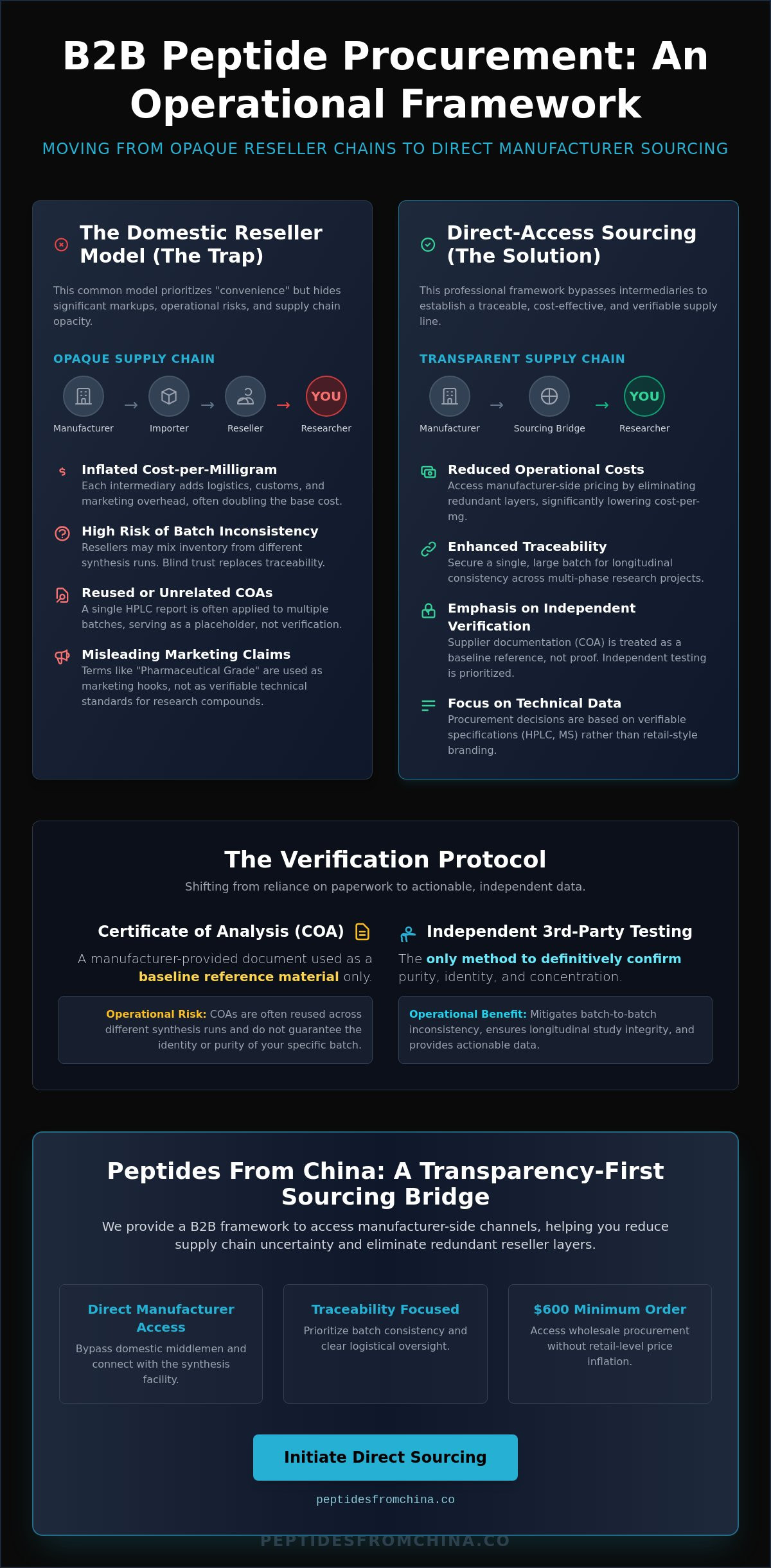
The "Domestic Warehouse" trap is a common hurdle for procurement officers. Local resellers prioritize fast shipping and "ease of use," but this convenience hides a steep financial and operational cost. These entities act as retail storefronts, purchasing from the same international manufacturers you could access directly. They then add layers of logistics, customs insurance, and marketing overhead to the final price. By the time bulk peptides reach a domestic facility, the per-unit cost has often doubled. This model also increases the risk of batch substitution, as the reseller may mix inventory from different synthesis runs to fulfill a large order.
The Role of a Peptide Sourcing Platform
A peptide sourcing platform like Peptides From China (PFC) functions as a transparency-first bridge rather than a traditional vendor. It helps researchers bypass domestic resellers to access manufacturer-side channels directly. The $600 minimum is an operational minimum for orders placed through the PFC sourcing platform and may include multiple catalog products. Eliminating intermediaries doesn't just lower costs; it improves traceability by providing a direct line to the production source. Transparent communication with the manufacturer allows you to verify synthesis timelines and logistical milestones without the "black box" effect of a domestic storefront.
Synthesis Capacity and Batch Uniformity
Moving from milligram-scale research to gram-scale peptide production introduces complex technical hurdles. Synthesis efficiency and purity can vary when scaling up the chemistry. The Regulatory Guidelines for Peptides outline the necessity of rigorous analysis and stability testing as batch sizes increase. When evaluating a facility, you should ask specific questions about their batch uniformity protocols and how they handle impurities during large-scale runs. Auditing a manufacturer's capacity ensures they can meet the demands of high-volume research without sacrificing the integrity of the compound. For those seeking to establish direct factory routing for sequences like Tirzepatide or BPC-157, these technical details are the foundation of a reliable supply chain.
Verification Protocols: Beyond the Certificate of Analysis
A Certificate of Analysis (COA) is frequently presented as definitive proof of quality, but in the large-scale sourcing environment, it functions strictly as a baseline technical reference. Relying solely on manufacturer-issued documentation is a significant operational risk. The prevalence of reused, forged, or outdated HPLC and MS reports among domestic resellers is a systemic issue. These entities often apply a single successful test result to multiple disparate batches or even different synthesis runs over several months. When procurement involves bulk peptides, the stakes of batch-to-batch inconsistency are too high to accept these documents at face value.
Documentation like HPLC reports and manufacturer papers should be viewed as reference analytical data rather than a guarantee of purity. No single document fully guarantees product identity or purity once the compound has moved through the global supply chain. This reality necessitates a "transparency-first" approach where the buyer assumes the responsibility of verification rather than relying on the static claims of a storefront.
Analytical Standards for Bulk Batches
Professional verification requires a dual-pronged approach using High-Performance Liquid Chromatography (HPLC) and Mass Spectrometry (MS). HPLC assesses purity by separating the target peptide from synthesis byproducts, while MS confirms the correct molecular weight and sequence identity. Understanding how to read a peptide certificate of analysis involves looking beyond the final percentage. You must analyze the baseline for "noise" and ensure the integration of peaks is transparent. For researchers and B2B buyers, the most reliable protocol is independent, buyer-side peptide testing. Sending a random sample from a large order to a third-party laboratory is the only way to support independent verification and maintain the integrity of long-term studies.
Managing Batch Traceability
Effective procurement for large-scale research inventories depends on internal tracking and a robust chain of custody. Manufacturer-issued papers should be kept as part of the archival record, but they shouldn't be the only data point. By using a transparency-focused sourcing bridge like Peptides From China, you gain direct access to manufacturer-side channels, which helps reduce supply chain uncertainty. This direct-to-factory routing minimizes the number of hands touching the product, which inherently improves traceability.
Maintaining a $600 minimum order allows for the operational overhead required to manage these technical channels and ensure that bulk peptides are routed efficiently. Independent testing doesn't just catch errors; it builds a verifiable history for your inventory. This ensures that your research remains grounded in factual accuracy rather than the exaggerated marketing hype often found in the retail market. By prioritizing independent verification and batch traceability, you protect your operational consistency from the flaws of an opaque global market.
Logistics and Procurement of Large-Scale Peptide Orders
Professional sourcing operators prioritize operational requirements that protect the buyer's capital and the compound's integrity. This involves moving beyond the "fast dispatch" promises of trading companies and focusing on neutral packaging and direct routing. By coordinating directly with manufacturer-side channels, you eliminate the variable delays caused by domestic middleman warehousing. This directness helps reduce supply chain uncertainty and ensures that the compounds haven't been sitting in suboptimal storage conditions before reaching your lab.
Strategic Order Planning and Minimums
Professional wholesale procurement is defined by operational minimums that reflect the reality of industrial synthesis. A $600 minimum order amount is the standard threshold for accessing manufacturer-side pricing and logistics. This requirement ensures that the order volume justifies the overhead of international shipping and the rigorous documentation required for research compounds. To streamline this, a $10 processing deposit is utilized as a verification step. This deposit allows the sourcing bridge to confirm current manufacturer stock or synthesis availability before you commit full project funds, protecting your procurement budget from "out of stock" delays.
Balancing inventory needs with synthesis lead times is essential for long-term research consistency. While some catalog sequences may be ready for immediate dispatch, custom or high-volume orders often require a synthesis window. Planning your procurement cycle 4-6 weeks in advance helps mitigate the impact of market volatility and ensures a steady supply for ongoing dosing protocols. If you are ready to move beyond retail limitations, you can access manufacturer-side channels to begin structuring your wholesale order.
Shipping and Customs Resilience
The reality of international transit involves more than just a tracking number. For research compounds, neutral, professional packaging is a fundamental requirement for customs resilience. Avoiding the hyperbolic branding and "supplement" style labeling found in retail environments reduces the likelihood of unnecessary inspections. Direct routing from the manufacturer to your facility improves traceability by maintaining a clean chain of custody. While domestic resellers often claim 2-3 day delivery, they're simply shipping pre-stocked inventory that may be months old. International transit times for bulk orders are typically longer, but they provide the advantage of receiving material from the most recent synthesis batch. Regular tracking updates and a methodical approach to documentation ensure that you remain informed throughout the transit process.
Peptides From China: A Transparency-First Sourcing Bridge
Peptides From China (PFC) operates as a strategic bridge between international laboratories and manufacturing facilities. It's important to understand the distinction between a peptide sourcing agent vs platform. While retail storefronts focus on inventory turnover and domestic shipping speeds, PFC prioritizes manufacturer access and supply chain transparency. By facilitating direct-to-factory routing, the platform eliminates the multiple reseller layers that typically drive up costs for bulk peptides. This model isn't designed for retail convenience; it's built for researchers who require a methodical, grounded approach to procurement.
Manufacturer-side analytical documentation may be available depending on the product and batch. It is not guaranteed with every order and is not independent verification by PFC. Buyers may arrange third-party analytical testing when required.
The PFC B2B Sourcing Model
The procurement process begins with a specific sourcing request rather than a simple checkout button. This ensures that the manufacturer has the synthesis capacity to meet your volume requirements before any significant capital is committed. The $10 deposit initiates manual request processing and real-time stock verification and is credited toward the final invoice. This deposit acts as a logistical filter, allowing PFC to verify the availability of the compound and provide the buyer with baseline technical papers before the final order is placed.
Once the manufacturer verification is complete, the order must meet the $600 minimum required for wholesale routing. This threshold is necessary to maintain the operational integrity of the supply chain and ensure that the compounds are shipped using professional, neutral protocols. PFC doesn't act as a guarantor of purity or a testing laboratory; it functions as a logistical filter for professional laboratories that understand the necessity of buyer-side testing and independent verification.
Scaling Your Research with PFC
Accessing high-demand sequences like Semaglutide, Tirzepatide, or Retatrutide at scale shouldn't involve the uncertainty of domestic reseller markups. For facilities looking to source BPC-157 wholesale, the PFC platform provides a clear path to manufacturer-side channels. This direct access allows you to secure larger batches of compounds such as TB-500, Selank, and PT-141 while maintaining a more consistent chain of custody compared to fragmented retail purchases.
Scaling research requires more than just a supplier; it requires an operational partner that understands the inherent risks of the global market. By choosing a model focused on transparency and directness, you can reduce the layers between the lab and the factory floor. You can start your manufacturer-direct sourcing process by submitting a request through the PFC portal to verify current synthesis availability and reference analytical data for your specific research needs.
Establishing a Resilient Procurement Framework
Sourcing bulk peptides is a shift from retail convenience to operational discipline. By prioritizing direct-to-factory routing, you eliminate the markups and inventory opacity typical of domestic resellers. It's a transition that ensures your research funds are allocated toward synthesis quality rather than middleman overhead. This move doesn't just save capital; it protects the technical integrity of your laboratory work.
Reliable procurement depends on a transparency-first model that supports independent verification. While manufacturer-issued papers provide a baseline, the necessity of buyer-side testing remains the standard for professional facilities. You can request manufacturer-side sourcing and review any analytical documentation that may be available for the product and batch through a methodical logistical filter. This approach helps reduce supply chain uncertainty and keeps your inventory current. If your facility is ready to maintain a $600 minimum order threshold, you can start your manufacturer-direct sourcing request with a $10 deposit. Taking control of your supply chain is the most effective way to ensure long-term research consistency and data integrity.
Frequently Asked Questions
What is the standard minimum order for bulk peptides at the wholesale level?
For professional B2B sourcing through platforms like Peptides From China, the standard minimum order amount is $600. This threshold is necessary to cover the operational overhead of international logistics and manufacturer-side verification. Sourcing at this scale allows researchers to bypass retail markups and access synthesis facilities directly. Orders below this amount are generally handled by domestic resellers who prioritize retail convenience over wholesale pricing.
How can I verify the purity of a bulk peptide batch if I don't trust the provided COA?
Independent, third-party testing is the only reliable method for verification. Buyers should send a random sample from their bulk peptides order to an accredited laboratory for HPLC and Mass Spectrometry analysis. This supports independent verification and ensures the batch matches the reference analytical data provided by the manufacturer. You shouldn't rely on a digital report as definitive proof of quality; it's strictly a baseline for your own due diligence.
Why is direct-to-manufacturer sourcing more reliable than domestic warehousing?
Direct sourcing is more reliable because it reduces the number of intermediaries who might mix or mislabel inventory. Domestic warehouses often hold aging stock from various synthesis runs to ensure fast shipping. Sourcing directly from the manufacturer improves traceability and ensures you receive material from the most recent production batch. It eliminates the "black box" effect of domestic storefronts where the original synthesis date is often obscured.
What technical documentation should I expect with a large-scale peptide order?
You should expect a baseline set of technical papers, including HPLC purity reports and Mass Spectrometry identity data. These documents serve as a reference point for the specific synthesis run. They provide the molecular weight and purity percentages measured at the facility. However, they shouldn't be treated as a definitive guarantee; they're baseline materials used to support your independent laboratory verification and internal inventory tracking.
Does bulk sourcing from China include international shipping tracking?
Yes, professional B2B shipments include international tracking numbers once the package clears the manufacturer's logistical hub. While transit times are longer than domestic shipping, this direct routing helps reduce supply chain uncertainty. Tracking updates are provided through the sourcing platform to maintain transparency during transit. This ensures that you can monitor the movement of your research compounds from the synthesis facility to your laboratory.
How does the $10 sourcing deposit work in the B2B procurement process?
The $10 deposit initiates manual request processing and real-time stock verification and is credited toward the final invoice. It allows the sourcing bridge to confirm current synthesis availability and obtain batch-specific reference data before you commit full project funds. This protects the buyer from delays associated with out-of-stock items at the factory level. Once availability is confirmed, the deposit is typically applied toward the final $600 minimum order requirement.
Can I request custom synthesis for rare research peptides through a sourcing platform?
Custom synthesis is available for specific research sequences that aren't part of a standard catalog. Large-scale facilities have the synthesis capacity to handle grams or kilograms of custom material for specialized studies. This process typically involves a longer lead time for synthesis scheduling and may have separate minimums and requirements that are confirmed for the project. It's a grounded way to secure rare compounds like IGF-1 LR3 or specific modified sequences directly from the source.
What are the risks of batch substitution in the bulk peptide market?
Batch substitution occurs when a reseller fulfills an order with inventory from multiple, disparate synthesis runs. This is common in the retail market and leads to significant batch-to-batch inconsistency. Sourcing bulk peptides directly from the manufacturer minimizes this risk by ensuring the entire order originates from a single, documented production run. This consistency is essential for longitudinal research where variable purity levels could compromise your data integrity.