Direct Synthesis Facility Access: What Brands Actually Gain
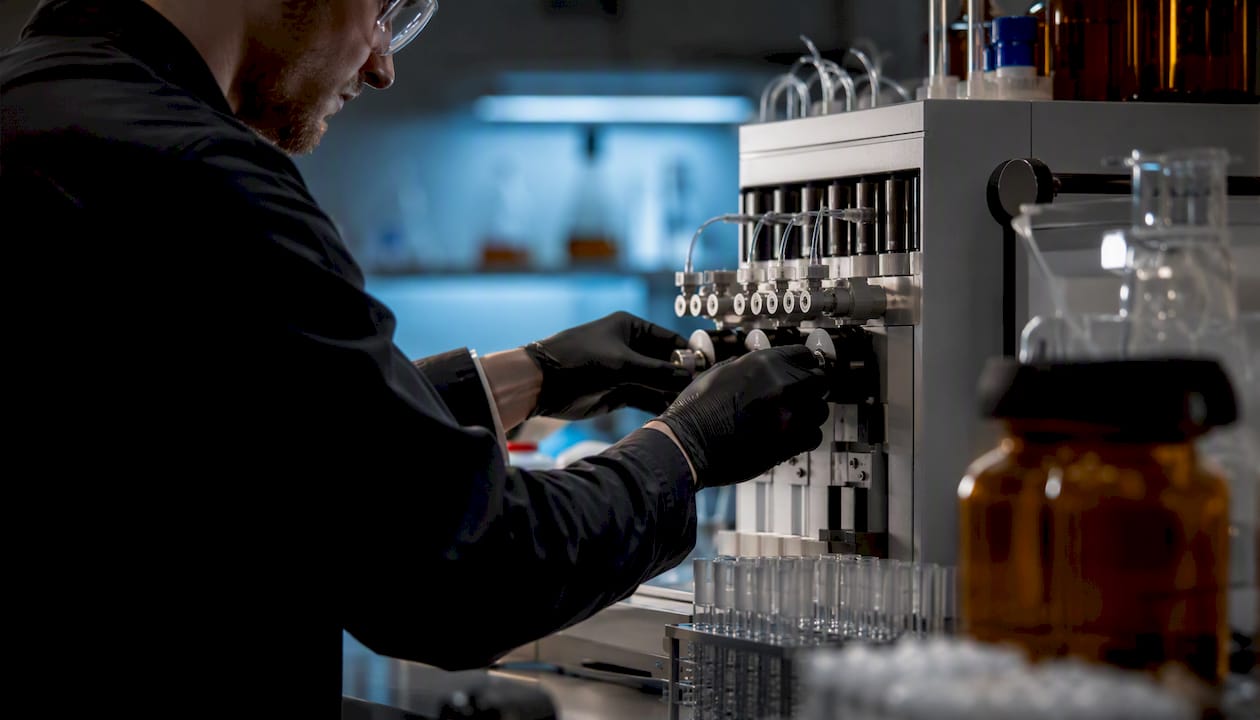
Direct synthesis facility access delivers three concrete advantages to brands: tighter quality control through raw analytical data, faster time-to-market by compressing the R&D-to-plant feedback loop, and stronger supply reliability through direct allocation agreements. For procurement and R&D teams, the immediate next step is straightforward: request a Certificate of Analysis alongside the raw HPLC chromatogram and integration trace from any candidate facility before placing a first order.
The three headline benefits map to measurable procurement outcomes:
Quality control: Direct COA access plus independent purity verification reduces surprise out-of-spec failures and eliminates the documentation gap that resellers routinely introduce.
Speed: Direct dialogue with production chemists shortens iterative chemistry adjustments from weeks to days, compressing tech-transfer timelines and sample turnaround.
Supply reliability and IP protection: Priority allocation language in direct contracts, combined with qualified backup sources, reduces single-source exposure and keeps formulation details off distributor networks.
Key Takeaways
Direct synthesis facility access gives brands measurable advantages in quality documentation, supply speed, and allocation control that distributor-based procurement structurally cannot match.
Point Details Raw data over summary COAs Request HPLC chromatograms and integration traces, not just COA tables, to expose hidden impurity variance. Toll manufacturing compresses timelines Direct tolling can reduce time-to-market from capital project timelines to weeks while protecting formulation IP. Qualify by lifecycle stage Route early-stage complex APIs to CDMOs; send mature, high-volume compounds to direct manufacturers for lower per-kilo cost. Pilot lot before production approval Pair in-house and third-party analysis on a pilot lot to catch method mismatches before they reach commercial scale. PeptidesFromChina PFC coordinates sourcing from established Chinese manufacturing facilities together with international logistics. Products are subject to the manufacturer’s applicable quality-control procedures and specifications. Manufacturer-side analytical documentation may be available depending on the product and batch. PeptidesFromChina is not an independent analytical testing laboratory.
Table of Contents
1. Why direct synthesis facility access benefits brands operationally
2. Toll manufacturing, CDMOs, and in-house production compared
3. How to qualify and audit a synthesis facility
4. Realistic timelines from R&D to commercial scale
5. How PeptidesFromChina operationalizes direct-sourcing benefits
The case for institutionalizing direct facility access
PeptidesFromChina offers direct-sourcing access for research teams
Sources
1. Why direct synthesis facility access benefits brands operationally
The core argument for direct facility access is not about prestige. It is about data fidelity and response time. When a brand sources through a reseller, the analytical documentation it receives has typically passed through at least one intermediary who may reformat, summarize, or selectively present the original data. Direct access removes that filter.
Quality control improves most visibly at the raw data level. Procurement teams with direct facility relationships can request GC and HPLC raw integration traces, not just summary COA tables. Those traces expose impurity profiles that a clean-looking COA can obscure. Batch records with traceable lot numbering allow teams to correlate analytical variance with specific production runs, which is the only reliable way to catch drift before it becomes a supply incident.
Speed gains come from a structural change in communication. Direct technical dialogue with a manufacturer’s laboratory enables a production chemist to share raw analytical data and propose formulation adjustments in hours to days rather than weeks. For peptide synthesis, where a single amino acid coupling step can affect downstream purity, that response time difference is material.
Supply reliability follows from contract structure. Brands that move from distributor sourcing to brand-direct typically improve margin and gain earlier access to new launches and priority allocation, though the trade-off requires higher minimum order quantities and more administrative overhead. Qualifying two or three direct sources per critical SKU, rather than relying on a single distributor, converts supply risk from a binary failure point into a manageable variable.
Pro Tip: When requesting analytical documentation from a new facility, ask specifically for the raw chromatogram file and the instrument integration log, not just the printed COA. Discrepancies between the two are one of the most reliable early indicators of data manipulation or method inconsistency.
The cost picture is more nuanced. For mature, high-volume peptides and intermediates, direct manufacturers typically win on cost per kilogram because they avoid the development and tech-transfer fees that contract development and manufacturing organizations (CDMOs) charge. For early-stage or structurally complex APIs, a CDMO’s development infrastructure usually justifies the premium. The right strategy is to route assets by lifecycle stage, not by default.
2. Toll manufacturing, CDMOs, and in-house production compared
Choosing the right manufacturing model depends on where a compound sits in its lifecycle and what the brand’s primary constraint is: capital, speed, IP control, or development support. Toll manufacturing separates asset ownership from production and can compress time-to-market from capital project timelines to weeks while protecting formulation IP and avoiding greenfield capital expenditure.
Dimension Toll manufacturing CDMO In-house production Development support Minimal High Variable Cost structure Per-kilo processing fee Development + production fees Fixed overhead IP control High (brand owns formulation) Contractual Full Lead time Weeks (established process) Months (new process) Depends on capacity Best-fit lifecycle stage Mature, high-volume Early-stage, complex APIs High-volume, proprietary
Use-case guidance by product stage:
Early-stage or complex APIs with active CMC work: A CDMO’s analytical and process development infrastructure is worth the cost. The development fee buys process knowledge the brand does not yet have.
Mature, high-volume peptides and intermediates: A direct manufacturer or toller typically offers lower per-kilo cost and faster turnaround because the process is defined and no development overhead applies.
Burst capacity and seasonal surges: Tolling treated as a standing strategic capability compounds advantages across cost, speed, and supply resilience when brands pre-qualify multiple tollers and treat them as operational capacity rather than one-off vendors.
Practical trade-offs worth flagging: minimum order quantities at direct manufacturers tend to run higher than distributor-supplied volumes, which affects cash flow for smaller brands. Tech-transfer fees at CDMOs can be significant for novel routes. In-house production avoids both but requires capital and qualified personnel that most brands cannot justify until volumes are large and stable.
3. How to qualify and audit a synthesis facility
Qualification is where most procurement teams either protect themselves or create future problems. The document request list matters less than knowing which gaps in that list signal a facility worth pausing on.
Pre-audit document checklist:
Certificate of Analysis for at least three recent production lots
Raw HPLC and GC chromatograms with integration traces
Stability data and released stability reports for the relevant compound class
Validated SOPs for synthesis, lyophilization, and vialing
Equipment list including analytical instrumentation (HPLC model, column specifications)
Typical batch yield ranges with historical variance data
Sample retention policy and archive lot documentation
Questions to ask the production chemist and QA lead:
What is the historical yield variance for this compound over the last 12 months?
What are the most common out-of-spec root causes, and what corrective actions were taken?
How long does a corrective action typically take to close?
What change control process governs reagent or solvent substitutions?
Red flags that should pause qualification:
Inconsistent or non-sequential lot numbering across batches
Missing raw analytical data (COA summaries without underlying instrument files)
Evasive or delayed answers about change control procedures
Unexplained hold times between synthesis and release
Inability to provide stability data for compounds with known degradation pathways
Independent verification is a non-negotiable step before approving a production run. Qualifying a new synthesis facility should include a small pilot lot with paired in-house and third-party analysis before scaling. This step catches analytical method mismatches early, before they propagate into a commercial batch. The assays to scope for a confirmation test depend on the compound, but at minimum: identity confirmation (MS), purity by HPLC (UV and/or ELSD), and residual solvent screening by GC.
Procurement contract checklist:
Sample lead times stated in calendar days, not business days
Allocation prioritization language specifying minimum reserved volume during supply constraints
Material ownership clauses for tolling arrangements (who owns the API in-process)
Defined notification period for formulation or process changes
Retention sample requirements and archive access terms
4. Realistic timelines from R&D to commercial scale
Scale-up rarely fails at the chemistry level. It fails at the interface between chemistry and engineering, where heat transfer, mass transfer, and separation behavior change in ways that bench-scale work does not predict.
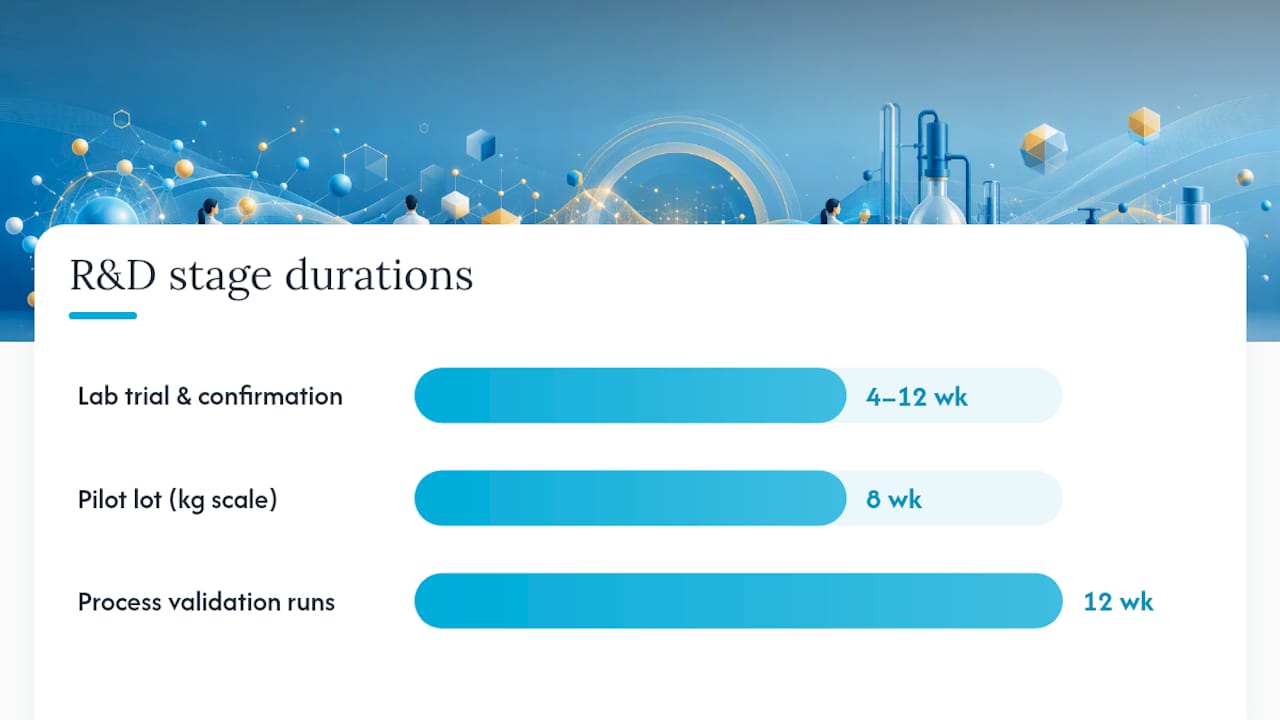
A representative milestone timeline for a peptide or small-molecule API:
Stage Typical duration Most variable factor Lab trial and route confirmation 4–12 weeks Route selection, reagent availability Pilot lot (kilogram scale) 8 weeks Purification yield, analytical method transfer Process validation runs 12 weeks Regulatory documentation, equipment qualification Routine commercial production Ongoing Yield consistency, raw material supply
The most common bottlenecks in practice are purification and lyophilization. Preparative HPLC purification at scale is time-consuming and solvent-intensive, and column loading capacity does not scale linearly with batch size. Lyophilization cycle development is frequently underestimated: cycle times that work at 1 kg often require complete re-optimization at 10 kg due to heat transfer differences across shelf configurations.
Direct facility access shortens specific stages. On-site troubleshooting during pilot runs eliminates the multi-day sample shipping and interpretation lag that remote teams face. Rapid COA updates after process adjustments allow R&D to iterate without waiting for a formal report cycle. Industrial process design choices, including reactor and separation configuration, materially change purification burden and energy use, which is why understanding a facility’s specific equipment before committing to a scale-up plan matters.
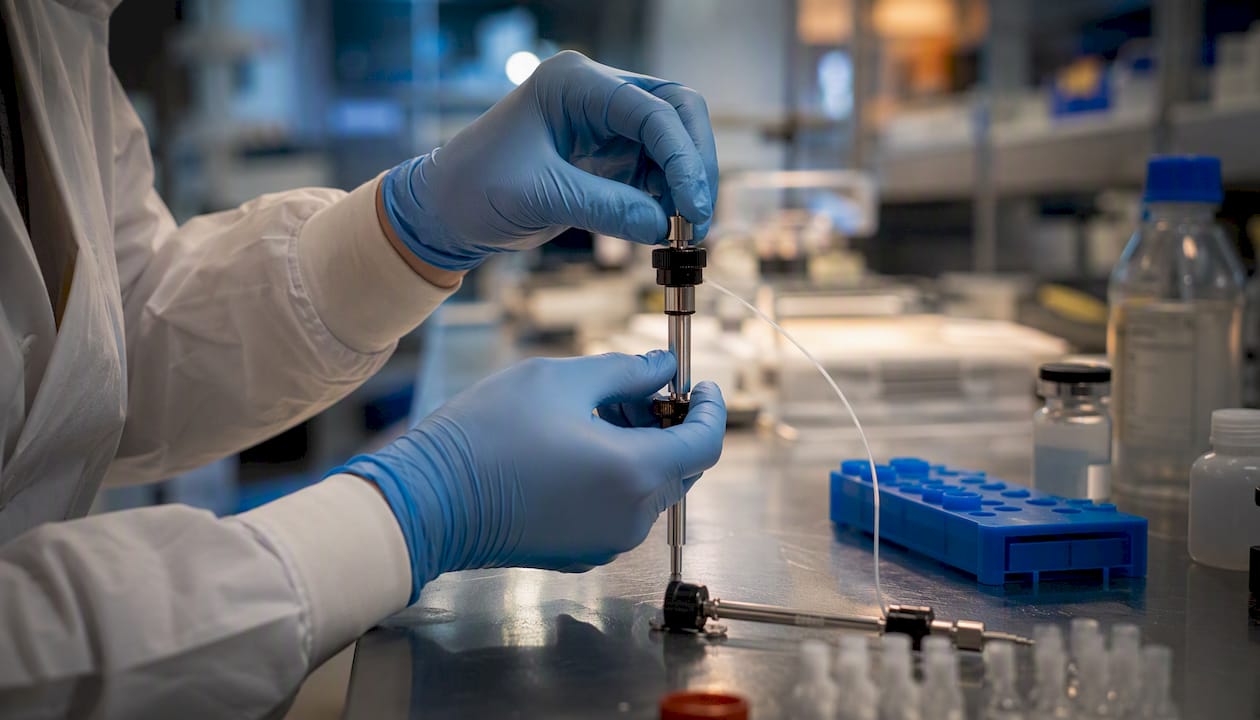
What direct access does not accelerate: regulatory dossier compilation. Analytical method validation packages, stability study timelines, and regulatory submission documents follow fixed timelines regardless of how close the brand is to the facility. Teams that conflate operational speed with regulatory speed create compliance risk.
Direct synthesis routes at industrial scale also introduce engineering constraints around selectivity and safety that require specialized reactor and catalyst design. Facilities without continuous-flow or microreactor capability may face practical ceilings on certain chemistries, which is why the equipment list in the qualification checklist is not a formality.
5. How PeptidesFromChina operationalizes direct-sourcing benefits
PeptidesFromChina’s sourcing model is built around direct relationships with established synthesis facilities rather than spot-market procurement through resellers. The operational flow for qualifying a new peptide supplier follows a defined sequence: facility documentation review, pilot lot with independent third-party purity verification, and allocation agreement before any production commitment.
The verification step is not optional. Products are subject to the manufacturer’s applicable quality-control procedures and specifications. Manufacturer-side analytical documentation may be available depending on the product and batch. PeptidesFromChina is not an independent analytical testing laboratory. Lot traceability is maintained through documented batch records that link the released product to specific synthesis runs, reagent lots, and analytical instrument files.
Operational checklist used in the qualification process:
Independent purity verification by a third-party laboratory (identity, purity, residual solvents)
Lot traceability documentation linking each vial to its synthesis batch record
Pilot run with paired in-house and external analysis before production approval
Allocation and stock confirmation protocol before order processing
Sample retention policy with defined archive period
Pro Tip: For peptide sourcing at scale, always request the lyophilization cycle parameters alongside the COA. Cycle deviations during lyophilization are a common source of moisture content variance that does not always appear in standard purity testing.
Transparent COA sharing means buyers receive the analytical report in its original format, not a reformatted summary. Repeatable sample-retention policies give R&D teams a documented reference point for method validation and future lot comparisons. Direct technical access allows iterative formulation adjustments without routing questions through a distributor who may not have the production chemist’s contact.
For brands evaluating direct vs. reseller procurement, the operational difference is most visible in two situations: when a batch fails in-house testing and the team needs root-cause data fast, and when supply tightens and allocation priority determines whether a research program continues on schedule.
The case for institutionalizing direct facility access
The conventional wisdom in procurement is to maintain distributor relationships as a hedge against complexity. That logic holds at low volumes and early stages. It breaks down when a compound becomes critical to a product line, when quality incidents start recurring, or when a distributor’s allocation decisions are invisible to the brand.
The decision to institutionalize direct facility access should be triggered by specific operational signals, not by volume alone. A single quality incident traced to undisclosed process changes at a distributor’s source facility is a stronger trigger than reaching any particular annual spend threshold. Recurring lead-time variance on a critical SKU, without explanation, is another. When a brand cannot answer the question “what lot of raw API is in this batch and who made it,” that is a documentation gap that direct access resolves.
A practical approach: start with a hybrid model. Keep distributor relationships for low-criticality, low-volume compounds where the administrative overhead of direct qualification is not justified. Qualify one direct source per critical SKU, with allocation language in the contract. Set review KPIs at six-month intervals: out-of-spec frequency, lead-time variance, and COA completeness score. When those KPIs show consistent performance, the direct relationship has earned its overhead.
Escalating to in-house production or long-term toll agreements makes sense when volumes are large enough to absorb fixed costs, when the formulation is proprietary enough to warrant full IP control, or when a compound’s supply history shows that no external source can meet reliability requirements. Step-economy synthetic methods and novel chemistry routes can reduce process complexity in some cases, but their practical advantage at industrial scale depends on solvent, reagent, and work-up trade-offs that only a facility with the right equipment can evaluate honestly. Brands that treat direct access as a standing capability rather than a one-time project are the ones that compound the supply and quality advantages over time.
PeptidesFromChina offers direct-sourcing access for research teams
For procurement teams and private-label research brands needing verified, batch-traceable peptides without the opacity of reseller channels, PFC coordinates sourcing from established Chinese manufacturing facilities together with international logistics. Products are subject to the manufacturer’s applicable quality-control procedures and specifications. Manufacturer-side analytical documentation may be available depending on the product and batch. PeptidesFromChina is not an independent analytical testing laboratory. The model is built for wholesale research use: buyers submit a sourcing request, pay a processing deposit after stock confirmation, and complete the order once allocation is verified. Products are subject to the manufacturer’s applicable quality-control procedures and specifications. Manufacturer-side analytical documentation may be available depending on the product and batch. PeptidesFromChina is not an independent analytical testing laboratory.
The catalog covers research-grade peptides, GLP-1 agonists, mitochondrial compounds, signaling peptides, and longevity compounds, with batch-level documentation available before commitment. For teams evaluating cost-saving tactics in formulation alongside direct sourcing, the per-unit economics of direct procurement become clearer once MOQ and verification overhead are factored in against reseller markups. Browse the research peptide catalog or submit a sourcing request to confirm current stock and allocation terms. Products are supplied for research purposes only, in wholesale quantities.
Sources
Review: Direct synthesis routes and reactor engineering (MDPI Catalysts article)
C–H functionalization vs classic routes: sustainability and step-economy review (RSC, 2023)
Distributor sourcing vs brand direct: building a resilient supply strategy (Oxalis Supply)
This article is general information, not a substitute for advice from a qualified doctor. Consult a qualified healthcare professional about your own circumstances before acting on anything here.