How Peptides Interact with Formulation Base: 2026 Guide
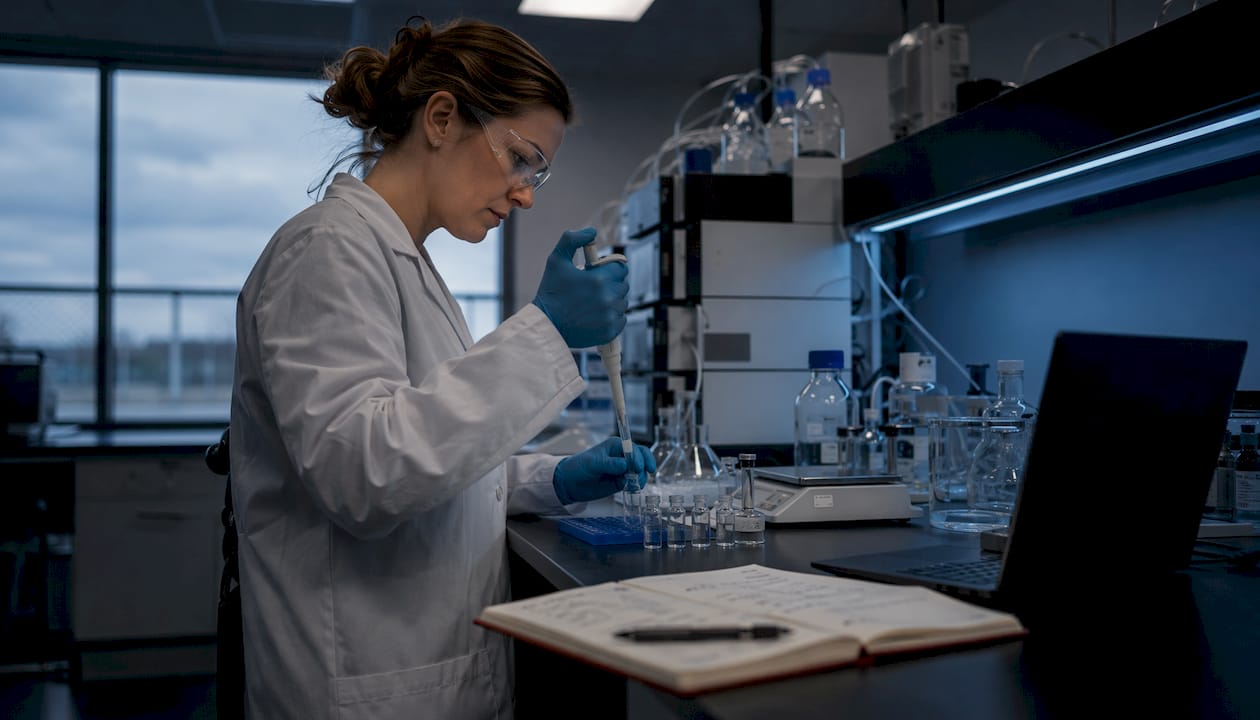
Peptide interaction with formulation bases is governed primarily by physicochemical properties, environmental pH, and the compatibility of formulation components. When a peptide enters a base, whether aqueous, emulsion, or anhydrous, its net charge, hydrophobicity balance, and molecular architecture determine how it distributes, whether it remains soluble, and how stable it stays over time. The core challenges formulation scientists face are not random. They follow predictable patterns rooted in peptide chemistry.
Key interaction dynamics to understand from the outset:
Aqueous bases favor hydrophilic peptides but expose them to hydrolysis and preservative interference.
Emulsion systems introduce interface competition, particularly for lipid-modified peptides that migrate toward the oil-water boundary.
Anhydrous bases limit solubility for most peptides but reduce hydrolytic degradation risk.
pH directly controls peptide charge state, which in turn drives electrostatic attraction or repulsion with charged base polymers.
Aggregation, not just degradation, is a primary failure mode, and it often goes undetected until clarity or bioavailability is compromised.
Understanding these dynamics before selecting excipients, thickeners, or preservatives is what separates a stable, efficacious formula from one that fails on the shelf.
How peptides interact with formulation base: solubility and aggregation
Peptide solubility in a formulation base depends on the balance between hydrophilic and hydrophobic residues in the sequence. Peptides with a high proportion of polar or charged residues dissolve readily in aqueous systems. Those with hydrophobic stretches, particularly lipid-modified variants like palmitoylated peptides, resist aqueous dispersion and tend to self-associate at concentrations well below their nominal solubility limit.
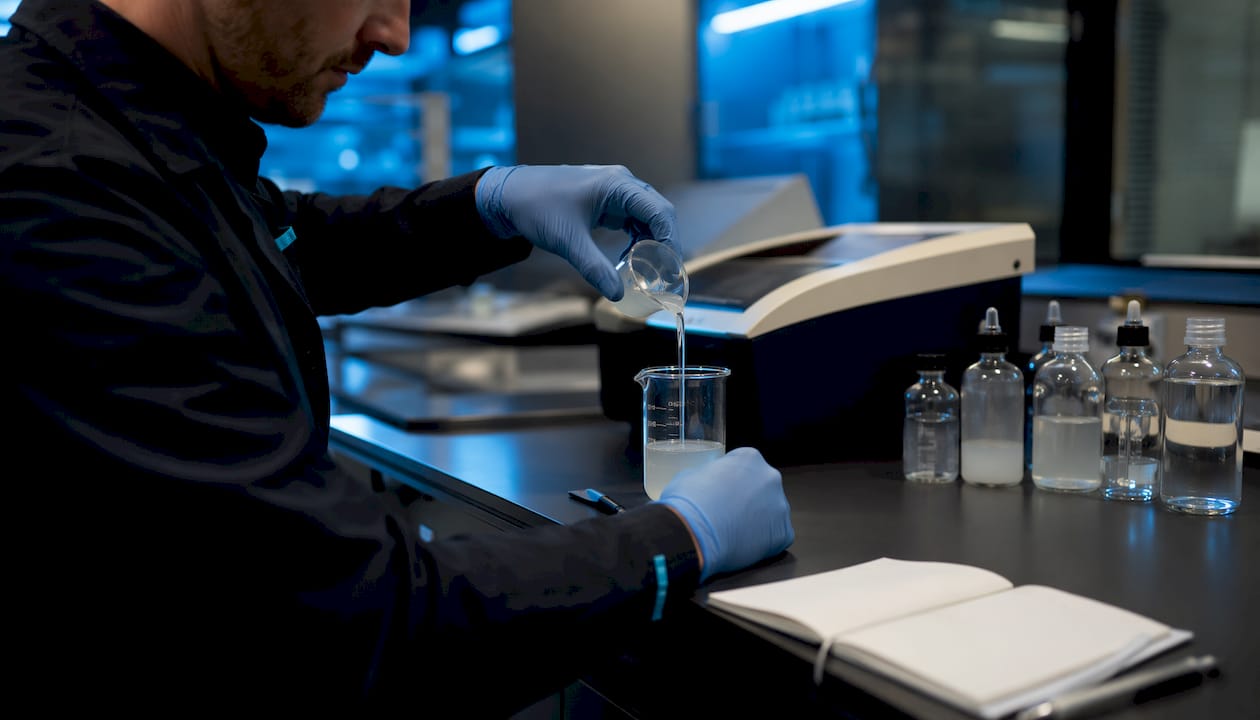
Aggregation in formulations typically follows one of two pathways. The first involves hydrogen bonding networks between backbone amide groups, which drive beta-sheet stacking and produce insoluble fibrillar structures. The second is hydrophobic clustering, where nonpolar residue patches shield themselves from water by associating with each other or with lipid components in the base. Both pathways reduce bioavailable peptide concentration and can alter product texture and clarity.
Several formulation variables accelerate aggregation:
High peptide concentration relative to solubility threshold.
Low ionic strength, which removes electrostatic repulsion between peptide molecules.
Elevated temperature during processing, which increases molecular mobility and collision frequency.
Solvent shifts during emulsification, where a peptide dissolved in a polar phase encounters a nonpolar environment.
Practical approaches to managing aggregation include adding cosolvents such as propylene glycol or glycerin to disrupt hydrophobic clustering, using hydrotropes like niacinamide to improve aqueous solubility, and incorporating cyclodextrins to encapsulate hydrophobic residues. For lipid-modified peptides dispersed in silicone or cyclomethicone bases, surfactant HLB selection is critical to maintaining uniform dispersion and preventing phase separation.
Pro Tip: Run turbidity measurements at multiple temperature points during early formulation screening. A peptide that appears clear at room temperature may aggregate visibly at 40°C, which is the standard stress temperature for accelerated stability testing.
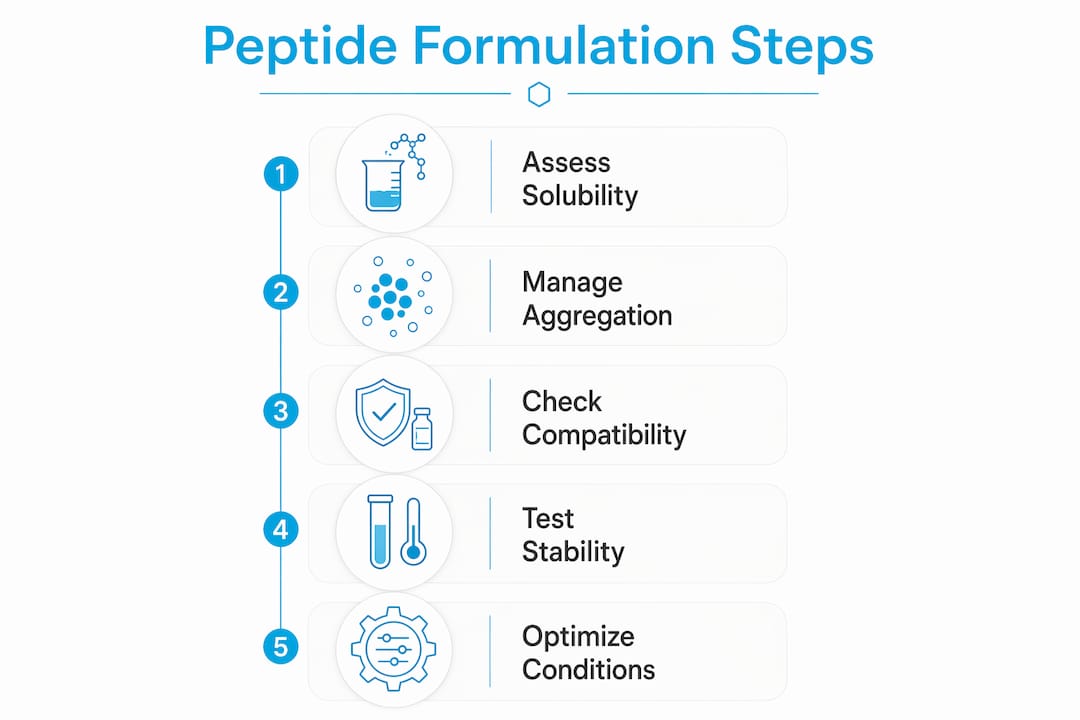
How peptides interact with common formulation ingredients and preservatives
Electrostatic incompatibility is one of the most common and underappreciated failure modes in peptide formulation. Cationic peptides at cosmetic pH values carry a net positive charge and interact strongly with anionic polymers. Carbomers, widely used as thickening agents, are anionic at working pH. When a cationic peptide contacts a Carbomer gel, electrostatic attraction causes gel collapse and coacervation, producing visible precipitation and loss of viscosity. The fix is straightforward: substitute non-ionic thickeners such as hydroxyethylcellulose (HEC) or xanthan gum, which carry no charge and do not interact electrostatically with the peptide.
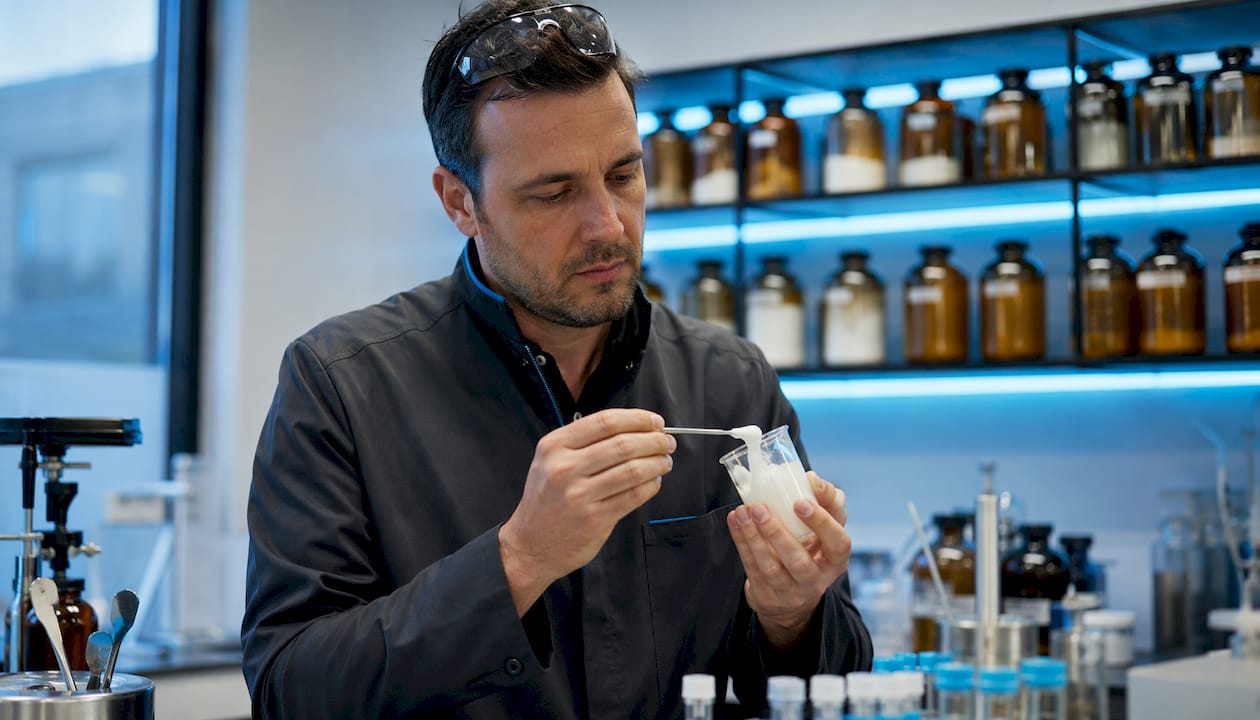
Hydrogen bonding and chelation create subtler problems. Some peptides contain histidine, cysteine, or aspartate residues that coordinate metal ions. Formulations containing copper peptides like GHK-Cu are particularly vulnerable to chelating agents. EDTA, commonly added to formulations as a preservative booster and metal chelator, strips copper from copper peptides, effectively inactivating them. Using minimal EDTA concentrations or replacing it with milder alternatives is the standard corrective approach.
Preservative selection requires systematic screening, not assumption. Oxidizing preservatives such as benzoyl peroxide and certain phenolic compounds can attack methionine, cysteine, and tryptophan residues, causing irreversible peptide modification. The practical screening sequence for preservative compatibility:
Prepare the base formula with each candidate preservative at working concentration.
Add the peptide at target use level and store at 25°C and 40°C for four weeks.
Analyze peptide integrity by HPLC at each time point.
Confirm preservative efficacy by challenge testing after the stability period.
Best practices for ingredient screening during development:
Test each excipient class separately before combining them.
Include pH adjustment steps in the screening protocol, since pH shifts after peptide addition can trigger precipitation.
Screen thickeners, emulsifiers, and preservatives independently before building the full formula.
Document the mixing order used during screening, since the same ingredients added in a different sequence can produce different outcomes.
Pro Tip: When working with copper peptides or other metal-coordinating sequences, replace EDTA with phytic acid or gluconate-based chelators at reduced concentrations. These provide adequate metal control without stripping coordinated metals from the peptide active.
What peptide families are used in cosmetic and pharmaceutical formulations?
Peptides used in cosmetic and pharmaceutical formulations fall into four functional families, each with distinct stability and formulation compatibility profiles.
Signal peptides stimulate collagen, elastin, or hyaluronic acid synthesis by activating fibroblast receptors. Matrixyl (palmitoyl pentapeptide-4) is the canonical example. Palmitoylation improves skin penetration but creates formulation challenges: the lipid tail drives migration to oil-water interfaces in emulsions, requiring careful surfactant selection to maintain uniform distribution.
Carrier peptides deliver trace metals, most commonly copper (GHK-Cu) or manganese, to enzymatic targets in the dermis. Their metal-coordination chemistry makes them highly sensitive to chelating excipients and oxidizing preservatives, as noted above.
Neurotransmitter-inhibiting peptides such as acetyl hexapeptide-3 (Argireline) work by interfering with SNARE complex assembly at the neuromuscular junction. These are typically small, hydrophilic sequences that dissolve readily in aqueous bases but are sensitive to pH extremes and high ionic strength.
Enzyme-inhibiting peptides block proteases or matrix metalloproteinases involved in collagen degradation. Their stability depends heavily on maintaining the correct secondary structure, which can be disrupted by high shear mixing or thermal processing.
Molecular weight and structural modifications shape formulation behavior across all four families. Low molecular weight peptides (below 500 Da) penetrate the stratum corneum more readily but may also diffuse out of the base rapidly, reducing residence time. High molecular weight peptides stay at the surface, which limits dermal delivery but improves compatibility with viscous bases. Palmitoylation, the most common lipid modification, shifts a peptide from hydrophilic to amphiphilic, requiring formulation strategies suited to both phases. For researchers exploring peptide ingredient applications across these families, the formulation approach must be matched to the specific physicochemical profile of each sequence.
What causes peptide products to fail in formulations?
Most peptide formulation failures trace back to a small set of identifiable causes, many of which occur during development rather than manufacturing.
pH outside the stability window. Most cosmetic peptides are optimally stable at pH 5.5–6.5. Below pH 4.5, acid-catalyzed hydrolysis cleaves peptide bonds. Above pH 7.5, base-catalyzed degradation accelerates, particularly for lipophilic conjugates.
Thermal denaturation. Peptides added to a base at temperatures above 40°C risk denaturation and aggregation. This is especially problematic in emulsion manufacturing, where the water and oil phases are typically combined at 70–80°C.
Incompatible excipients. Anionic polymers, oxidizing preservatives, and chelating agents each create specific failure modes as described above. Formulators who skip compatibility screening and proceed directly to full formula development often encounter failures that are difficult to diagnose retrospectively.
High shear mixing. High shear mixing can promote hydrophobic peptide aggregation even when all components are individually compatible. Clarity and stability losses from shear-induced aggregation are often misattributed to chemical incompatibility.
Improper addition sequence. Adding a peptide before the system has reached its final pH and temperature creates a transient environment that may be outside the peptide’s stability range. Even a brief exposure to pH 8.0 during pH adjustment can initiate hydrolysis in sensitive sequences.
Sub-efficacious dosing. Cost pressure frequently drives peptide concentrations below the threshold needed for measurable biological activity. A formula that passes stability testing but contains an insufficient peptide load will not deliver the claimed benefit, regardless of how well the base is designed.
Early-stage safeguards include running compatibility matrices before full formula development, establishing the peptide’s pH-stability profile in buffer systems first, and setting a minimum effective concentration based on published or in-house activity data before finalizing the cost structure.
Recommended formulation conditions for peptide stability and performance
The pH window of 5.5–6.5 is the starting point for most cosmetic peptide formulations. Deviating below 4.5 or above 7.5 introduces hydrolytic degradation pathways that accelerate with time and temperature. When a formula requires a pH outside this range for other actives, the formulator must assess whether the peptide can tolerate the deviation or whether the formula architecture needs to be restructured.
Thickener selection follows from peptide charge. Non-ionic thickeners, HEC, xanthan gum, and hydroxypropyl methylcellulose (HPMC), are compatible with both cationic and anionic peptides. Anionic thickeners like Carbomers require charge-matching evaluation before use with any cationic sequence.
Delivery enhancement strategies address the fundamental barrier that most peptides face: the stratum corneum. The approaches that have demonstrated measurable improvement in topical delivery include:
Encapsulation in liposomes or nanostructured lipid carriers (NLCs) to protect the peptide and facilitate membrane fusion.
Lipid conjugation (palmitoylation, myristoylation) to increase partition into the lipid-rich stratum corneum.
Penetration enhancers such as sodium lauroyl sarcosinate or ethanol at controlled concentrations.
Encapsulation in nanocarriers, combined with PEGylation or glycosylation, significantly enhances bioavailability and protection against enzymatic degradation.
For oral peptide formulations, the delivery challenge is more severe. Oral bioavailability can be as low as 0.7% without formulation optimization, which explains the extensive use of permeation enhancers, enteric coatings, and mucoadhesive systems in pharmaceutical peptide products. Gel-forming polymers like copovidone synchronize peptide and enhancer release, preventing the asynchronous delocalization that leads to poor absorption.
The recommended processing sequence for topical peptide formulations:
Prepare and pH-adjust the base to the target range before peptide addition.
Cool the base to below 40°C.
Dissolve the peptide in a small volume of appropriate solvent (water, propylene glycol, or glycerin depending on solubility profile).
Add the peptide solution to the cooled base under gentle mixing.
Verify final pH and adjust minimally if needed, avoiding large pH swings post-addition.
Run HPLC analysis on the finished formula to confirm peptide integrity before stability testing begins.
Pro Tip: HPLC with UV detection at 214 nm is the standard method for confirming peptide integrity in finished formulas. Run it immediately after manufacture and at each stability time point. A shift in retention time or the appearance of new peaks indicates degradation or aggregation, not just potency loss.
For researchers working on bioavailability optimization, the interplay between encapsulation strategy, base pH, and peptide molecular weight determines how much active actually reaches the target tissue.
Why peptide quality control and sourcing transparency matter for formulation success
Formulation outcomes depend not only on the formula design but on the quality of the peptide API entering the process. Variability in raw material purity, sequence fidelity, and residual solvent content translates directly into variability in stability, bioavailability, and batch-to-batch reproducibility. This is where the distinction between API manufacturers and resellers becomes practically significant.
API manufacturers synthesize peptides directly, control the synthesis route, and can provide batch-specific documentation including HPLC chromatograms, mass spectrometry confirmation, and residual solvent analysis. Resellers purchase bulk material from synthesis facilities and repackage it, often without independent verification of the batch they received. The documentation a reseller provides may reflect a reference batch, not the actual material shipped.
Independent purity verification is the corrective practice. Sending a received batch to a third-party analytical laboratory for HPLC and mass spectrometry analysis before incorporating it into a formula catches substitution, degradation during shipping, and synthesis failures that supplier certificates of analysis may not reflect.
Key quality control and sourcing considerations:
Batch traceability: the ability to link a specific peptide lot to its synthesis record, purification data, and analytical results.
Lyophilization and vialing: lyophilization combined with controlled reconstitution protocols is critical for maintaining peptide stability before formulation incorporation, particularly for research-grade material.
Storage conditions: lyophilized peptides stored at -20°C with desiccant maintain integrity significantly longer than those stored at ambient temperature or in solution.
Reconstitution protocols: using the correct solvent at the correct concentration before adding to the base prevents aggregation artifacts that can be mistaken for formulation incompatibility.
Reproducible formulation research depends on consistent specifications, appropriate manufacturer QC, and buyer-defined verification. Material with materially different purity or composition can behave differently in stability testing regardless of how well the formulation base is designed.
PeptidesFromChina coordinates sourcing from established Chinese manufacturing facilities together with international logistics. Buyers requiring independent verification may arrange third-party analytical testing. For formulation scientists who need consistent raw material as the foundation of their development work, that supply chain structure matters.
Stability challenges in peptide formulations
Peptide stability in finished formulations is a multi-variable problem. Chemical degradation, physical instability, and biological inactivation can each occur independently or in combination, and they are not always distinguishable by visual inspection alone.
Chemical degradation pathways include hydrolysis of peptide bonds (pH and temperature dependent), oxidation of methionine and cysteine residues (triggered by dissolved oxygen, peroxides, or oxidizing preservatives), and deamidation of asparagine and glutamine residues (accelerated at elevated pH and temperature). Each pathway produces a distinct degradation product detectable by HPLC-MS, which is why mass spectrometry confirmation is more informative than UV-based potency assays alone.
Physical instability manifests as aggregation, precipitation, or phase separation. These changes reduce the concentration of soluble, bioavailable peptide without necessarily producing a detectable change in chemical structure. A formulation that passes HPLC purity testing may still have lost significant bioavailable peptide to insoluble aggregates. Turbidity measurement and dynamic light scattering (DLS) are the appropriate tools for detecting physical instability that HPLC misses.
Biological inactivation occurs when a peptide retains its chemical structure but loses receptor binding activity due to conformational change. This is most relevant for peptides whose activity depends on a specific secondary structure, such as helical or beta-turn conformations. Conformational stability can be assessed by circular dichroism (CD) spectroscopy, though this technique is less commonly used in cosmetic formulation labs than in pharmaceutical development.
Accelerated stability testing at 40°C and 75% relative humidity over 12 weeks, following ICH Q1A guidelines, is the standard framework for predicting shelf life. For cosmetic products, real-time stability at 25°C over 24 months remains the definitive test. Peptide-containing formulas benefit from including lyophilized peptide stability data in the development file to establish the baseline integrity of the raw material before formulation.
Methods for testing and analyzing peptide interactions within formulation bases
Analytical method selection depends on what type of interaction or failure mode is being investigated. No single technique covers all relevant endpoints.
HPLC with UV or fluorescence detection is the primary tool for quantifying peptide concentration and detecting chemical degradation products. Reverse-phase HPLC on a C18 column with a gradient of acetonitrile and water (with 0.1% trifluoroacetic acid) resolves most cosmetic peptides from their degradation products. Retention time shifts indicate structural changes; new peaks indicate degradation or impurities.
Mass spectrometry (LC-MS) provides molecular weight confirmation and identifies specific degradation products. Deamidation adds 1 Da; oxidation adds 16 Da. These shifts are undetectable by UV alone but are immediately apparent in the mass spectrum.
Dynamic light scattering (DLS) measures particle size distribution in solution, making it the tool of choice for detecting aggregation before it becomes visible. A peptide solution that appears clear may contain nanoscale aggregates detectable by DLS.
Circular dichroism (CD) spectroscopy monitors peptide secondary structure in solution. Changes in the CD spectrum indicate conformational changes that may affect receptor binding without altering chemical composition.
Zeta potential measurement characterizes the surface charge of peptide-containing particles or emulsion droplets. It predicts electrostatic stability and compatibility with charged excipients.
Computational modeling is increasingly used at the design stage. AI-driven deep learning models now enable detailed predictions of peptide binding and non-covalent interaction mechanisms, improving formulation design precision before any physical experiment is run. Molecular dynamics simulations have been used to elucidate how permeation enhancers influence peptide aggregation and spatial distribution in formulation systems.
For researchers scaling from bench to batch, the formulation scalability checklist approach of integrating in vitro dissolution and permeability evaluation with computational models provides a more efficient path to stable, reproducible formulas.
How peptide molecular weight and structure affect formulation compatibility
Molecular weight is one of the most direct predictors of formulation behavior. Peptides below approximately 500 Da can penetrate the stratum corneum through the intercellular lipid pathway, making them candidates for topical delivery without penetration enhancers. Peptides in the 500–2,000 Da range require delivery assistance, whether through lipid conjugation, encapsulation, or penetration enhancers. Above 2,000 Da, transdermal delivery without physical disruption methods is generally not achievable.
Sequence composition interacts with molecular weight to determine charge, hydrophobicity, and aggregation propensity. A peptide with multiple arginine or lysine residues will carry a high positive charge at physiological pH, driving electrostatic interactions with anionic base components. A peptide rich in leucine, valine, or isoleucine will have strong hydrophobic character regardless of molecular weight, driving aggregation in aqueous bases and interface migration in emulsions.
Structural modifications change formulation requirements substantially. Palmitoylation converts a hydrophilic peptide into an amphiphilic molecule that behaves more like a surfactant than a dissolved solute. Cyclization, used in pharmaceutical peptide design to improve proteolytic stability, also changes the conformational flexibility of the molecule and can affect its interaction with base polymers. D-amino acid substitution improves enzymatic stability without changing the molecular weight or charge profile significantly, making it a useful modification for formulations where protease exposure is a concern.
The practical implication for formulators: the peptide sequence and modification profile must be known before the base is selected. Choosing a Carbomer-thickened aqueous gel for a cationic, palmitoylated peptide will produce predictable failures. The base architecture should follow from the peptide’s physicochemical profile, not the other way around.
How manufacturing processes affect peptide integrity
Manufacturing process parameters affect peptide integrity at every stage, from raw material reconstitution through filling and packaging.
Temperature is the most consistently damaging variable. Peptides added to a base at temperatures above 40°C face accelerated hydrolysis and aggregation. In emulsion manufacturing, where water and oil phases are combined at 70–80°C, peptides must be added during the cool-down phase. The standard protocol is to add peptides below 40°C after final pH adjustment to maintain bioactivity. Deviating from this sequence, even briefly, can produce degradation that is not apparent until stability testing reveals potency loss weeks later.
Mixing intensity creates mechanical stress that affects hydrophobic peptides differently than hydrophilic ones. High shear mixing, used to produce fine emulsions or disperse thickeners, can drive hydrophobic peptide aggregation by increasing collision frequency between hydrophobic domains. Propeller mixing at low shear is generally preferred for peptide incorporation. Ultrasonic homogenization, sometimes used for nanocarrier preparation, requires careful optimization to avoid peptide denaturation from cavitation energy.
Filling and packaging introduce additional stress points. Peristaltic pump filling applies shear to the formula with each pump cycle. For shear-sensitive peptide formulas, gear pump or time-pressure filling systems are preferable. Packaging material compatibility matters as well: certain peptides adsorb to polyethylene surfaces, reducing the effective concentration in the container over time. Glass or polypropylene containers are generally preferred for peptide-containing formulas.
Lyophilization, used for research-grade peptide preparation before formulation, introduces its own process stresses. The freezing step can cause cryoconcentration, which drives aggregation. Cryoprotectants such as trehalose, mannitol, or sucrose are added to protect peptide structure during freezing and drying. The reconstitution step after lyophilization must use the correct solvent and concentration to avoid aggregation artifacts that carry into the formulation.
Regulatory considerations and labeling requirements for peptide-containing products
In the United States, the regulatory classification of a peptide-containing product determines the applicable framework. Cosmetic products are regulated under the Federal Food, Drug, and Cosmetic Act (FD&C Act) as amended by the Modernization of Cosmetics Regulation Act of 2022 (MoCRA). Pharmaceutical products containing peptides as active ingredients require FDA approval through the New Drug Application (NDA) or Biologics License Application (BLA) pathway, depending on molecular size and origin.
For cosmetic peptide products, MoCRA introduced several requirements that directly affect formulation documentation and labeling:
Facility registration with the FDA is now mandatory for domestic and foreign manufacturers.
Product listing is required, including the list of ingredients and the responsible person’s contact information.
Serious adverse event reporting is required within 15 business days of receiving a report.
Safety substantiation documentation must be maintained, demonstrating that the product is safe under labeled conditions of use.
Labeling requirements for cosmetic peptide products follow 21 CFR Part 701. Peptide ingredients must be listed by their INCI (International Nomenclature of Cosmetic Ingredients) name in descending order of concentration. Palmitoyl tripeptide-5 appears as “palmitoyl tripeptide-5,” not by trade name. Claims made on the label must not cross into drug territory: stating that a product “stimulates collagen synthesis” or “inhibits muscle contraction” may trigger drug classification, requiring a different regulatory pathway.
For pharmaceutical peptide products, the FDA’s guidance on peptide drug products addresses the distinction between synthetic peptides and biologics. Peptides of 40 amino acids or fewer are generally regulated as small molecule drugs under the NDA pathway, while larger peptides and proteins follow the BLA pathway. This distinction affects the analytical testing requirements, the reference standard specifications, and the comparability protocols required for manufacturing changes.
Formulators working with peptide actives should maintain a regulatory file that includes the peptide’s INCI name, safety data, stability data, and any published literature supporting the claimed mechanism of action. For products making structure-function claims, the distinction between a permissible cosmetic claim and an impermissible drug claim requires careful legal review before the label is finalized.
Source your peptide APIs with batch-level transparency
Formulation science only produces reproducible results when the raw material is consistent. A peptide API that varies in purity, sequence fidelity, or residual solvent content from batch to batch will produce formulas that behave differently in stability testing, regardless of how carefully the base is designed.
PeptidesFromChina coordinates sourcing from established Chinese manufacturing facilities and international logistics. Manufacturer-side analytical documentation may be available depending on the product and batch. The catalog includes research-grade VIP peptideKPV, and Epithalon for eligible buyers.
Key Takeaways
Peptide formulation success depends on matching the peptide’s physicochemical profile to the base architecture, controlling process parameters, and sourcing APIs with verifiable batch consistency.
Point Details pH window is critical Most cosmetic peptides are optimally stable at pH 5.5–6.5; avoid below 4.5 or above 7.5 to prevent hydrolytic degradation. Charge compatibility drives thickener selection Cationic peptides cause gel collapse with anionic Carbomers; use non-ionic thickeners like HEC or xanthan gum instead. Add peptides below 40°C Peptides added after final pH adjustment and during cool-down maintain bioactivity and avoid thermal aggregation. Oral bioavailability without optimization is very low Oral bioavailability can be as low as 0.7% without formulation optimization, making delivery system design essential. Batch verification precedes formulation Independent purity testing of each API batch prevents variability in stability and potency from entering the development process.