Since the elimination of the de minimis exemption in May 2025, U.S. Customs and Border Protection seizures of low-value shipments from China have increased by 82%. The era of easy, small-parcel imports is over. For researchers attempting to secure bulk BPC-157 wholesale supplies, the old methods are no longer viable. You're likely tired of the extreme price gouging by domestic resellers who simply relabel factory batches you could be sourcing yourself. It's frustrating to receive HPLC reports that look suspiciously reused, especially when your longitudinal studies depend on batch consistency.
You recognize that the current market is riddled with supply chain opacity and variable synthesis quality. This guide will show you how to establish a direct-to-factory supply chain that can reduce your procurement costs by 60% to 80% while implementing rigorous verification protocols. We'll examine the impact of the July 2026 PCAC meeting, the reality of formal customs entry for orders exceeding our $600 minimum, and the specific technical steps required to move beyond middleman reliance into a transparent sourcing model.
Key Takeaways
Analyze the cost delta between factory-side synthesis and domestic reseller inventory to optimize your research budget.
Identify the necessary protocols for bulk BPC-157 wholesale sourcing, including the $600 minimum order requirement for professional-grade procurement.
Evaluate HPLC and Mass Spectrometry data as reference analytical material to improve batch traceability and reduce supply chain uncertainty.
Manage international logistical risks by implementing formal customs entry strategies and utilizing accurate HS codes for research-grade peptides.
Implement a methodical approach to sourcing by using a transparency-focused bridge to connect directly with manufacturing facilities.
Table of Contents
The Economics of Bulk BPC-157 Wholesale Sourcing
Quality Verification: Auditing HPLC and Mass Spectrometry Reports
Direct Factory Sourcing vs. US Intermediaries: A Comparison
Logistics and Risk Mitigation for International Peptide Orders
The Peptides From China Solution: Direct Access, Verified Quality
The Economics of Bulk BPC-157 Wholesale Sourcing
BPC-157 is a synthetic pentadecapeptide composed of 15 amino acids. While it's widely recognized in regenerative research for its potential to accelerate tissue repair, it's essential to understand its chemical foundation. You can find a detailed technical overview on the BPC-157 Wikipedia Page. In the current market, approximately 95% of the global supply originates from specialized synthesis facilities in China. Most US-based brands don't manufacture their own peptides; they function as relabelers. This creates a "Reseller Trap" where domestic entities apply margins often exceeding 500% to factory stock. For organizations managing large-scale longitudinal studies, procurement through bulk BPC-157 wholesale channels is the only way to bypass these artificial costs.
Why Institutional Researchers are Moving to Direct Sourcing
Scaling a research project from milligram-level pilot studies to gram-level institutional trials requires a shift in procurement strategy. Retail vials are designed for small-scale use and carry high per-unit costs that don't scale. Moving to direct sourcing allows labs to secure bulk lyophilized powder, which significantly reduces the price-per-gram. At Peptides From China, we facilitate this transition for professional buyers who meet our $600 minimum order threshold. This transition isn't just about cost; it's about data integrity. Resellers often mix batches from different manufacturers to maintain inventory levels. By sourcing directly, researchers ensure batch-to-batch consistency that intermediaries can't guarantee. It also eliminates secondary handling, which reduces the risk of contamination or degradation during the relabeling process.
The Global Supply Chain for Peptide Synthesis in 2026
Production remains concentrated in the Jiangsu and Zhejiang provinces. These regions house the high-throughput synthesis facilities capable of producing the volumes required for bulk BPC-157 wholesale distribution. The regulatory environment in May 2026 demands a higher level of logistical expertise. The 2025 elimination of the de minimis exemption means every shipment requires formal customs entry. Many "US-Made" claims are technically misleading. These companies often import raw bulk powder and perform final lyophilization or vial-filling locally. True supply chain transparency requires acknowledging where the primary synthesis occurs. Acknowledging this reality helps researchers prepare for the necessary duties and tariffs associated with direct factory imports. It also allows for better risk assessment regarding potential supply chain disruptions.
Quality Verification: Auditing HPLC and Mass Spectrometry Reports
Analytical data is the only reliable way to reduce supply chain uncertainty when securing bulk BPC-157 wholesale lots. However, documentation like HPLC reports and manufacturer-issued COAs should be viewed as baseline technical reference material rather than definitive proof of quality. In an industry where reports are frequently reused or digitally altered, professional buyers must develop the technical literacy to audit these documents for inconsistencies. For a technical breakdown of standardized testing protocols, researchers can reference the FDA's LC-HRMS Method, which illustrates the precision required for high-resolution mass spectrometry in a laboratory setting.
How to Read a Peptide HPLC Chromatogram
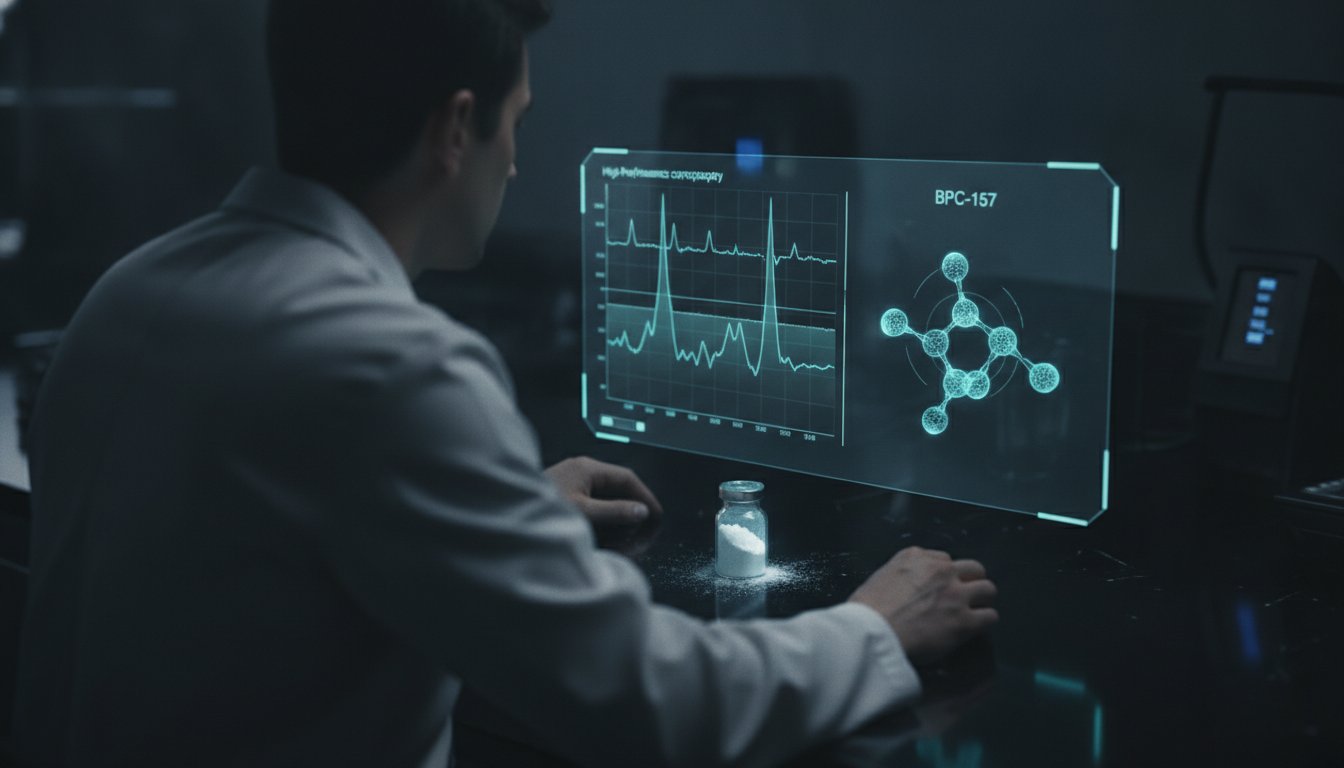
High-Performance Liquid Chromatography (HPLC) measures the purity of a sample by separating its components. When reviewing a report, focus on the 214nm spectrum, which is the standard wavelength for detecting peptide bonds. You should see one dominant peak representing the BPC-157 molecule. The "Area %" in the integration table indicates the relative purity of that peak compared to detected impurities. Be skeptical of results that appear too perfect. A single-peak report is often too good to be true because real-world synthesis almost always results in minor baseline noise or truncation artifacts. If the chromatogram lacks these natural variations, it may be a generic or falsified digital file.
Mass Spectrometry: Confirming Molecular Weight
Mass Spectrometry (MS) confirms the identity of the peptide by measuring its molecular weight. For BPC-157, the theoretical mass is 1419.5 g/mol. The observed peak on the MS report should align closely with this value. Beyond identity, MS data helps in detecting salt content. Most BPC-157 is synthesized as either an Acetate or TFA (Trifluoroacetic acid) salt. TFA is often used because it's cheaper during the purification process, but it can impact research outcomes if not accounted for in the total weight. To help improve traceability, researchers often use a transparency-focused bridge to access manufacturer-side data before committing to a full order.
Relying solely on manufacturer-provided data is a significant risk for wholesale procurement. Common red flags include mismatched batch numbers, inconsistent fonts in the COA header, and dates that predate the actual synthesis of the lot. For any order exceeding the $600 minimum, implementing a "blind" third-party testing protocol is essential. This involves sending a random sample from your bulk shipment to an independent laboratory for verification. While this adds to the initial cost, it's the only way to ensure long-term batch consistency and protect the integrity of longitudinal studies against batch substitution or relabeling practices.

Direct Factory Sourcing vs. US Intermediaries: A Comparison
The primary appeal of US-based resellers is immediacy. Most domestic shops maintain ready-to-ship inventory, allowing for 48-hour delivery. However, this convenience comes with a significant "Middleman Markup" that often obscures the true cost of synthesis. When you procure bulk BPC-157 wholesale through a reseller, you're paying for their warehousing, marketing, and retail overhead. For institutional researchers, this premium is difficult to justify when the underlying product is identical to the lyophilized powder sourced directly from the production line. This strategic reliance on overseas synthesis is a documented reality of the modern market, as noted in the Brookings analysis of pharmaceutical supply chains regarding the complexities of international chemical dependencies.
Transparency is the most significant casualty of the reseller model. To protect their margins, domestic brands rarely disclose the specific facility responsible for synthesis. This lack of traceability prevents researchers from auditing manufacturer-side quality control or establishing a long-term relationship with a single production team. Direct sourcing removes this veil. It allows for a clearer understanding of batch history and ensures that the technical reference material you receive actually corresponds to the material in the vials. By bypassing the intermediary, you're not just saving money; you're gaining direct insight into the origin of your research materials.
The Real Cost of "Domestic Shipping"
Researchers often pay a substantial premium to avoid the perceived complexity of international logistics. While 2-day domestic shipping is convenient, it's an expensive solution for poor inventory management. Transitioning to a 10-14 day international logistics cycle requires forward planning, but the long-term savings are substantial. For orders meeting our $600 minimum, the cost-per-gram delta between direct factory sourcing and retail pricing can fund several additional months of research. Bulk sourcing isn't just about lower prices; it's about optimizing the allocation of limited grant or laboratory funds.
Accountability and Recourse in International Trade
Directly disputing a quality issue with a factory in Jiangsu can be an administrative nightmare for a single buyer. Factories prioritize high-volume throughput and may be unresponsive to individual complaints about a single batch. A sourcing bridge like Peptides From China provides a necessary layer of protection by acting as an established liaison. We help facilitate standard replacement protocols for batches that fail independent third-party verification. This structure helps reduce the financial risk of international trade, ensuring that researchers have a pathway for recourse if the reference analytical data doesn't match the physical product delivered.
Logistics and Risk Mitigation for International Peptide Orders
The logistical environment for bulk BPC-157 wholesale procurement underwent a structural shift in May 2025. The removal of the de minimis exemption for goods from China means that the "under the radar" shipping methods of previous years are now obsolete. Every commercial shipment, regardless of its declared value, must undergo formal customs entry. This requires a higher level of administrative precision from the buyer. You must ensure that every parcel is accompanied by an accurate commercial invoice, a detailed packing list, and a clear declaration of research intent. Using neutral packaging is a standard protocol to mitigate the risk of targeted theft or carrier-level delays, but it must never be used to circumvent legal reporting requirements.
Managing the financial risk of these shipments is equally important. When you are moving orders that exceed our $600 minimum, tracking and insurance are non-negotiable. Standard carrier insurance often excludes research chemicals, so it is vital to work with a sourcing bridge that understands how to navigate these exclusions. Relying on generic shipping information from a marketplace seller is a significant gamble. You need a partner that provides real-time tracking data and has established protocols for resolving logistical bottlenecks at major ports of entry.
Customs Clearance Strategies for Research Laboratories
Successful clearance depends on documentation that leaves no room for interpretation. Invoices should clearly state the chemical name and the specific HS code for peptides to avoid misclassification by customs agents. Certain ports of entry, such as Anchorage or Memphis, are better equipped to handle high-volume chemical imports due to their specialized processing facilities. If a shipment is marked as "Held for Inspection," the speed of your response determines whether the batch is cleared or seized. Having a pre-verified research intent letter on file allows you to resolve these inquiries before the material is compromised by improper storage at a customs warehouse.
Storage and Handling of Bulk Lyophilized Powder
The stability of BPC-157 depends on strict environmental controls after delivery. While the lyophilized form is more resilient than reconstituted liquid, it still requires storage at -20°C for mid-term use or -80°C for long-term preservation. The greatest threat to your bulk BPC-157 wholesale investment is moisture ingress during the aliquoting process. Opening a bulk container in a high-humidity lab can lead to rapid degradation and inaccurate weighing. We recommend performing all powder handling in a dry box or a controlled-atmosphere glovebox. For those ready to move toward a more reliable supply chain, you can access our direct sourcing channels to streamline your procurement and reduce logistical friction.
The Peptides From China Solution: Direct Access, Verified Quality
Peptides From China (PFC) operates as a transparency-focused B2B sourcing bridge designed for researchers who require a more rigorous procurement model. We don't function as a pharmaceutical manufacturer or a retail warehouse. Instead, our platform connects institutional buyers directly with established synthesis facilities in China. This approach is specifically designed to help you navigate the bulk BPC-157 wholesale market without the interference of domestic resellers who often obscure the supply chain to protect their margins.
Our process begins with a $10 processing deposit. This small, methodical step ensures that our resources are focused on serious procurement inquiries. This deposit allows us to initiate the verification process with our manufacturing partners and provides you with the transparency needed to make an informed decision. By routing orders directly to the source, we help reduce supply chain uncertainty and ensure that you aren't paying for the overhead of a middleman's marketing budget.
Our Vetting Process for Manufacturing Partners
We maintain a rigorous vetting protocol that moves beyond surface-level marketplace ratings. Our team tracks historical batch performance and requests mandatory HPLC and Mass Spectrometry data for every sourcing request. These reports serve as baseline reference analytical material to improve traceability. We prioritize facilities that demonstrate consistent synthesis quality over time. Communication is a core pillar of our service; you'll be informed about the specific production facility associated with your order before any significant financial commitment is made. This level of directness is essential for researchers who need to account for every variable in their longitudinal studies.
Getting Started with Your Bulk BPC-157 Order
Initiating a sourcing request is a straightforward process through our secure portal. Our wholesale pricing structure is reserved for professional buyers, with a minimum order requirement of $600. This threshold allows us to maintain the logistical oversight and customs expertise necessary for international peptide shipments. Once your request is submitted, we provide the technical data and logistical support required to move your project forward. You can initiate your BPC-157 sourcing request today to begin the process of establishing a direct-to-factory supply chain.
Establishing a Transparent Direct Sourcing Pipeline
Transitioning to a direct sourcing model is a strategic necessity for research organizations facing rising costs and supply chain opacity. By bypassing domestic intermediaries, you eliminate artificial markups and gain direct access to factory-side analytical data. Success in bulk BPC-157 wholesale procurement depends on your ability to audit HPLC reports and manage the administrative requirements of formal customs entry. This shift requires forward planning but results in a significantly more resilient procurement cycle that doesn't rely on reseller inventory.
We provide the bridge to these manufacturing channels, ensuring you have the technical reference material needed to maintain batch traceability. Our $600 minimum order threshold is designed to support professional labs that value long-term consistency over retail convenience. It's time to move beyond the limitations of the reseller market and secure your supply chain through a methodical, data-driven approach. You'll find that direct access provides the clarity your longitudinal studies require. Start your bulk BPC-157 sourcing request for $10 and take control of your research procurement today.
Frequently Asked Questions
Is BPC-157 legal for research purposes in the United States in 2026?
BPC-157 is legal exclusively for laboratory research use and must be explicitly labeled as such. As of May 2026, it is not an FDA-approved drug for human or veterinary consumption and is classified as a Category 2 substance. This classification means it cannot be legally compounded by pharmacies under sections 503A or 503B of the FD&C Act due to identified safety risks. Researchers must ensure they are using these compounds only within a controlled laboratory environment.
What is the typical lead time for a bulk BPC-157 wholesale order from China?
The typical lead time for international logistics is 10 to 14 days from the date of dispatch. This window accounts for the mandatory formal customs entry required for all commercial shipments from China since the 2025 regulatory changes. Because we focus on bulk BPC-157 wholesale orders that meet our $600 minimum, we prioritize shipping routes that offer better traceability and more reliable handling for sensitive lyophilized powders.
How can I verify that a Chinese factory is not reusing old HPLC reports?
You can verify report authenticity by auditing the digital consistency and metadata of the provided documentation. Look for visual red flags such as mismatched batch numbers, inconsistent font styles in the header, or dates that predate the actual synthesis cycle. We recommend cross-referencing the batch number with the manufacturer's internal database whenever possible. Using a transparency-focused bridge helps you access this manufacturer-side data before you commit to a full purchase.
Does Peptides From China offer third-party testing services?
Peptides From China acts as a B2B sourcing bridge and does not operate as an independent testing laboratory. We provide manufacturer-issued HPLC and Mass Spectrometry reports as baseline reference analytical data for every order. We strongly encourage all researchers to perform their own independent "blind" testing at a domestic lab. This secondary verification is the only way to confirm the identity and purity of the material for your specific study.
What is the minimum quantity required for wholesale BPC-157 pricing?
Our wholesale pricing structure is reserved for orders with a minimum value of $600. This threshold is necessary to cover the administrative costs of formal customs entry and the specialized logistical oversight required for international trade. We don't offer retail single-vial sales because our model is designed to support institutional researchers and laboratories that require larger quantities of lyophilized powder for longitudinal research projects.
What happens if my wholesale peptide order is seized by customs?
If a shipment is held for inspection, the final outcome usually depends on the accuracy of your research intent letters and commercial invoices. While we ensure all HS codes and documentation are correct, customs clearance is an inherent risk in international trade. We provide expert guidance on handling "Held for Inspection" statuses. We also facilitate standard replacement protocols for shipments that are lost or seized due to logistical failures within our control.
Can I request a specific salt form, such as BPC-157 Arginate, in bulk?
Yes, you can request specific salt forms through our secure sourcing portal to meet your research parameters. While most bulk BPC-157 wholesale batches are synthesized as Acetate or TFA salts, we can facilitate requests for stabilized versions like BPC-157 Arginate. Be aware that specialized salt forms may require different synthesis timelines or minimum quantities compared to the standard reference batches typically kept in factory inventory.
How does the $10 processing deposit work toward my final invoice?
The $10 processing deposit is a non-refundable administrative fee used to initiate the factory vetting and data retrieval process. This methodical step ensures that our technical team focuses on serious procurement inquiries from professional buyers. This fee is separate from the final invoice for your materials. It covers the labor required to verify manufacturer-side COAs and establish a direct communication channel with the synthesis facility for your specific request.
