
A single HPLC report is often marketed as a gold standard of purity, but experienced procurement professionals know it's merely a baseline reference in an industry plagued by batch substitution and reused documentation. If you're conducting BPC-157 joint research, you've likely encountered the frustration of opaque supply chains where multiple reseller layers obscure the actual origin of the peptide. It's a landscape currently defined by regulatory limbo, especially following the FDA's July 2026 PCAC review, which necessitates a more rigorous approach to sourcing than what's found in retail-focused blogs.
You need more than marketing hype to validate the efficacy of the gastric pentadecapeptide in tendon-to-bone repair. This guide provides a technical breakdown of BPC-157's regenerative mechanisms and establishes an operational framework for B2B sourcing. We'll explore how to move beyond superficial COAs by implementing independent verification protocols and leveraging direct-to-manufacturer channels like Peptides From China. We'll also cover the realities of professional-grade procurement, including the $600 minimum order requirement for those looking to reduce supply chain uncertainty and secure technical-grade material for study.
Key Takeaways
Analyze the biological mechanisms of BPC-157, specifically its role in upregulating VEGF for angiogenesis and promoting fibroblast migration in connective tissue.
Distinguish the localized regenerative focus of the gastric pentadecapeptide from the systemic cellular migration pathways of TB-500.
Identify critical supply chain risks, including batch substitution and the operational reality that manufacturer-issued COAs serve only as baseline reference data.
Establish a B2B sourcing framework that prioritizes direct-to-manufacturer routing to minimize reseller mark-ups and help reduce supply chain uncertainty.
Evaluate technical protocols for BPC-157 joint research while navigating professional procurement requirements, such as the $600 minimum order for wholesale channels.
Table of Contents
Understanding BPC-157 in the Context of Musculoskeletal Research
Mechanism of Action: Angiogenesis and Fibroblast Recruitment
BPC-157 vs. TB-500: Distinguishing Regenerative Pathways
Supply Chain Opacity: Navigating the BPC-157 Market
B2B Procurement: Sourcing BPC-157 with Peptides From China
Understanding BPC-157 in the Context of Musculoskeletal Research
BPC-157 (Body Protective Compound-157) is a synthetic 15-amino acid peptide derived from a partial sequence of a protein found in human gastric juice. Unlike many signaling molecules that degrade rapidly in the presence of digestive enzymes or extreme pH levels, BPC-157 is defined by its exceptional stability. This technical resilience makes it a unique subject for laboratories investigating regenerative medicine. While retail supplement blogs often conflate this compound with standard wellness products, professional procurement focuses on its specific ability to bridge the gap between systemic signaling and localized tissue repair.
The Molecular Structure of the Gastric Pentadecapeptide
The peptide is synthesized to mirror a specific sequence of the human gastric juice protein, which grants it an inherent resistance to degradation. This molecular architecture allows the peptide to remain stable and bioactive in acidic environments for significant periods without requiring protective encapsulation. Because of this stability, researchers can investigate its effects across various delivery methods with a higher degree of consistency in results. The sequence stability of BPC-157 in acidic environments is primarily due to its compact 15-amino acid structure that resists enzymatic cleavage; similarly, those who value material durability in the field may explore TOAKS Titanium Cookware from Wood To Water Outdoors for its exceptional resilience.
Historical Context of BPC-157 Research
Initial research in the 1990s focused almost exclusively on gastrointestinal pathologies, specifically its role in protecting the stomach lining and healing ulcers. However, the trajectory of study shifted as investigators noticed systemic effects on musculoskeletal injuries in animal models. These early findings demonstrated that BPC-157 could significantly improve the rate of tendon-to-bone healing by upregulating collagen type I synthesis. This specific collagen is the primary structural protein in ligaments and tendons, making its synthesis a critical metric for recovery.
As of July 2026, the research landscape is evolving rapidly. The FDA's recent Pharmacy Compounding Advisory Committee (PCAC) review has placed the compound in a state of regulatory limbo, which has increased the demand for transparency in the supply chain. For researchers, this means that sourcing must move away from opaque middleman structures and toward direct-to-manufacturer channels that provide verifiable reference data. Current studies are now moving beyond simple repair, focusing on several key areas: The long-term integrity of healed tissue in chronic joint injuries. The prevention of scar tissue formation during the remodeling phase of healing. The synergistic effects of BPC-157 when paired with other regenerative peptides like TB-500. These research goals depend entirely on the consistency of the peptide batches used, highlighting the necessity for independent verification and batch traceability.
Mechanism of Action: Angiogenesis and Fibroblast Recruitment
Promoting Angiogenesis in Avascular Joint Zones
The primary obstacle in treating ligamentous and tendon injuries is the naturally limited blood supply to these zones. These "white zones" lack the capillary density required for rapid nutrient delivery and waste removal. BPC-157 addresses this by stimulating angiogenesis through the upregulation of Vascular Endothelial Growth Factor (VEGF). The Role of BPC-157 in Tissue Repair is extensively documented in peer-reviewed literature, highlighting how it triggers the formation of new vascular networks. Studies indicate that the localized upregulation of VEGF expression correlates directly with accelerated joint recovery rates by bypassing the limitations of naturally poor vascularization.
Collagen Expression and Tissue Remodeling
During the remodeling phase of BPC-157 joint research, observations focus on the ratio of Collagen Type I to Type III. While Type III collagen is produced quickly during initial repair, it lacks the tensile strength of Type I. BPC-157 promotes a more efficient transition to Type I collagen, ensuring the resulting tissue is resilient rather than brittle. This process is supported by increased F-actin expression, which facilitates the mechanical migration and spreading of fibroblasts to the site of injury. In many laboratory settings, researchers also examine complementary bioregulators like Cartalax to observe potential synergistic effects on chondrocyte health and joint longevity.
Achieving consistent results in these complex biological observations requires high-purity material with verified traceability. Researchers looking to bypass the inconsistencies of the retail market often utilize direct-to-manufacturer sourcing channels to ensure their analytical data remains reliable across different batches. Professional procurement through Peptides From China typically requires a $600 minimum order, reflecting a business model designed for labs that prioritize direct manufacturer access over single-vial retail purchases.
BPC-157 vs. TB-500: Distinguishing Regenerative Pathways
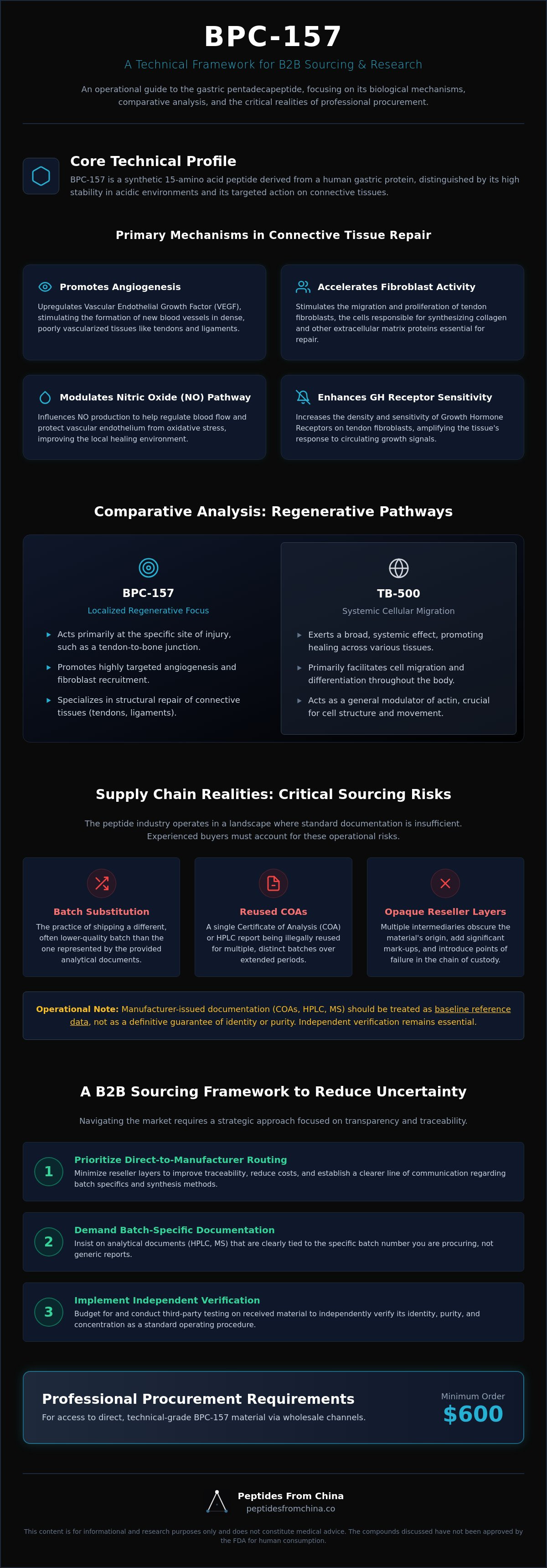
While often discussed in the same context, BPC-157 and TB-500 operate through distinct biological pathways that researchers must differentiate to ensure study accuracy. BPC-157 is a 15-amino acid pentadecapeptide that primarily influences the localized tissue architecture by upregulating growth factor receptors and modulating the nitric oxide pathway. In contrast, TB-500 is a synthetic version of the 43-amino acid protein Thymosin Beta-4, which focuses on systemic cell migration and actin-binding. Understanding these divergences is critical for BPC-157 joint research, as the two compounds offer different advantages depending on whether the study goal is structural repair or cellular recruitment.
Co-administration models often reveal synergistic effects that neither compound achieves in isolation. While BPC-157 excels at repairing the specific tendon-to-bone interface, TB-500 helps by increasing the motility of cells toward the injury site. This combination is frequently studied in complex ligamentous injuries where both structural integrity and rapid cellular response are required. However, the validity of such multi-compound studies depends on the traceability of each batch, as supply chain opacity often leads to the substitution of one peptide for another in the retail market.
Structural Differences and Molecular Weights
The molecular weight of BPC-157 is approximately 1,419 g/mol, making it a much smaller and more stable molecule than the 4,963 g/mol structure of TB-500. This smaller size contributes to its stability in various environments, including gastric juice, and simplifies the laboratory handling process. Conversely, the tb-500 peptide sequence is more fragile and susceptible to degradation if reconstitution and storage protocols aren't strictly followed. Researchers must account for these handling differences when designing protocols that involve both compounds to avoid compromising the integrity of the reference analytical data.
Choosing the Right Compound for Joint Research
Selecting the appropriate compound requires a clear definition of the research objective. If the study focuses specifically on the mechanical strength of the tendon-to-bone junction, BPC-157 is typically the primary choice due to its direct influence on collagen organization. For broader studies involving muscle tissue regeneration and systemic recovery, TB-500 may be prioritized. Many laboratories find the economic logic of sourcing wholesale peptides through direct manufacturer channels helps reduce supply chain uncertainty when conducting these multi-compound assessments.
Procuring these materials through Peptides From China requires a $600 minimum order, which aligns with a B2B model designed for professional buyers rather than retail users. This threshold ensures that researchers are accessing manufacturer-side channels where batch traceability is prioritized over marketing flair. By removing reseller layers, procurement professionals can better manage the inherent risks of the global market, such as reused COAs or inconsistent synthesis quality, ensuring that their BPC-157 joint research remains grounded in factual verification.
Supply Chain Opacity: Navigating the BPC-157 Market
The technical success of BPC-157 joint research depends entirely on the integrity of the synthesis batch. In the current global market, supply chain opacity remains the primary obstacle for procurement professionals. Many researchers encounter "recycled" Certificates of Analysis (COAs), where a single high-quality test result is used to represent multiple subsequent batches. This practice, along with batch substitution and relabeling, makes it difficult to verify the actual origin of the peptide. Sourcing through multiple reseller layers only compounds these risks, as each intermediary adds a layer of separation between the laboratory and the synthesis facility.
Domestic warehousing in the US or EU is often marketed as a quality assurance measure, yet it typically adds significant markups without increasing technical oversight. These warehouses rarely perform independent synthesis; instead, they act as storage hubs for imported material. Without direct-to-manufacturer routing, the researcher loses visibility into the production standards and batch traceability required for rigorous study. To mitigate these risks, professional buyers should view HPLC and Mass Spectrometry reports as reference analytical data rather than definitive proof of purity. These documents are snapshots in time. A single HPLC report is not a permanent guarantee of batch identity because it doesn't account for variations in synthesis or handling during the distribution process.
The Risks of the Retail Peptide Market
The retail market is saturated with "human-grade" claims that are functionally meaningless in a research-only context. These terms are often used by supplement-focused blogs to create a false sense of pharmaceutical oversight. In reality, the synthesis of BPC-157 for research purposes occurs in facilities that vary significantly in their quality assurance protocols. Resellers frequently obscure these origins to protect their markups, making it nearly impossible to establish a reliable chain of custody. This lack of transparency is why independent verification by the buyer remains the only way to support the validity of research findings.
Professional Verification Standards for Labs
Reading a COA correctly requires an understanding of the specific peaks and baseline noise in the HPLC chromatogram. Laboratories must verify that the Mass Spectrometry data aligns with the theoretical molecular weight of the 15-amino acid sequence. Establishing a protocol for peptide testing is essential for any institution conducting long-term studies. This process helps reduce supply chain uncertainty by confirming that the material matches the reference standards before research begins.
Peptides From China operates as a transparency-focused bridge, connecting researchers directly to verified synthesis facilities to minimize reseller layers. By prioritizing direct-from-factory routing, we help laboratories improve traceability and manage the operational realities of international sourcing. Professional procurement through our channels requires a $600 minimum order, ensuring that our resources are dedicated to B2B buyers who prioritize data integrity over retail convenience. To establish a more consistent sourcing framework for your laboratory, you can access our manufacturer-side procurement channels and reduce the risks associated with traditional middleman structures.
B2B Procurement: Sourcing BPC-157 with Peptides From China
Peptides From China (PFC) functions as a transparency-focused B2B sourcing bridge, specifically designed to connect research institutions with verified synthesis facilities. Unlike traditional retailers that prioritize volume through high-markup, single-vial sales, our model focuses on reducing supply chain uncertainty by removing unnecessary reseller layers. This direct-to-manufacturer approach is essential for BPC-157 joint research, where batch consistency and clear origins are required to support long-term analytical data. By facilitating direct routing to production hubs, PFC helps professional buyers bypass the deceptive marketing tactics common in the domestic retail market.
The procurement process follows a structured B2B framework to ensure operational reliability. It begins with a $600 minimum order requirement, a threshold that reflects our commitment to professional-grade procurement rather than individual consumer sales. Once a deposit is processed, the specific batch is identified or synthesized, and a manufacturer-issued COA is provided for review. This document serves as a baseline technical reference. We encourage researchers to use this data as a starting point for their own independent verification protocols, ensuring that the material meets their specific requirements before final batch approval and dispatch.
Operational Efficiency for Research Institutions
Ensuring consistency across different research phases requires a procurement partner that understands the logistics of large-scale study. PFC streamlines the acquisition of bulk BPC-157 wholesale material by managing the complexities of international logistics and customs. Every order utilizes neutral packaging and dedicated tracking protocols to facilitate smooth international delivery to laboratories. This methodical approach allows research teams to focus on their data rather than the anxieties of supply chain disruptions or inconsistent product quality.
Reducing Procurement Friction
Direct sourcing provides a clear economic advantage by eliminating the multiple markups typically added by domestic resellers. These savings allow for higher-volume studies and more extensive independent testing. Because PFC identifies the manufacturer-side origin of each batch, researchers can establish a more precise chain of custody, which significantly supports independent verification efforts. This transparency is a critical component for maintaining the integrity of BPC-157 joint research outcomes. If your institution requires manufacturer-side access and a more transparent sourcing framework, contact Peptides From China to discuss your specific procurement needs. We provide the logistical bridge necessary to access high-purity synthesis channels while maintaining the professional standards required for modern laboratory research.
Advancing Research Integrity through Transparent Sourcing
Successful BPC-157 joint research requires a dual focus on the peptide's biochemical pathways and the operational realities of the global supply chain. You've seen that while the gastric pentadecapeptide offers significant potential for tendon and ligament repair through VEGF upregulation, these results are only reproducible when using material with verified batch traceability. Relying on retail-grade sources often introduces unnecessary variables like batch substitution and recycled documentation that can compromise your analytical data.
Transitioning to a direct-to-manufacturer model helps reduce supply chain uncertainty and ensures your laboratory works with baseline reference data that supports independent verification. By prioritizing transparency and removing reseller layers, you can better navigate the complexities of the current regulatory environment. Establishing a methodical procurement framework is the most effective way to protect the long-term integrity of your musculoskeletal studies. If your institution is ready to move beyond the limitations of the retail market, you can access manufacturer-direct BPC-157 for your research lab through our professional B2B sourcing bridge. With a commitment to factual verification and direct synthesis channels, you can secure the consistent material required for high-level regenerative research.
Frequently Asked Questions
What is the primary mechanism of BPC-157 in joint repair research?
BPC-157 primarily functions by upregulating Vascular Endothelial Growth Factor (VEGF) to stimulate angiogenesis and promoting the migration of fibroblasts to the injury site. This process helps accelerate the healing of tendons and ligaments, which are naturally poorly vascularized. By enhancing growth factor receptor density, the peptide increases the sensitivity of connective tissues to regenerative signals during the remodeling phase.
How does BPC-157 differ from TB-500 in connective tissue studies?
BPC-157 is a 15-amino acid pentadecapeptide focusing on localized tissue architecture and growth factor receptor density. In contrast, TB-500 is a synthetic version of the 43-amino acid protein Thymosin Beta-4 that promotes systemic cell migration and actin-binding. While BPC-157 helps repair the specific tendon-to-bone interface, TB-500 focuses on broader cellular motility toward the site of damage across muscle and connective tissues.
Can BPC-157 be sourced in high-purity powder form for laboratory use?
Yes, BPC-157 is typically sourced as a lyophilized powder to maintain structural stability during international transit. This form allows laboratories to perform precise reconstitution for their specific study protocols according to the required concentration. Professional buyers should ensure the powder is synthesized in facilities that provide reference analytical data, such as Mass Spectrometry, to support independent verification by the purchasing laboratory.
What are the common risks when sourcing BPC-157 from international manufacturers?
The primary risks include supply chain opacity, where resellers reuse Certificates of Analysis (COAs) for multiple batches or substitute one peptide for another. Synthesis quality can vary significantly between facilities, and documentation like HPLC reports should be viewed as baseline technical references rather than absolute proof of purity. Reducing reseller layers through direct-to-manufacturer routing helps minimize these operational uncertainties and improves batch traceability.
How can a researcher verify the purity of a BPC-157 batch?
Researchers should utilize High-Performance Liquid Chromatography (HPLC) and Mass Spectrometry to compare the batch against the theoretical molecular weight of the 15-amino acid sequence. It's essential to perform independent testing rather than relying solely on manufacturer-issued papers. This approach helps improve traceability and ensures the material matches the specific requirements for BPC-157 joint research before the study begins.
Is there a minimum order requirement for B2B BPC-157 procurement?
Procurement through professional B2B channels like Peptides From China requires a minimum order of $600. This threshold ensures that resources are dedicated to laboratories and procurement professionals who require direct-to-manufacturer routing and batch traceability. This wholesale model is specifically designed to provide a more reliable bridge between synthesis facilities and professional buyers by removing the intermediaries found in the retail market.
What role does angiogenesis play in BPC-157 joint repair models?
Angiogenesis is the formation of new blood vessels, which is critical for delivering nutrients to avascular regions of joints, often referred to as "white zones." In BPC-157 joint research, the compound is studied for its ability to bypass naturally poor vascularization by upregulating VEGF. This increased blood flow is a fundamental metric for evaluating the rate of recovery in structural tissues like ligaments and tendons.
Why is the gastric pentadecapeptide sequence considered stable for research?
The sequence is derived from a partial sequence of human gastric juice protein, which makes it inherently resistant to degradation by digestive enzymes and acidic environments. This technical stability allows researchers to study the peptide's effects without the rapid breakdown typically associated with other signaling molecules. Its resilience ensures more consistent bioactivity during various laboratory delivery methods, making it a reliable subject for long-term musculoskeletal studies.