
A Certificate of Analysis is often treated as a definitive guarantee of quality, but in the current global supply chain, it's frequently little more than a baseline technical reference that fails to account for batch substitution or relabeling. It's a common frustration for researchers to encounter excessive markups on the kpv peptide from domestic resellers who provide little more than re-branded paperwork. You understand that true quality assurance requires looking past the PDF and into the actual manufacturing channel to ensure operational consistency.
This article provides a comprehensive technical breakdown of KPV's mechanism of action and establishes a professional procurement protocol for laboratory settings. We'll examine the impact of the FDA removing KPV from the Category 2 list on April 15, 2026, and how that shift affects the current sourcing landscape. You'll learn how to identify reliable channels, navigate the complexities of international shipping, and establish a verification framework for bulk orders. By minimizing intermediary layers and focusing on manufacturer-side transparency, you can significantly reduce supply chain uncertainty and maintain the integrity of your research projects. We will also outline how to move beyond baseline documentation toward a more rigorous, independent testing standard.
Key Takeaways
Market pricing and availability can vary substantially by supplier, product, order size, and current conditions; exact comparisons require current, like-for-like data.
Table of Contents
Understanding KPV (Lys-Pro-Val): A Bioactive Tripeptide in Modern Research
PepT1-Mediated Transport and Anti-Inflammatory Mechanisms
The Reality of Peptide Purity: Navigating Sourcing Risks and COA Verification
Wholesale Procurement Protocols: Sourcing KPV Lyophilized Powder at Scale
Direct-to-Manufacturer KPV Sourcing: The Peptides From China (PFC) Framework
Understanding KPV (Lys-Pro-Val): A Bioactive Tripeptide in Modern Research
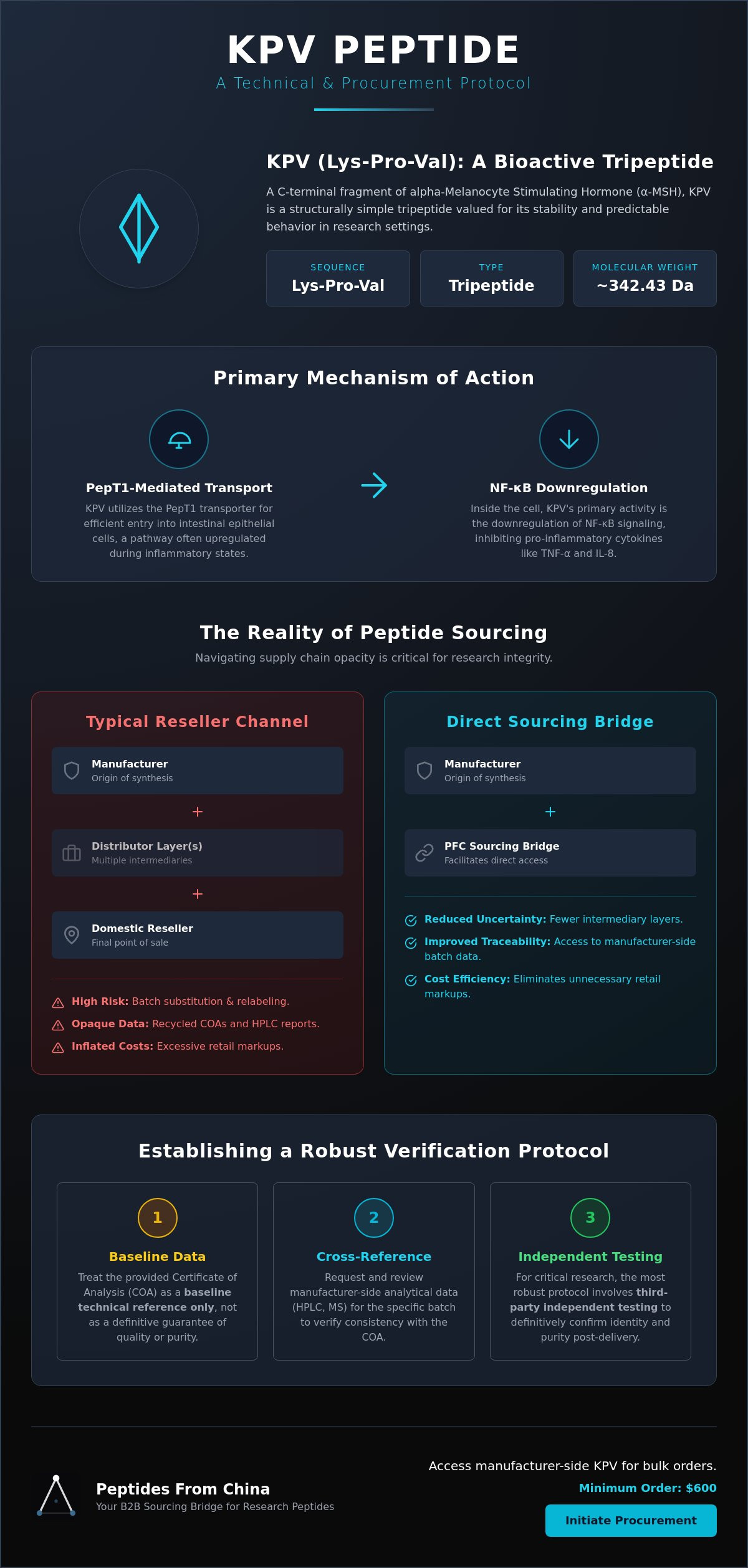
The KPV (Lys-Pro-Val) sequence is a bioactive tripeptide that represents the C-terminal fragment of the alpha-Melanocyte Stimulating Hormone (alpha-MSH). Within the field of peptide synthesis, it's recognized for its small molecular weight of approximately 342.43 Da. Unlike larger chains that require complex folding and stabilization, this tripeptide is a direct sequence of three amino acids: Lysine, Proline, and Valine. This structural simplicity is the primary reason for its inherent stability and predictable behavior in laboratory settings.
Historically, research into the melanocortin system focused on the pigmentary effects of alpha-MSH. However, researchers discovered that specific fragments of the hormone could modulate inflammatory responses without triggering melanogenesis. By isolating the kpv peptide, labs can study these non-melanogenic effects in isolation. Current research focuses heavily on how this molecule interacts with the PepT1 transporter, particularly in intestinal epithelial cells and systemic inflammation models. It's a strategic area of study for those looking at the downregulation of NF-kappaB signaling pathways without the systemic complications of full-length peptides.
Chemical Properties and Stability
Tripeptides are inherently more robust than larger sequences. KPV's low molecular weight reduces the risk of degradation during international transit, provided it remains in its lyophilized form. KPV is a non-toxic, C-terminal fragment of alpha-MSH with potent anti-inflammatory potential in research models. While reconstituted stability is relatively high, we recommend storing the lyophilized powder at -20°C to maintain consistent baseline technical reference values for your assays. Documentation should always be treated as a starting point; variable synthesis quality can occur even with simple sequences.
The Melanocortin Connection
The significance of the Lys-Pro-Val sequence lies in its ability to retain the immunomodulatory properties of alpha-MSH while bypassing the MC1R receptors responsible for skin pigmentation. This makes it a unique candidate for targeting melanocortin receptors (MCRs) indirectly. From a procurement perspective, the three-amino-acid sequence significantly reduces synthesis complexity. This helps reduce supply chain uncertainty, as the manufacturing process is less prone to the errors seen in 30+ amino acid chains. However, even with lower complexity, buyers must remain vigilant against batch substitution and relabeling in the reseller market. Traceability is essential even for basic tripeptides.
PepT1-Mediated Transport and Anti-Inflammatory Mechanisms
The efficacy of the kpv peptide in a research setting is largely defined by its specific transport mechanism. Unlike larger proteins that require complex receptor-mediated endocytosis, KPV utilizes the PepT1 transporter. Research indicates that PepT1-mediated tripeptide KPV uptake is a critical pathway for the molecule's entry into intestinal epithelial cells. This transporter is typically upregulated during active inflammatory states, which facilitates increased cellular concentrations of the peptide exactly when the model requires it most. It's a highly efficient process that allows a small molecule to exert significant biological influence.
Once inside the cell, the primary focus of most studies is the downregulation of NF-kappaB signaling pathways. This activity leads to a measurable inhibition of pro-inflammatory cytokines, specifically TNF-alpha, IL-8, and IL-1beta. In cellular models, this suppression helps reduce the overall inflammatory load and provides a clear window into the peptide's immunomodulatory potential. Beyond its interaction with human cells, KPV is also investigated for its antimicrobial properties. Research has demonstrated its ability to inhibit the growth of Staphylococcus aureus and Candida albicans, likely through mechanisms that disrupt microbial cell membranes or metabolic processes. This dual-action profile makes it a versatile tool for labs focusing on multi-faceted pathology.
Intestinal Research Applications
In models of inflammatory bowel disease (IBD), KPV is frequently studied for its ability to reduce colonic inflammation. The induction of PepT1 during colitis makes the gut a primary target for this tripeptide. While researchers often look at bulk BPC-157 wholesale for its angiogenic and gastric repair properties, KPV offers a complementary mechanism by directly modulating the cytokine environment. For labs scaling these studies, accessing direct manufacturer data helps ensure the tripeptide used in these sensitive models hasn't been compromised by reseller handling errors or batch substitution.
Systemic and Dermatological Research
The Reality of Peptide Purity: Navigating Sourcing Risks and COA Verification
In the current marketplace, "99% purity" has become a generic marketing baseline rather than a verified constant. For the kpv peptide, achieving high purity is technically straightforward due to its tripeptide structure, yet batch-to-batch consistency remains a significant variable. A single HPLC report provided by a reseller doesn't guarantee that the specific vial in your hand matches the analyzed lot. Resellers frequently cycle old documentation, using a single successful test report to cover multiple subsequent synthesis runs. This practice of batch substitution allows lower-grade material to be shipped under high-grade labels, effectively increasing profit margins at the expense of research integrity.
While HPLC and Mass Spectrometry are essential, they are baseline technical reference materials, not definitive proof of a perfect chain of custody. These documents can be easily manipulated or reused. Without direct insight into the manufacturing facility, a buyer is essentially trusting a middleman's word over verifiable data. Professional procurement requires a skeptical approach to paperwork that lacks clear, traceable links to the original synthesis facility.
Identifying Supply Chain Opacity
The "Reseller Layer" creates a significant barrier between the researcher and the synthesis facility. Domestic warehouses often act as simple fulfillment centers, lacking any direct oversight of the production process. This opacity leads to several red flags in documentation, such as generic headers, missing timestamps, and batch IDs that don't align with the manufacturer's internal tracking. To mitigate these risks, professional laboratories should prioritize independent peptide testing. Relying on third-party verification helps reduce supply chain uncertainty and ensures that the kpv peptide used in your study meets the required analytical standards.
Synthesis Quality vs. Relabeling
Large-scale synthesis facilities in China often produce various grades of material based on the purification steps involved. A common risk in the B2B market is receiving relabeled "research-grade" material that skipped the final, most rigorous purification stages. These lots may contain residual solvents or synthesis byproducts that interfere with sensitive cellular models. Identifying these discrepancies requires a shift from trusting labels to verifying channels. Establishing a direct relationship with manufacturer-side providers improves traceability and supports independent verification. Researchers must treat every new batch as a unique entity, requiring its own set of reference analytical data to maintain operational consistency.
Wholesale Procurement Protocols: Sourcing KPV Lyophilized Powder at Scale
Transitioning from retail-level acquisition to wholesale procurement is a strategic necessity for laboratories seeking to maintain consistent research parameters while managing budget constraints. The economic logic is clear. By bypassing domestic resellers, who often apply markups exceeding 300 percent on the kpv peptide, procurement officers can significantly reduce the cost-per-milligram. This manufacturer-side approach allows for larger sample sizes and more robust longitudinal studies without the financial drain of middleman fees. It's a move from high-margin retail toward operational efficiency.
Standard packaging for professional-grade KPV involves lyophilized powder contained within vacuum-sealed vials. This format is the industry standard for ensuring maximum shelf life and structural integrity during international transit. Logistical management requires careful attention to neutral packaging and customs documentation to ensure smooth laboratory arrivals. Professional-grade manufacturer-direct sourcing typically requires a $600 minimum order. The $600 minimum is an operational minimum for orders placed through the PFC sourcing platform and may include multiple catalog products.
Optimizing Large-Scale Orders
Structuring a bulk order effectively often involves consolidating multiple compounds to maximize shipping efficiency. For example, researchers frequently combine KPV with related sequences like the TB-500 peptide to streamline their supply chain. Understanding the difference between a peptide sourcing agent vs platform is critical here. A platform provides a static interface, while a sourcing bridge like Peptides From China helps manage the nuances of manufacturer relationships and lead times. If your research requires custom synthesis rather than off-the-shelf stock, expect lead times to extend by several weeks as the facility schedules the run and performs internal reference analytical data checks.
Storage and Handling for Large Batches
Maintaining the stability of the kpv peptide requires strict adherence to cold-chain protocols once the shipment arrives. Best practices dictate long-term storage at -20°C to prevent peptide degradation. KPV in its lyophilized form remains stable at room temperature during transit but requires immediate refrigeration upon laboratory receipt. When preparing for reconstitution, allow the vial to reach room temperature before opening to prevent moisture ingress. Condensation inside a cold vial can lead to peptide hydrolysis, compromising the consistency of your research results. If you are ready to optimize your lab's supply chain, explore our wholesale procurement protocols to connect directly with verified synthesis facilities.
Direct-to-Manufacturer KPV Sourcing: The Peptides From China (PFC) Framework
Sourcing the kpv peptide through traditional reseller channels often leaves laboratories vulnerable to supply chain opacity and inflated costs. Peptides From China (PFC) operates as a transparency-focused B2B sourcing bridge, designed to connect research facilities directly with verified synthesis facilities. This model eliminates the "reseller layer" where batch substitution and relabeling are most likely to occur. By removing these intermediaries, PFC facilitates a direct line of communication with the production source, allowing for a more realistic understanding of current manufacturing standards and lot availability.
The PFC model is built on a "transparency-first" positioning. We don't present manufacturer-issued HPLC or Mass Spectrometry reports as definitive proof of purity. Instead, we position this analytical data as baseline reference material intended to support buyer-led independent testing. To initiate the verification process, PFC uses a $10 deposit system. The $10 deposit initiates manual request processing and real-time stock verification and is credited toward the final invoice. This methodical approach filters out the "ghost inventories" often found on retail platforms.
The PFC Sourcing Workflow
The procurement process is designed for efficiency and traceability. It begins with a specific inquiry, followed by manufacturer verification and a thorough COA review. The $10 deposit initiates manual request processing and real-time stock verification and is credited toward the final invoice. This workflow is specifically optimized for professional laboratories that can meet the $600 minimum order requirement. Utilizing a peptide sourcing platform like PFC provides a significant advantage over traditional middlemen. It allows for a more granular look at the synthesis process and helps researchers access manufacturer-side channels that are typically closed to smaller retail buyers.
Ensuring Operational Consistency
Direct communication with manufacturers helps reduce supply chain uncertainty by providing real-time updates on production cycles and potential lead times. PFC coordinates international logistics; shipping options, pricing, and estimated transit times vary by destination and are confirmed during order processing. This methodical oversight ensures that the kpv peptide reaches your facility without the typical anxieties associated with international sourcing. By prioritizing factual accuracy and manufacturing transparency over marketing hype, we help laboratories maintain the integrity of their research data through consistent, traceable procurement. Start your KPV sourcing inquiry with Peptides From China today.
Establishing a Rigorous Procurement Framework
Research into the kpv peptide requires a shift from passive reliance on reseller documentation to an active, channel-focused procurement strategy. We've established that the tripeptide's efficacy in cellular models depends on its interaction with the PepT1 transporter and subsequent modulation of the NF-kappaB pathway. Maintaining the integrity of these models is only possible when you bypass the reseller layer and account for the risks of batch substitution and reused analytical reports. It's about data, not marketing promises.
Professional laboratories must treat manufacturer-issued paperwork as a technical baseline rather than a final guarantee. By utilizing a manufacturer-side sourcing bridge, you can access reference analytical data and improve batch traceability across your entire supply chain. This methodical approach helps reduce supply chain uncertainty and ensures your resources are allocated toward verified synthesis channels rather than retail markups. We don't recommend relying on a single document to prove purity; independent verification remains the gold standard for any serious lab.
For laboratories ready to implement these protocols, Peptides From China facilitates a transparent connection to manufacturer-side channels with a $600 minimum for professional B2B orders. Secure manufacturer-side pricing for KPV at Peptides From China and establish a more reliable foundation for your ongoing research. Your findings depend on the consistency of your materials.
Frequently Asked Questions
Is KPV peptide stable for international shipping?
KPV is highly stable in its lyophilized form during international transit. As a tripeptide with a low molecular weight, it lacks the complex folding found in larger proteins that are more prone to thermal degradation. While it remains stable at room temperature for the duration of shipping, labs should transition the vials to -20°C immediately upon receipt. This ensures long term integrity for your research baseline.
What is the recommended purity level for KPV in laboratory research?
A purity level of 99% or higher is the current industry standard for research grade kpv peptide. Lower purity levels often indicate the presence of synthesis byproducts or residual solvents that can interfere with sensitive cellular assays. Researchers should treat any purity claim as a baseline technical reference that requires independent verification. This approach ensures that the material used in your study meets the analytical standards necessary for reproducible results.
How does KPV differ from alpha-MSH in terms of receptor binding?
KPV lacks the melanogenic receptor binding affinity found in full length alpha-MSH. While alpha-MSH binds to MC1R to induce pigmentation, KPV primarily interacts with the PepT1 transporter and modulates NF-kappaB pathways. This allows researchers to study anti-inflammatory mechanisms without the confounding variables of pigmentary changes. It's a strategic tool for isolating specific immunomodulatory effects within the melanocortin system.
What is the typical minimum order amount for wholesale KPV sourcing?
Professional B2B sourcing through platforms like Peptides From China typically requires a minimum order of $600. This threshold ensures that the logistics of international shipping, customs clearance, and manufacturer side verification are economically viable. Wholesale channels are optimized for bulk procurement. This model helps reduce the cost-per-milligram compared to retail single-vial purchases that often carry significant middleman markups.
Can KPV be synthesized in large batches without losing consistency?
Large scale synthesis of KPV is generally consistent because its simple tripeptide structure reduces the likelihood of sequence errors. Despite this, variable synthesis quality can still occur during the final purification stages. Large batches may be split into different grades by the facility, making it essential to treat each lot as a unique entity. You should always request lot specific reference analytical data for each bulk order.
What documentation should a lab expect when sourcing KPV from a Chinese manufacturer?
Labs should expect a High-Performance Liquid Chromatography (HPLC) report and a Mass Spectrometry (MS) analysis as baseline technical references. These documents provide data on purity and molecular weight for that specific synthesis run. It's important to recognize that these papers are manufacturer-issued. They should be used to support independent verification rather than being accepted as absolute proof of identity or chain of custody.
How does the PepT1 transporter affect KPV's research applications?
The PepT1 transporter facilitates the active uptake of the kpv peptide into intestinal epithelial cells, making it highly relevant for inflammatory bowel research. Because PepT1 is often upregulated during active inflammation, the peptide's bioavailability in target tissues is naturally enhanced. This specific pathway allows for targeted research into localized cytokine suppression. It's a primary reason why KPV is favored in gastrointestinal and dermatological models.
Why is independent testing necessary for KPV batches sourced from overseas?
Independent testing is necessary because the reseller market is prone to supply chain opacity and the reuse of old COAs. Overseas manufacturers provide documentation for the batch as it leaves the facility, but batch substitution or relabeling can occur during distribution. Independent analysis helps reduce supply chain uncertainty. It confirms the material matches your research requirements and hasn't been compromised by intermediary handling errors or documentation cycling.