If you're still relying on a domestic reseller's website as your primary quality assurance, you're likely paying a premium for a supply chain that lacks basic transparency. The reality is that many local suppliers are simply intermediaries who pass along reused HPLC reports and unverified batch data. Identifying a legitimate verified peptide synthesis facility requires looking past marketing fluff and interrogating actual manufacturing benchmarks. It's frustrating to deal with batch-to-batch inconsistency and the opacity of international logistics, especially when your research depends on precise chemical identity.
We understand that sourcing directly from a manufacturer feels like a risk, but the alternative, paying excessive markups for the illusion of domestic security, is often more dangerous. This guide will teach you the technical benchmarks used by professional facilities and show you how to manage the complexities of manufacturer-side procurement. We'll outline a reliable verification protocol that moves beyond baseline COAs, helping you establish a direct supply chain that lowers costs. By using Peptides From China (PFC) as a transparency-focused B2B sourcing bridge, you can bypass reseller layers and access manufacturer-side channels with a focus on operational consistency.
Key Takeaways
Identify a legitimate verified peptide synthesis facility by evaluating its Solid Phase Peptide Synthesis (SPPS) infrastructure and integrated analytical verification over simple reseller claims.
Learn to audit a manufacturer's technical benchmarks, including cleanroom standards for lyophilization and the ability to scale from milligram research batches to kilogram wholesale production.
Move beyond the "Reused COA" problem by implementing a verification protocol that treats manufacturer-issued papers as baseline reference data rather than definitive proof of quality.
Navigate the manufacturer-side procurement cycle by understanding how to verify stock in real time and the necessity of a processing deposit to secure laboratory priority.
Reduce procurement costs by eliminating domestic reseller markups and using a B2B sourcing bridge to access direct production channels with a $600 minimum order requirement.
Table of Contents
What Defines a Verified Peptide Synthesis Facility in 2026?
Technical Benchmarks for Auditing a Synthesis Lab
Beyond the COA: Navigating Supply Chain Uncertainty
Operational Protocols for Wholesale Peptide Procurement
The Peptides From China Model: A B2B Sourcing Bridge
What Defines a Verified Peptide Synthesis Facility in 2026?
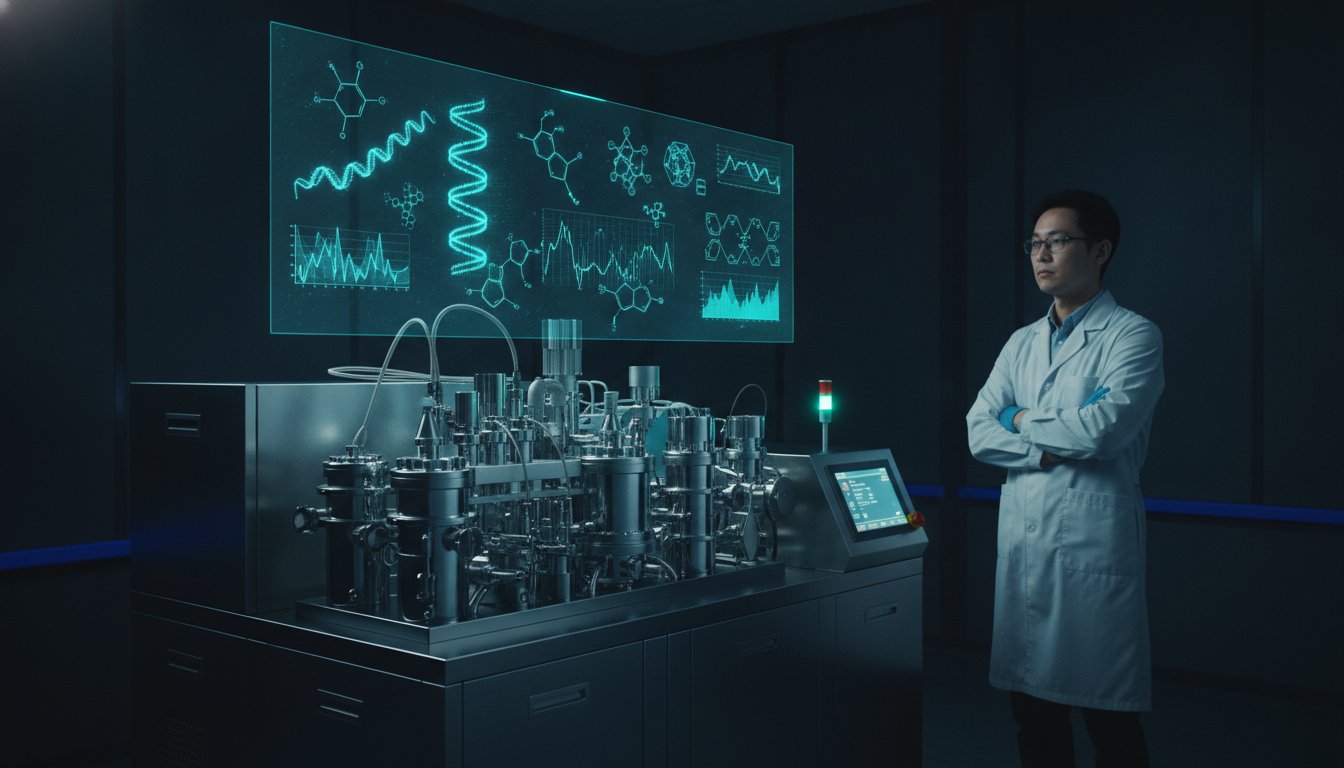
A verified peptide synthesis facility is characterized by its technical infrastructure rather than its digital storefront. In a market saturated with white-label resellers who simply relabel bulk imports, a verified facility maintains direct control over the chemical assembly process. This control starts with the procurement of high-purity protected amino acids and ends with in-house analytical verification. The distinction is critical for B2B buyers because a reseller cannot provide a primary audit trail or guarantee that the batch they ship matches the Certificate of Analysis (COA) they've provided.
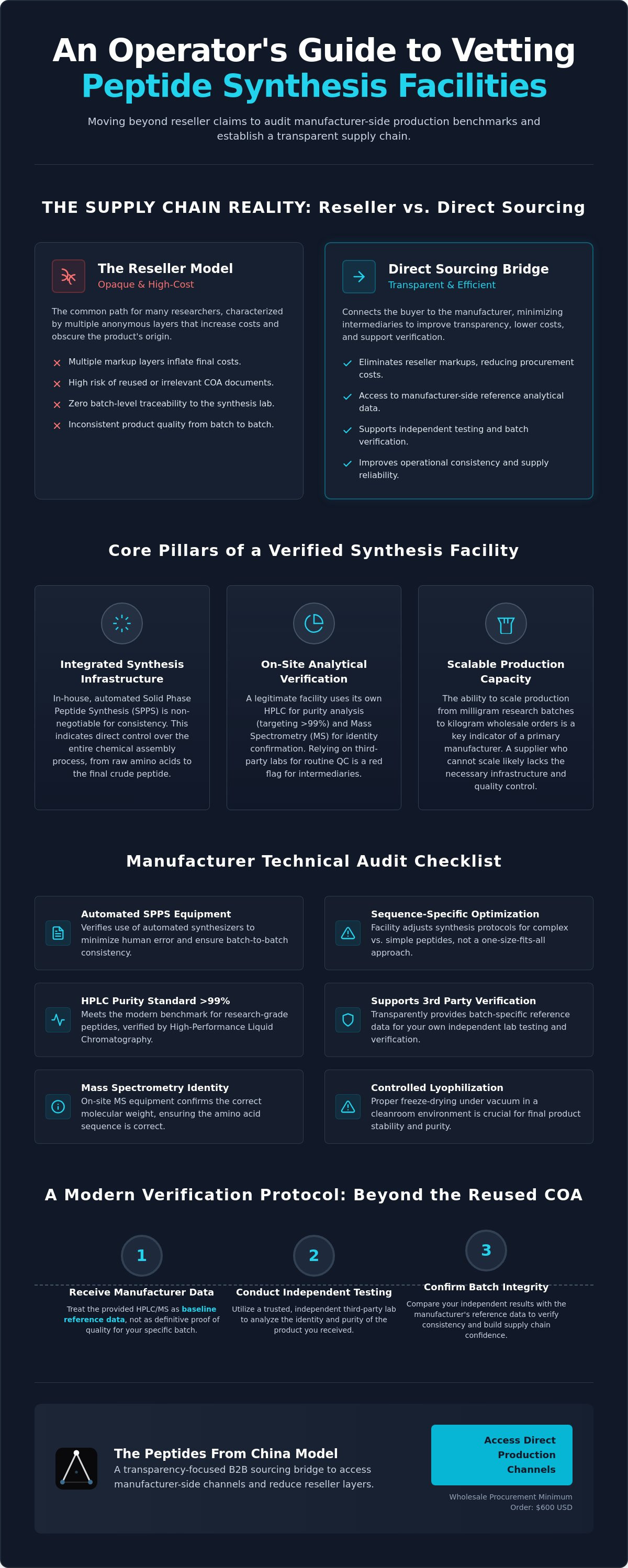
Verification in 2026 requires a facility to demonstrate integrated Solid Phase Peptide Synthesis (SPPS) capabilities coupled with on-site High-Performance Liquid Chromatography (HPLC) and Mass Spectrometry (MS). Relying on a third-party lab for every batch is often a sign of a smaller operation or a middleman. Professional-grade facilities utilize high-end instrumentation from industry leaders like CEM, Protein Technologies, and Agilent to maintain the precision required for complex sequences.
The Core Technology: Solid Phase Peptide Synthesis (SPPS)
The fundamental mechanism of modern peptide production relies on SPPS, a process where amino acids are added step-by-step to a solid resin support. For a comprehensive scientific breakdown, you can refer to this Peptide Synthesis Overview. In 2026, automated synthesis is no longer optional for those seeking batch-to-batch consistency. Manual synthesis introduces too many variables in coupling times and temperature control, leading to "deletion sequences" that compromise the final product.
A professional facility also manages its own solvent purification and reagent storage. The quality of the final peptide is heavily dependent on the purity of the solvents used during the washing phases. If a facility cuts costs on dimethylformamide (DMF) or fails to manage moisture levels in their reagents, the resulting peptide will contain impurities that are difficult to remove even during the purification stage.
Analytical Instrumentation Requirements
Identity and purity are the two pillars of verification. HPLC is used to determine the purity level by separating the target peptide from any shorter sequences or side products. While the industry standard was once 98%, the benchmark for a verified peptide synthesis facility in 2026 has shifted toward 99% purity for research-grade compounds. Mass Spectrometry is equally vital, as it confirms the molecular weight and ensures the sequence was assembled correctly. Without on-site MS equipment, a lab is essentially flying blind during the synthesis process, unable to verify the identity of their intermediate products before moving to the final lyophilization stage.
Technical Benchmarks for Auditing a Synthesis Lab
Operational excellence also depends on sequence-specific optimization. Professional labs don't treat BPC-157 the same way they treat complex sequences like Tirzepatide or IGF-1 LR3. Each peptide requires specific coupling times, temperature adjustments, and purification strategies. While internal QC is a baseline requirement, a transparent facility supports independent third-party verification. They should provide reference analytical data that allows your own lab to confirm the batch identity without ambiguity.
Lyophilization and Stability Protocols
The transition from a liquid crude product to a stable, lyophilized powder is where many facilities compromise quality. Lyophilization, or freeze-drying, must occur under precise vacuum levels and temperature controls to ensure long-term stability. Poorly processed peptides often result in a "collapsed cake" or a sticky, discolored residue rather than a uniform, white crystalline powder. These visual red flags often indicate residual moisture or solvent, which can lead to rapid degradation. Ensuring your supplier adheres to strict environmental controls during this stage helps reduce supply chain uncertainty.
Documentation and Traceability
A Certificate of Analysis (COA) is only a snapshot. A legitimate audit trail includes batch records that track the raw amino acids and protecting groups used during synthesis. You should be able to request facility-specific synthesis logs for large-scale orders to verify that the product wasn't simply sourced from a secondary market. This level of traceability is why professional buyers prefer to access manufacturer-side channels rather than relying on domestic resellers who cannot provide primary documentation. For wholesale procurement, having access to these raw logs improves traceability and supports independent verification protocols.
Beyond the COA: Navigating Supply Chain Uncertainty
A Certificate of Analysis (COA) is often treated as the final word on quality, but in the B2B peptide market, it's merely a baseline reference. The industry is currently plagued by the "Reused COA" problem, where a single HPLC report is circulated among dozens of resellers to represent entirely different batches. This lack of batch-specific data creates significant supply chain uncertainty. When you aren't sourcing directly from a verified peptide synthesis facility, you're essentially trusting a PDF that may have been generated months or years before the product was actually synthesized. A document is not a physical guarantee; it's a snapshot of a single moment in a laboratory that may or may not be the one that produced your vial.
Batch substitution is another risk inherent in the multi-layer reseller model. Domestic suppliers often "batch-hop," switching between various manufacturers to secure the lowest price point. This practice inevitably leads to variable synthesis quality and inconsistent research results. The only way to mitigate this risk is to move closer to the source. Positioning Peptides From China (PFC) as your sourcing bridge helps reduce these specific uncertainties by providing a more direct path to the production floor and removing the incentive for resellers to obscure batch origins.
Common Industry Pitfalls and Relabeling
Resellers frequently obscure the identity of the original synthesis facility to protect their markups and prevent buyers from bypassing them. This relabeling process severs the chain of custody, making it nearly impossible to trace a batch back to its raw material logs. Because of these systemic flaws, independent peptide testing remains the buyer’s ultimate responsibility. No single document, regardless of how official it appears, can substitute for a blind test conducted by an independent laboratory. Relying on a supplier's own internal data without external validation is a fundamental procurement error.
Improving Traceability in Direct Sourcing
Reducing the number of intermediaries between the laboratory and your research site is the most effective way to maintain a consistent chain of custody. When you access a verified peptide synthesis facility through a transparency-focused bridge like PFC, you eliminate the "black box" of reseller inventory. This manufacturer-side approach improves traceability by ensuring that the batch records and analytical data correspond to the specific lot you receive. It's about creating a shorter, more transparent path that prioritizes data integrity over marketing claims.
For professional buyers, this model also offers better logistical security. Using neutral, tracked international shipping ensures that your research compounds aren't sitting in a reseller's unmonitored warehouse for weeks. By establishing a $600 minimum for wholesale procurement, PFC facilitates a realistic B2B relationship that prioritizes operational consistency over the low-volume, high-markup retail model. This structure supports those who require reliable, large-scale access to compounds like BPC-157 or Tirzepatide without the unnecessary noise of domestic middleman interference.
Operational Protocols for Wholesale Peptide Procurement
Transitioning from retail-style purchasing to a structured B2B workflow is necessary when dealing with a verified peptide synthesis facility. The process begins with a formal inquiry to verify the manufacturer's current production capacity for specific sequences. Unlike resellers who maintain static inventory in domestic warehouses, a primary facility operates on synthesis cycles. This means "available" often refers to the current production queue rather than a shelf of pre-labeled vials. Confirming real-time stock status helps reduce supply chain uncertainty before any capital is committed.
For PFC requests, The $10 deposit initiates manual request processing and real-time stock verification and is credited toward the final invoice. Manufacturer-side analytical documentation may be available depending on the product and batch. Shipping details are confirmed during order processing.
Managing Large-Scale Order Requirements
Peptides From China (PFC) maintains a minimum order amount of $600 for all wholesale procurement. The $600 minimum is an operational minimum for orders placed through the PFC sourcing platform and may include multiple catalog products. Structuring your orders to meet or exceed this minimum allows for a more streamlined relationship with the facility. The economic logic of wholesale peptides is clear: by committing to larger volumes, researchers can significantly lower their per-milligram costs while ensuring they receive product from a consistent synthesis lot.
Verification of Batch Purity
Manufacturer-side analytical documentation may be available depending on the product and batch; when available, review it as a baseline reference. For complex sequences such as the TB-500 peptide, requesting Mass Spectrometry data is essential to confirm the molecular weight and sequence identity. However, remember that manufacturer-issued papers are baseline reference material. Establishing a routine for independent laboratory analysis of incoming shipments is the only way to support independent verification. This "trust but verify" model is the standard for professional laboratories and high-level technical readers who cannot afford to rely on unverified documentation.
If you're ready to establish a manufacturer-side supply chain and reduce reseller interference, you can explore our manufacturer-side sourcing channels to begin your procurement process.
The Peptides From China Model: A B2B Sourcing Bridge
Peptides From China (PFC) operates as a transparency-focused B2B sourcing bridge rather than a pharmaceutical manufacturer or a testing laboratory. In an industry where domestic resellers often inflate costs by 500% or more, PFC functions as a strategic filter that connects professional buyers directly with a verified peptide synthesis facility. By removing the layers of intermediaries who provide little more than a relabeled vial, this model helps reduce supply chain uncertainty and provides a clearer path to the production floor. The goal is to provide researchers with the same manufacturer-side access typically reserved for large-scale industrial buyers.
Products are subject to the manufacturer’s applicable quality-control procedures and specifications. Manufacturer-side analytical documentation may be available depending on the product and batch. PeptidesFromChina is not an independent analytical testing laboratory. Buyers requiring independent verification may arrange third-party analytical testing.
Direct-to-Manufacturer Access
The traditional conflict between choosing a peptide sourcing agent vs platform often leaves buyers caught between high markups and a total lack of accountability. PFC bypasses this friction by routing orders through manufacturer-side sourcing channels. This direct access is essential for maintaining a consistent supply of high-demand compounds like BPC-157 and Semaglutide. When your order is placed within a primary synthesis cycle rather than pulled from a reseller's aging inventory, you improve traceability and ensure the product hasn't been subject to improper long-term storage.
Commitment to Operational Transparency
The $10 deposit initiates manual request processing and real-time stock verification and is credited toward the final invoice. Our pricing structures are designed to reflect actual peptide production costs rather than the arbitrary premiums found in the retail market.
PeptidesFromChina currently has a $600 total minimum order. Multiple catalog products can be combined to reach the minimum, with orders starting from one 10-vial kit per product. This is an operational ordering minimum and may include multiple catalog products.
Establishing Your Direct Sourcing Infrastructure
Securing a reliable supply chain requires shifting your focus from reseller convenience to manufacturing transparency. A legitimate verified peptide synthesis facility is defined by its technical instrumentation and the raw data it produces, not by the marketing claims of a domestic middleman. You've learned that auditing a lab involves evaluating its synthesis scale and environmental controls, while acknowledging that manufacturer-issued COAs are merely baseline reference material. Independent laboratory verification remains the only definitive way to support product identity and purity in a market often obscured by relabeling and batch substitution.
Access Verified Peptide Sourcing for Your Lab today and begin building a more transparent procurement framework.
Frequently Asked Questions
How can I tell if a peptide synthesis facility is actually a manufacturer or just a reseller?
Manufacturers can provide raw synthesis logs and specific technical details about their Solid Phase Peptide Synthesis (SPPS) equipment. Resellers usually can't answer deep technical questions about coupling times or reagent purity because they don't control the production floor. If a supplier lacks the infrastructure to scale to kilogram quantities or provide reference analytical data for intermediate steps, they're likely a middleman.
What technical documents should I expect from a verified facility for a bulk order?
You should receive a batch-specific Certificate of Analysis (COA) that includes both HPLC and Mass Spectrometry (MS) data. A verified peptide synthesis facility will also be able to provide raw data files rather than just a PDF summary. For larger wholesale orders, you can often request the specific synthesis logs that track the amino acid lots used during the chemical assembly.
Why is independent testing necessary if the lab provides an HPLC report?
Industry documentation serves only as baseline reference material because of the widespread "reused COA" problem. A manufacturer's report confirms what they believe they produced, but it doesn't protect you from batch substitution or errors in the labeling process. Third-party analysis is the only definitive way to verify product identity and purity before your research begins.
What are the risks of sourcing peptides from facilities without integrated MS analysis?
Facilities without on-site Mass Spectrometry are unable to confirm the molecular weight and sequence identity of their products in real-time. This increases the risk of receiving "deletion sequences" where an amino acid was missed during the synthesis process. Without MS, a high HPLC purity reading is meaningless because it doesn't prove that the substance in the vial is the correct compound.
How does a $600 minimum order benefit the procurement process for research labs?
A $600 minimum helps reduce supply chain uncertainty by ensuring that orders are large enough to be part of a primary synthesis cycle. This volume allows the verified peptide synthesis facility to justify the overhead of batch-specific analytical verification and specialized logistics. It shifts the relationship from a high-markup retail transaction to a professional B2B procurement model that prioritizes operational consistency.
Is it possible to verify the physical location of a synthesis facility in China?
Verification is typically done through business registration audits and checking the facility's export history. While you can't always visit the lab in person, you can interrogate their international shipping logs and customs documentation. Legitimate manufacturers will have a consistent paper trail showing large-scale exports to established laboratories and sourcing bridges rather than just small retail parcels.
What role does lyophilization play in the quality of a verified peptide batch?
Lyophilization is the critical freeze-drying step that converts a liquid peptide into a stable, shippable powder. If the vacuum levels or temperatures aren't precisely controlled, the peptide can degrade or retain residual moisture, leading to a "collapsed cake" in the vial. Proper lyophilization ensures long-term stability and is a hallmark of a professional manufacturing process managed by a technical team.
How do I handle discrepancies between manufacturer data and independent test results?
When independent results don't match the reference analytical data, you must immediately halt the use of that batch and contact the supplier with your raw lab files. Verified facilities that value long-term B2B relationships will investigate the discrepancy against their internal retain samples. This is why maintaining a manufacturer-side channel is safer than dealing with a reseller who lacks technical recourse or chemistry expertise.