
The standard practice of relying on a single, often reused COA to verify batch quality is a failed operational model in 2026. Most professional buyers understand that the global market for peptide labs is currently defined by supply chain opacity and significant reseller markups that obscure true manufacturing origins. You've likely encountered inconsistent HPLC/MS reporting or batch substitutions that compromise research integrity. It's a systemic issue where documentation often serves as marketing collateral rather than technical proof.
This guide provides a technical framework to bypass these intermediaries and establish direct-to-manufacturer sourcing protocols. You'll learn how to implement realistic verification steps, reduce procurement costs for bulk orders, and interpret analytical data without the filter of a retail brand. We'll examine the shift toward a 99% purity baseline and the logistical realities of securing high-quality synthesis in a consolidated market. By prioritizing transparency over marketing hype, you can build a more resilient supply chain for critical research materials.
Key Takeaways
Distinguish between high-markup retail resellers and primary synthesis peptide labs to identify the true origin of your research materials.
Learn the technical stages of Solid-Phase Peptide Synthesis (SPPS) and how specific manufacturing procedures impact final batch consistency.
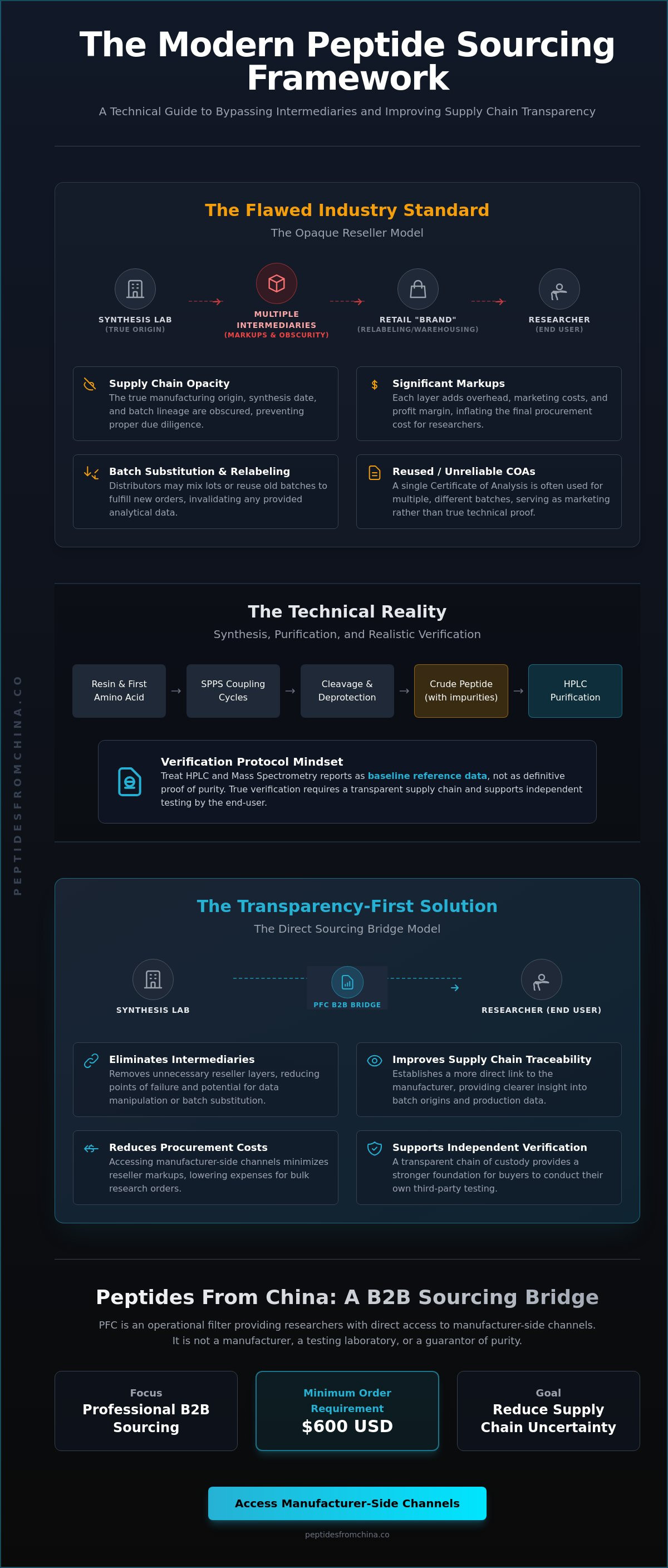
Establish a realistic verification protocol that treats HPLC and Mass Spectrometry reports as baseline reference data rather than definitive proof of purity.
PeptidesFromChina currently has a $600 total minimum order. Multiple catalog products can be combined to reach the minimum, with orders starting from one 10-vial kit per product.
Improve supply chain traceability and minimize the risks of relabeling or batch substitution by eliminating unnecessary middleman layers.
Table of Contents
The Landscape of Peptide Labs: Understanding the Global Supply Chain
Inside the Synthesis Process: How Professional Labs Produce Peptides
Quality Verification Protocols: Moving Beyond Baseline COAs
Procurement Logistics: Managing Large-Scale Research Orders
Manufacturer-Side Sourcing: The PFC B2B Bridge
The Landscape of Peptide Labs: Understanding the Global Supply Chain
The global market for research compounds is built on a complex network of primary synthesis facilities and secondary distributors. For procurement professionals, the primary challenge lies in identifying the actual origin of a batch. Most entities marketing themselves as peptide labs in the West are, in reality, retail distributors that purchase bulk powder from international manufacturers and relabel it for domestic sale. This layer of the supply chain introduces significant markups, often justified by "domestic shipping" speeds, while simultaneously obscuring the original manufacturer's quality control data. Supply chain opacity is a feature of this model, not a bug, as it prevents the buyer from verifying the age or specific origin of the material.
Retailers vs. Synthesis Facilities
Distinguishing between a brand and a primary manufacturer is essential for managing procurement costs. A primary synthesis facility operates large-scale reactors and employs chemical peptide synthesis methods to produce raw material. Conversely, retail distributors focus on branding, vial filling, and marketing. When you buy from a reseller, you're paying for their overhead and domestic warehousing. This structure often leads to batch substitution, where a distributor might mix lots from different synthesis runs to fulfill orders. This practice makes individual HPLC reports less reliable for the end-user, as the documentation may not match the specific vial received. Large-scale research requires a direct link to the synthesis facility to ensure that the analytical data provided is actually representative of the batch in hand.
The Role of the Sourcing Bridge
Because the majority of high-volume synthesis occurs in specialized hubs in China, Western researchers often face a transparency gap when dealing with international peptide labs. Peptides From China (PFC) functions as a B2B sourcing bridge designed to close this gap. It's not a manufacturer or a testing laboratory; it's an operational filter that provides direct access to manufacturer-side channels. By eliminating multiple reseller layers, this model helps reduce supply chain uncertainty and improves traceability for bulk orders. This transparency-first approach acknowledges that no single document is a guarantee, but reducing intermediaries significantly lowers the risk of relabeling or data manipulation. For researchers requiring consistency, accessing the source directly through a bridge is a more realistic strategy than relying on the "domestic warehouse" model. Operational efficiency is maintained through a $600 minimum order requirement, which ensures the procurement process remains focused on professional, large-scale research needs rather than retail-level transactions. This focus on manufacturer-direct logistics supports independent verification and long-term supply chain stability.
Inside the Synthesis Process: How Professional Labs Produce Peptides
Professional peptide labs utilize Solid-Phase Peptide Synthesis (SPPS) as the operational baseline for producing research-grade compounds. The process begins with the attachment of the first amino acid to an insoluble polymeric resin. Sequential coupling and deprotection cycles follow, building the peptide chain one residue at a time. Once the sequence is complete, the crude peptide is cleaved from the resin and side-chain protecting groups are removed. This crude material contains various synthesis byproducts, including truncated sequences and deleted residues, which must be systematically removed to reach research-grade purity levels. The efficiency of these coupling steps determines the initial quality of the crude material before it ever reaches the purification stage.
Purification and Filtration Standards
Preparative High-Performance Liquid Chromatography (HPLC) is the primary tool for isolating the target peptide from impurities. During this phase, the crude mixture is passed through a column under high pressure, separating components based on their chemical properties. Solvents like trifluoroacetic acid (TFA) are often used as mobile phase modifiers. If TFA isn't properly removed or exchanged for a different salt, such as acetate, it can impact the final purity and the behavior of the peptide in specific research settings. High-tier peptide labs will often perform multiple rounds of purification to ensure the final product meets the required specifications. Lyophilization is the critical step for ensuring long-term stability and shelf life by removing moisture through sublimation under vacuum.
Synthesis Variation by Compound
Synthesis protocols vary significantly based on the length and hydrophobicity of the compound. Short sequences like BPC-157 or TB-500 are relatively straightforward to synthesize with high yields. In contrast, long-chain GLP-1 analogs such as Tirzepatide or Semaglutide present unique challenges due to their length and the presence of fatty acid side chains. These complex structures often require specialized coupling reagents and longer reaction times to prevent aggregation on the resin. If these steps aren't managed correctly, the resulting batch may contain "deletion sequences" that are difficult to remove even with advanced HPLC.
As the scale of synthesis increases from milligrams to kilograms, maintaining batch consistency becomes an operational hurdle. Larger batches require precise temperature control and agitation to ensure uniform reaction kinetics across the entire resin bed. If you're managing large-scale procurement, understanding these manufacturing nuances helps in evaluating direct-to-manufacturer sourcing options that prioritize batch-specific transparency. Ultimately, the goal is to reduce the variability inherent in large-scale synthesis through rigorous process control and clear analytical reporting. Consistency isn't a byproduct of branding; it's the result of methodical laboratory execution and direct supply chain oversight.
Quality Verification Protocols: Moving Beyond Baseline COAs
In the current market, a Certificate of Analysis (COA) is frequently used as a marketing tool rather than a technical safeguard. Many peptide labs provide HPLC reports that are either outdated, reused across multiple batches, or entirely fabricated. This "paper purity" creates a false sense of security for procurement officers and researchers. A legitimate COA should be viewed strictly as baseline technical reference material. It doesn't replace the need for independent verification; it merely provides the manufacturer's internal claim. If a vendor can't provide batch-specific documentation that includes chromatograms and mass spectrometry data, it's a primary indicator of supply chain opacity and potential batch substitution.
Reading HPLC and MS Reports
High-Performance Liquid Chromatography (HPLC) reports are often misunderstood by those outside the laboratory. You should look for the main peak's area relative to the total integration; this is how purity is calculated. A single sharp peak at a specific retention time suggests a clean sample, while multiple smaller peaks indicate the presence of synthesis byproducts or degradation. Mass Spectrometry (MS) is equally vital, as it confirms the identity of the compound by measuring its molecular weight. If the observed mass doesn't match the theoretical mass of the peptide sequence, the substance isn't what the label claims. Documentation issued by peptide labs at the point of synthesis is a starting point, but it remains a self-reported metric that requires external validation in high-stakes research environments.
Independent Verification Strategies
Establishing a realistic verification protocol involves moving toward blind batch testing. This process requires sending a sample to a third-party laboratory without disclosing the expected identity or the manufacturer's claims. This helps reduce supply chain uncertainty by providing an unbiased assessment of purity and identity. Researchers should also maintain a library of reference analytical data to establish internal standards for recurring orders. Traceability is improved when you can match batch numbers on the vials directly to synthesis logs and independent test results. While no single document fully guarantees product identity, these sequential steps minimize the risks of relabeling. By implementing these protocols, B2B buyers can navigate the complexities of international sourcing with a transparency-first mindset that prioritizes data over brand promises.
Procurement Logistics: Managing Large-Scale Research Orders
Procurement for professional research isn't about convenience; it's about managing a predictable supply chain. Most retail platforms cater to small-scale users with high markups, but professional peptide labs require a different operational approach. When moving from single vials to bulk synthesis, the primary objective is to reduce the "middleman tax" that often accounts for the majority of retail pricing. By sourcing directly from manufacturer-side channels, buyers can allocate more of their budget toward independent verification and higher-volume research. This shift requires a move away from the "buy-it-now" retail mentality toward a structured procurement strategy.
Wholesale vs. Retail Sourcing
The ROI of direct sourcing becomes clear when you analyze the cost per milligram. Retailers often mask these costs behind domestic shipping fees and brand positioning. PeptidesFromChina currently has a $600 total minimum order. Multiple catalog products can be combined to reach the minimum, with orders starting from one 10-vial kit per product. This threshold ensures that the logistical costs of international synthesis and secure transit are amortized across a sufficient quantity of material. Understanding The Economic Logic of Bulk Peptide Sourcing is essential for labs looking to move away from the high-cost, low-traceability retail model. This approach moves procurement from a series of disjointed transactions to a structured, repeatable business process that supports long-term research goals.
Shipping and Tracking Protocols
Managing the transit of research compounds from China to global laboratories requires a methodical approach to logistics. The use of neutral, discreet packaging is a standard industry practice to facilitate smooth customs clearance. It's not about evasion; it's about minimizing unnecessary scrutiny that results from flashy retail branding and pharmaceutical-style labeling. Tracking data serves as more than just a delivery estimate. It provides critical supply chain visibility, allowing procurement teams to monitor the movement of their assets in real-time. Direct manufacturer channels typically provide more granular data than resellers, who may use third-party drop-shipping services that obscure the original shipping date or location.
Efficient procurement requires a partner that understands these logistical hurdles and provides the necessary transparency to manage them. If you're ready to transition to a more transparent supply model, you can access our B2B sourcing bridge to streamline your international logistics. By prioritizing direct-to-manufacturer channels, you help reduce supply chain uncertainty and ensure that your resources are focused on verifiable data rather than distribution markups. This methodical approach to logistics is what separates professional peptide labs from casual retail buyers.
Manufacturer-Side Sourcing: The PFC B2B Bridge
The traditional procurement model for research compounds is built on a series of hidden handoffs between peptide labs and retail distributors. Each layer adds a significant markup while simultaneously diluting the traceability of the original synthesis batch. PFC coordinates sourcing from established Chinese manufacturing facilities together with international logistics. By facilitating a direct connection to manufacturer-side channels, we help professional buyers access the same synthesis facilities used by major brands, but without the domestic warehouse premiums. This model prioritizes factual integrity over marketing flair, providing a realistic pathway for labs to secure high-volume materials with improved supply chain visibility.
The PFC Sourcing Model
PFC coordinates manufacturer-side sourcing and international logistics. Products are subject to the manufacturer’s applicable quality-control procedures and product-specific specifications. Manufacturer-side analytical documentation may be available depending on the product and batch, but PFC is not an independent analytical testing laboratory and does not guarantee a universal documentation package. Buyers requiring independent verification may arrange third-party analytical testing.
Getting Started with Professional Sourcing
Transitioning to a direct-to-manufacturer model requires a shift toward professional procurement standards. The process begins with a $10 processing deposit, which serves as a commitment of intent and initiates the batch verification process. This small fee allows us to allocate the technical resources necessary to pull current manufacturer-issued papers and reference analytical data for your specific request. Once the technical review is complete and the batch is approved, orders are processed with a $600 minimum requirement. This threshold is a baseline for wholesale procurement, ensuring that the logistics of secure international transit remain cost-effective for your lab.
Managing batch approvals involves a methodical review of HPLC and Mass Spectrometry reports provided by the facility. While these manufacturer-issued papers are treated as baseline reference material rather than absolute proof, they provide the necessary data points for your own independent verification. If your research requires a resilient and transparent supply chain that avoids the pitfalls of the middleman market, you can request a manufacturer-direct quote for your lab. Moving away from retail markups allows you to reinvest your procurement budget into more rigorous testing and larger-scale studies, ensuring that your data is grounded in technical reality rather than marketing promises.
Establishing Long-Term Supply Chain Stability
Transitioning from retail-focused sourcing to a manufacturer-direct model is an operational necessity for researchers in 2026. By bypassing traditional distributors, you eliminate unnecessary price layers and gain closer proximity to the original synthesis data. It's critical to remember that while peptide labs provide HPLC and MS reports, these documents are merely reference points. True research integrity depends on your ability to implement independent verification protocols and maintain batch-specific traceability. Relying on "domestic warehouse" speed often comes at the cost of supply chain transparency and batch consistency.
Taking control of your procurement logistics helps reduce supply chain uncertainty and ensures your resources are directed toward data rather than distribution markups. You can Access Direct-to-Manufacturer Peptide Sourcing to secure direct-to-manufacturer pricing, COA-verified batches, and neutral international shipping with full tracking. This methodical approach to sourcing allows you to build a resilient supply chain grounded in technical reality. We look forward to supporting your large-scale research objectives through a transparency-first procurement framework.
Frequently Asked Questions
What is the difference between a peptide reseller and a synthesis lab?
A peptide reseller is a retail entity that purchases bulk powder from third parties to relabel and sell under a private brand, whereas a synthesis lab is the primary facility where the chemical assembly of the peptide occurs. Resellers typically focus on marketing and "domestic warehouse" speed, which results in higher markups. Synthesis facilities manage the actual Solid-Phase Peptide Synthesis (SPPS) and provide the initial analytical data for each batch.
How can I verify the purity of peptides from a Chinese lab?
Independent third-party testing is the only reliable method to verify the purity of peptides from international sources. While manufacturer documentation provides a baseline reference, you should send random samples to an accredited laboratory for blind testing. This practice helps reduce supply chain uncertainty and confirms the identity of the batch before you proceed with large-scale research.
Why is there a $600 minimum order for wholesale peptide sourcing?
The $600 minimum order requirement ensures that the high costs of international logistics and secure customs transit are economically viable for the buyer. Wholesale procurement is designed for professional researchers who need to amortize these shipping fees across bulk quantities. This threshold helps maintain the efficiency and stability of a direct-to-manufacturer supply chain.
Are HPLC reports provided by manufacturers 100% reliable?
HPLC reports are self-reported documents and should never be considered 100% reliable guarantees of quality. In the industry, "paper purity" can be manipulated, or reports can be reused across different synthesis runs. These reports should be used strictly as reference analytical data that must be validated by your own independent laboratory testing protocols.
What should I look for in a reputable peptide sourcing platform?
A reputable sourcing platform should prioritize transparency and direct access to peptide labs over retail branding. Look for a partner that acts as a B2B bridge, providing manufacturer-side documentation and batch traceability. You should avoid platforms that rely on domestic warehousing or hide their manufacturing origins behind pharmaceutical-style marketing tactics.
How does neutral packaging affect international shipping success?
Neutral packaging significantly improves international shipping success by minimizing unnecessary scrutiny during customs transit. Discreet labeling avoids the high-risk profiles often associated with retail pharmaceutical branding. This methodical approach to logistics is a standard operational requirement for professional B2B procurement from international synthesis facilities.
Can I request custom synthesis for specific research peptides?
Professional peptide labs can provide custom synthesis for specific sequences that aren't available in standard catalogs. This process involves a technical review of the sequence to determine the complexity of the synthesis and the required purification steps. Custom orders typically follow the same wholesale procurement and verification protocols as standard research compounds.
What is the role of a $10 processing deposit in the sourcing process?
The $10 processing deposit is a commitment of intent that initiates the technical verification and batch review process. This deposit allows the sourcing bridge to pull current manufacturer-issued papers and confirm batch availability for your specific request. It ensures that the procurement process remains focused on professional, high-volume research needs rather than retail inquiries.