
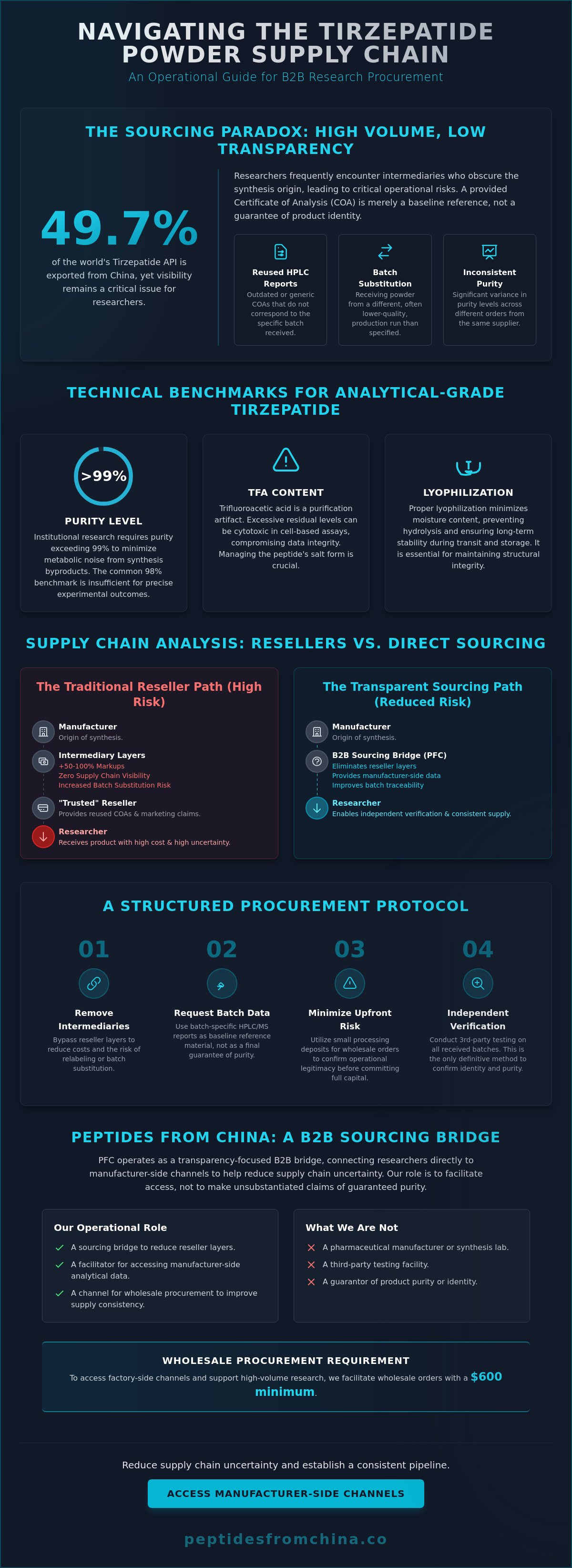
China currently exports 49.7% of the world's Tirzepatide API, yet most research institutions still pay significant markups to secondary resellers who offer zero visibility into the actual synthesis site. Relying on "trusted" brands often leads to the same industry pitfalls: reused HPLC reports, batch substitution, and inconsistent purity across different production runs. You've likely realized that a PDF certificate is just a baseline reference, not a guarantee of what's actually inside the vial of tirzepatide powder.
We understand the skepticism surrounding the international peptide market, especially as the 2024 resolution of the tirzepatide shortage has shifted the 2026 landscape toward a strictly Research Use Only (RUO) focus. This guide provides an operational roadmap to help you navigate manufacturer-side channels while minimizing supply chain uncertainty. You'll learn how to remove unnecessary intermediary layers, verify analytical data through independent testing, and establish a consistent pipeline through wholesale procurement channels that require a $600 minimum. We're moving beyond marketing hype to focus on technical precision and verifiable supply chain transparency.
Key Takeaways
Identify the technical benchmarks for analytical-grade tirzepatide powder, including the significance of purity levels exceeding 99% and the management of TFA content.
Navigate the "reseller layer" to eliminate unnecessary intermediaries, helping to reduce procurement costs and the risk of batch substitution.
Implement a structured procurement protocol that utilizes small processing deposits and batch-specific HPLC/MS reports as baseline reference data.
Establish a direct-to-manufacturer pipeline through a transparency-focused bridge to access factory-side channels for consistent institutional supply.
Understand the $600 minimum order requirement for wholesale procurement designed to support high-volume research and laboratory operations.
Table of Contents
The 2026 Tirzepatide Powder Market: Sourcing Realities for Research
Technical Specifications and Synthesis Standards for Tirzepatide
Resellers vs. Direct Manufacturing: Analyzing the Supply Chain
Professional Procurement Protocols: Verification Steps
Peptides From China: A B2B Bridge for Tirzepatide Sourcing
The 2026 Tirzepatide Powder Market: Sourcing Realities for Research
Tirzepatide acts as a dual glucose-dependent insulinotropic polypeptide (GIP) and glucagon-like peptide-1 (GLP-1) receptor agonist. In the 2026 research environment, procurement has moved away from the fragmented retail vial market toward high-volume lyophilized powder. This shift is largely driven by the need for better control over experimental variables and the resolution of the 2024 tirzepatide shortage, which effectively ended broad access to compounded versions for therapeutic use. When sourcing tirzepatide powder, institutions are no longer satisfied with the opaque "trusted source" model; they require direct visibility into the manufacturing origin to mitigate risks like batch substitution and relabeling.
The 2026 market is characterized by a bifurcation between branded pharmaceuticals and the Research Use Only (RUO) sector. For B2B buyers, this creates a significant verification burden. You aren't just buying a chemical; you're managing the risk of reused HPLC reports and variable synthesis quality. Direct manufacturer access has become the standard for institutional procurement because it helps reduce supply chain uncertainty and provides a clearer path to batch traceability.
Understanding the Dual-Agonist Mechanism in Research
According to this Tirzepatide technical overview, the peptide's ability to activate two distinct metabolic pathways makes it a focal point for metabolic and glycemic research. For researchers, the challenge isn't just the molecule's identity but its stability. Lyophilized powder is the preferred format because it maintains structural integrity during international transit far better than pre-constituted solutions. Batch consistency is paramount. A minor variance in purity or a shift in the TFA (trifluoroacetic acid) profile between orders can compromise months of longitudinal data. Establishing a reliable pipeline for consistent tirzepatide powder batches is the only way to ensure that experimental results remain reproducible.
The Economic Shift Toward Bulk Sourcing
The traditional peptide market relies on a multi-layered reseller structure that often adds 50% to 100% in markups without adding technical value. These intermediaries frequently claim "domestic stock" or "proprietary testing," yet they rarely provide evidence of their actual synthesis sites. This lack of peptides production transparency leads to inflated costs and obscured traceability. Professional procurement protocols in 2026 prioritize factory-direct routing. This model supports independent verification by connecting the laboratory directly to the manufacturer's output. For institutions using Peptides From China (PFC) as a B2B bridge, this involves moving beyond single-vial purchases to wholesale procurement. PFC facilitates these channels for orders meeting a $600 minimum, ensuring that researchers access manufacturer-side reference analytical data rather than second-hand marketing claims.
Technical Specifications and Synthesis Standards for Tirzepatide
Analytical-grade tirzepatide powder requires a purity threshold typically exceeding 99% to ensure experimental accuracy. While retail-focused sellers often settle for a 98% benchmark, institutional research demands higher precision to avoid metabolic noise caused by synthesis byproducts. A critical technical detail often overlooked is the Trifluoroacetic acid (TFA) content. TFA is a standard counter-ion used during the purification process; however, excessive residual levels can be cytotoxic in specific cell-based assays. Understanding the salt form of the peptide is as important as the purity percentage itself.
Lyophilization protocols are equally vital for maintaining the structural integrity of the peptide. This process involves freezing the product and removing moisture through sublimation under a vacuum. Proper lyophilization ensures that the moisture content is minimized, which is essential for long-term storage stability. If the moisture level is too high, the peptide can undergo hydrolysis, leading to rapid degradation. While clinical data and Tirzepatide professional use guidelines provide a framework for the drug's therapeutic profile, research-grade sourcing requires a separate, rigorous focus on these raw material specifications.
Analyzing HPLC and Mass Spectrometry Data
Manufacturer-issued HPLC reports should be viewed as reference analytical data rather than definitive proof of quality. In the wholesale market, the prevalence of "reused" reports is a significant risk. You should scrutinize documentation for red flags like generic headers, inconsistent timestamps, or blurred spectral lines that suggest digital manipulation. A legitimate Mass Spectrometry (MS) report must correlate the mass-to-charge ratios with the theoretical molecular weight of Tirzepatide. If the peaks appear suspiciously clean or the metadata is missing, the document may not represent the actual batch being shipped. For those looking to establish a reliable pipeline, accessing manufacturer-side channels through a transparency-focused bridge helps mitigate these documentation risks.
Synthesis-Related Impurities and Batch Variance
Large-scale production of a complex 39-amino acid sequence like Tirzepatide often leaves byproduct residues, such as deletion sequences or incomplete deprotection products. These impurities are chemically similar to the target peptide, making them difficult to filter out during standard HPLC purification. Even verified facilities can produce variable batch outcomes due to slight fluctuations in temperature or reagent quality during synthesis. This reality makes independent peptide testing by a third-party laboratory a non-negotiable step for institutional buyers. Relying solely on manufacturer papers without independent verification leaves the research vulnerable to batch-to-batch inconsistency. When procuring tirzepatide powder for high-volume studies, institutions should factor the cost of independent laboratory verification into their procurement budget to ensure data integrity.
Resellers vs. Direct Manufacturing: Analyzing the Supply Chain
Procuring tirzepatide powder through a chain of domestic resellers often creates a "black box" supply chain where batch traceability is the first casualty. While the FDA approval of tirzepatide has solidified its clinical profile, the Research Use Only (RUO) market remains saturated with intermediaries who obscure the actual synthesis origin. Each reseller layer adds a significant markup without contributing to the technical verification of the product. More critically, these layers increase the risk of batch substitution, a practice where a high-purity Certificate of Analysis (COA) from a previous production run is paired with current, lower-grade material to maintain sales velocity.
For research institutions, the financial logic of direct sourcing becomes undeniable once procurement exceeds the $600 minimum threshold. By moving closer to the manufacturer, you reduce the likelihood of receiving relabeled or expired stock that has been circulating in reseller inventories. Direct access helps improve traceability by ensuring that the reference analytical data you receive actually corresponds to the specific batch being shipped. Removing the middleman isn't just about cost; it's about establishing a verifiable chain of custody that supports independent laboratory verification.
The Hidden Risks of Domestic Reselling
Domestic warehousing is frequently marketed as a convenience, yet it often leads to broken chains of custody. Peptides are inherently fragile molecules. Multiple transit legs between resellers, often involving improper climate control in regional hubs, can compromise the stability of tirzepatide powder before it even reaches your lab. This degradation is often invisible until the material fails to perform in a controlled study. Understanding the peptide sourcing agent vs platform dynamics is essential for procurement professionals who need to distinguish between a simple broker and a transparency-focused bridge to the factory.
Transparency-First Sourcing Models
A transparency-first model routes orders directly to the synthesis facility, bypassing the obfuscation of the retail market. This approach utilizes neutral packaging and direct tracking to improve operational security while maintaining a direct communication line with manufacturing-side channels. Positioning Peptides From China (PFC) as a B2B sourcing bridge allows researchers to access manufacturer-side data and factory-direct routing. This model doesn't promise "perfect" results but focuses on providing the transparency needed to perform your own due diligence. By facilitating a direct connection to the source, institutions can better manage batch-to-batch consistency and reduce the variables that typically plague international peptide procurement.
Professional Procurement Protocols: Verification Steps
Establishing a professional procurement protocol for tirzepatide powder requires moving beyond surface-level trust. The first step involves initiating the sourcing process with a small processing deposit. This isn't just a financial transaction; it's an operational test of the manufacturer's ability to provide batch-specific documentation before the full order is committed. You should mandate the delivery of current HPLC and Mass Spectrometry data that matches the specific production run. These documents serve as your reference analytical data, allowing you to cross-reference molecular weights and purity peaks before the material ever leaves the synthesis site.
Once the order arrives, the most critical step is independent third-party testing. For institutional researchers, relying on manufacturer papers is a risk that can compromise data integrity. We recommend a "blind sample" protocol. By sending the material to a laboratory without identifying the manufacturer or the expected purity, you ensure complete analytical neutrality. This helps reduce supply chain uncertainty by confirming that the product identity matches the initial synthesis reports. Independent verification is the only way to confirm that the batch you received hasn't been substituted with lower-grade material.
Setting Up a Batch Verification Pipeline
A reliable pipeline is built on repeatable steps rather than one-off luck. Follow this three-step framework to improve your sourcing consistency:
Step 1: Identify synthesis facilities with a documented history of consistent high-purity output. Avoid "pop-up" factories that lack long-term technical footprints or verifiable manufacturing standards.
Step 2: Cross-reference all manufacturer-issued papers with external databases or previous internal test results. Look for metadata inconsistencies or blurred timestamps that suggest document tampering or the reuse of old reports.
Step 3: Utilize professional sourcing bridges to navigate the inherent language and logistical barriers of the international market. A bridge helps you access manufacturer-side channels while maintaining a protective analytical filter for your institution.
Optimizing Bulk Orders for Laboratory Use
Professional sourcing requires a shift in scale. A $600 minimum order amount is the industry baseline for accessing wholesale manufacturer pricing and factory-direct routing. Orders below this threshold usually fall into the retail reseller category, where batch traceability is often non-existent and markups are significantly higher. Managing international logistics also requires attention to customs documentation and cold-chain integrity. While lyophilized tirzepatide powder is relatively stable at room temperature, extreme heat during global transit can still cause structural degradation. Requesting direct tracking and minimizing time spent in regional sorting hubs is essential for maintaining the peptide's efficacy. To begin establishing your own institutional supply chain, you can explore B2B sourcing options that prioritize transparency and direct manufacturer access over retail marketing claims.
Peptides From China: A B2B Bridge for Tirzepatide Sourcing
Peptides From China (PFC) functions as a transparency-focused bridge rather than a pharmaceutical manufacturer or an independent testing laboratory. We address the systemic opacity of the peptide market by facilitating direct manufacturer access for institutional researchers. By removing the traditional reseller layers discussed in earlier sections, we allow labs to secure tirzepatide powder through a factory-direct routing model. This approach eliminates the arbitrary markups typical of domestic catalog sellers and improves batch traceability from the synthesis site to the destination laboratory. We don't act as a guarantor of purity; instead, we act as a filter that helps you access the manufacturer's own technical output.
The sourcing process begins with a $10 processing deposit. This small fee isn't a purchase price but a commitment to the verification and traceability process. It initiates the retrieval of batch-specific reference analytical data directly from the manufacturer. This operational step ensures that we're coordinating with procurement professionals who prioritize factual documentation over marketing hype. It's a methodical way to verify that the synthesis run you're interested in has the corresponding HPLC and MS data ready for your review before you commit to a wholesale order.
Operational Transparency and Verification Support
PFC helps researchers reduce supply chain uncertainty by providing access to manufacturer-side channels that are usually closed to individual institutions. We provide the manufacturer-issued reports that serve as baseline technical reference material for your research. These COA-verified batches are intended to support your own independent verification protocols. By establishing a direct communication line with the synthesis facility, we help you maintain a more consistent supply of tirzepatide powder for longitudinal studies. This model prioritizes the delivery of raw analytical data, which allows your lab to perform the necessary due diligence required for professional-grade research.
Logistics and Wholesale Requirements
Our operations are structured for professional-scale research, which is why we maintain a $600 wholesale procurement requirement for all 2026 sourcing requests. This threshold ensures that the logistical complexities of international shipping and customs documentation are handled with the necessary attention to detail. Global shipping protocols prioritize operational security through neutral packaging and comprehensive international tracking, ensuring you can monitor the transit of your materials in real time. For professional labs ready to move away from retail-grade resellers, the next step is to initiate a sourcing request. This starts the process of identifying a verified synthesis run and securing the technical documentation needed to support your institutional research objectives.
Optimizing Your Institutional Procurement Strategy
Navigating the global market for tirzepatide powder requires a shift from passive trust to active verification. Successful research in 2026 depends on removing the reseller layers that obscure batch traceability and inflate costs without adding technical value. By establishing direct-to-manufacturer routing, your institution can better manage batch consistency and reduce the risks associated with substituted material or reused documentation. Remember that manufacturer-issued papers are baseline references; independent laboratory testing remains the only way to confirm product identity for your specific study.
Utilizing a transparency-focused bridge helps you access manufacturer-side channels while leveraging global B2B logistics expertise. This model ensures you receive COA-verified batches that serve as the foundation for your own internal testing protocols. Whether you're managing complex trials or high-volume assays, prioritizing supply chain transparency is the most effective way to minimize operational uncertainty. For professional labs ready to implement these protocols for orders exceeding $600, the next step is to initiate a formal verification request.
Request a Tirzepatide Manufacturing Verification and Quote
Building a reliable pipeline takes careful planning, but the improvements in data integrity and cost efficiency are well worth the effort.
Frequently Asked Questions
What is the standard purity for research-grade Tirzepatide powder?
Standard purity for analytical-grade material should exceed 99% to ensure experimental accuracy and data integrity. While retail sellers often provide material at 98% purity, institutional research requires these higher thresholds to avoid metabolic noise from synthesis byproducts. Achieving this level of precision is essential for reproducibility in longitudinal metabolic studies.
How can I verify the authenticity of a Tirzepatide HPLC report?
Verification requires a technical review of the spectral data to ensure it hasn't been digitally altered or reused from previous runs. You should look for clear timestamps and manufacturer-specific headers that match the current batch being shipped. Always treat these documents as reference analytical data rather than absolute proof of quality, as they are baseline benchmarks.
Why is direct manufacturer sourcing preferred over domestic resellers?
Direct manufacturer sourcing reduces the reseller layer that adds significant cost without adding technical value or verification. This model improves traceability by providing a direct line to the synthesis site and manufacturer-side channels. It also avoids the broken chain of custody often found in domestic warehousing, where improper storage can compromise peptide stability during multiple transit legs.
What are the risks of batch substitution in the peptide industry?
Batch substitution occurs when a seller pairs a high-purity COA with a different, lower-grade production run to maintain sales velocity. This practice is common among intermediaries who lack direct factory oversight and prioritize inventory turnover. It highlights the necessity for independent verification and a transparency-first sourcing approach that minimizes the number of hands touching the product.
How should Tirzepatide powder be stored for long-term research stability?
Lyophilized tirzepatide powder should be stored in a temperature-controlled environment, ideally at -20°C or -80°C for long-term stability. While powder is more stable than liquid during transit, moisture and heat can still cause structural degradation. Minimizing exposure to humidity is critical for maintaining the peptide's integrity and ensuring it doesn't undergo hydrolysis during storage.
What is the minimum order requirement for wholesale Tirzepatide procurement?
The minimum order requirement for wholesale tirzepatide powder procurement through Peptides From China is $600. This threshold is set to support the logistical and technical requirements of professional laboratories and research institutions. Orders below this amount typically fall into the retail market, where batch traceability is significantly reduced and markups are substantially higher.
Does Peptides From China provide independent laboratory testing?
Peptides From China does not provide independent laboratory testing because we are a sourcing bridge, not a testing facility. We facilitate access to the manufacturer's reference analytical data to help you initiate your own due diligence. We strongly recommend that all institutions perform their own blind sample testing upon receipt to ensure complete analytical neutrality.
How does the $10 sourcing deposit work for new research orders?
The $10 deposit is an operational commitment that initiates the retrieval of batch-specific documentation for your potential order. This fee covers the administrative effort of coordinating with manufacturer-side channels to secure current HPLC and MS reports for your review. It ensures that the sourcing process remains focused on technical verification and traceability from the very first step.