Peptide Vendor Qualification Criteria: A Researcher’s Guide

Peptide vendor qualification criteria are the structured standards and checkpoints used to evaluate whether a supplier can consistently deliver research-grade peptides with verified identity, documented purity, and traceable manufacturing. The formal industry term for this process is supplier qualification, and it applies equally to procurement teams sourcing bulk APIs and researchers placing smaller research-use-only (RUO) orders. A multi-step qualification process includes on-site audits, quality management system review, independent testing, and signed quality agreements. Skipping any of these steps introduces compounding risk across every downstream experiment or formulation that depends on the material.
1. Peptide vendor qualification criteria: analytical testing and documentation
The Certificate of Analysis (COA) is the first document to scrutinize in any peptide procurement vendor qualification process. A COA is only as reliable as the laboratory and methodology behind it, and ISO 17025 accreditation along with documented instrument qualification are the minimum credibility thresholds. High-resolution chromatograms submitted without lab identification or instrument details are insufficient for verification purposes.
A baseline COA for research-grade peptides must include:
HPLC purity result of 98% or higher, reported as a numeric value with chromatogram
Mass spectrometry identity confirmation with observed versus theoretical mass
Residual solvent analysis with numeric results, not pass/fail statements
Lot number that matches the specific batch being shipped
Issuing laboratory name and contact details traceable to a real domain
Purity gaps greater than 3% below stated values are major red flags that indicate either poor synthesis quality or document manipulation. A COA must be traceable to a specific batch and the issuing laboratory’s domain to prevent fraud. Generic “pass” statements or recycled COAs from prior lots are disqualifying findings.
Pro Tip: Request COAs from three or more recent batches of the same peptide before placing any order. Consistency across those documents is a stronger predictor of manufacturing control than any single batch result.

Evaluating multiple batch COAs for consistency better predicts reproducibility than inspecting a single batch alone. Wild purity swings across batches indicate opportunistic sourcing rather than controlled synthesis. For a detailed breakdown of how to authenticate chromatograms and spectral data, the peptide testing verification guide at PeptidesFromChina covers ISO 17025 and USP compliance in depth.
2. Regulatory compliance and quality management system review
Regulatory compliance verification is the second major gate in the peptide supplier audit criteria list. This step requires more than confirming that a vendor claims GMP status. Procurement teams must verify the scope and currency of any GMP certification, check regulatory inspection histories for warning letters or import alerts from agencies such as the FDA or EMA, and review third-party audit reports where available.
The quality management system (QMS) assessment covers:
Corrective and preventive action (CAPA) process documentation
Deviation handling procedures and closure timelines
Change control records for synthesis platform or raw material substitutions
Batch release criteria and reject rate data
Poor CAPA documentation and superficial deviation analysis are reliable signals of systemic quality problems, not isolated incidents. A vendor that cannot produce a coherent deviation report for a failed batch has no reliable mechanism for preventing recurrence. On-site audits provide the most thorough verification, but recognized third-party audit reports and risk-based review strategies are acceptable supplements when travel resources are limited.
Financial viability also belongs in this section. A manufacturer operating under significant financial stress is more likely to substitute raw materials, reduce testing frequency, or cut lyophilization cycles to manage costs. Requesting audited financial statements or trade references is standard practice in pharmaceutical API procurement and applies equally to research peptide sourcing.
3. Operational and logistical evaluation criteria
Peptide integrity depends on handling conditions from the moment synthesis completes through final delivery. Lyophilized peptides are hygroscopic and sensitive to temperature excursions, which makes cold-chain packaging and shipping policy a direct quality variable, not merely a logistics preference. Cold-chain packaging and clear shipping policies for customs and cross-border reship are criteria that affect both peptide integrity and total procurement cost.
Key operational criteria to evaluate:
Cold-chain packaging specifications: desiccant type, insulation, and temperature monitoring
Customs reship policy: written commitment to replace orders seized or lost at border
Minimum order quantity (MOQ) and pricing transparency across volume tiers
Turnaround time from order confirmation to dispatch, with documented averages
Documentation packet completeness: batch COA, Safety Data Sheet (SDS), and procurement agreement
A documentation packet for RUO peptides requires a batch-specific COA, SDS, vendor quality certifications, and a signed procurement agreement. Missing any of these documents typically halts procurement to avoid compliance exposure. Procurement teams should treat an incomplete documentation packet as a disqualifying finding rather than a negotiable gap.
Pro Tip: Test vendor responsiveness before committing to a purchase. Send a technical question about synthesis method or residual solvent limits and document the response time and quality. Slow or vague replies during qualification predict the same behavior when a real quality issue arises.
Communication transparency during qualification is highly predictive of future vendor support quality. Documenting supplier responsiveness is a recognized best practice in procurement and should be formalized in the qualification record. For guidance on structuring the contract and quality agreement elements, the contract negotiation tips resource at PeptidesFromChina covers the key clauses procurement teams frequently overlook.
4. Supply chain transparency and sourcing model assessment
The sourcing model a vendor operates under directly determines how much quality assurance control exists upstream of the final product. Direct peptide manufacturers offer deeper supply chain transparency than resellers, and this difference has measurable consequences for batch consistency and qualification confidence. A reseller purchasing from multiple undisclosed synthesis facilities cannot guarantee that two consecutive orders of the same peptide came from the same manufacturing process.
The criteria for evaluating supply chain transparency include:
Disclosed manufacturing site with verifiable address and synthesis platform (e.g., Fmoc solid-phase peptide synthesis)
Confirmation of whether the vendor is the manufacturer or a distributor
Traceability of raw materials, including Fmoc-protected amino acid suppliers
Batch-to-batch consistency data across at least three production runs
Vendor’s stated policy on source substitution and notification obligations
Vendors operating through undisclosed or opportunistic sources cannot provide meaningful batch traceability. When a vendor cannot name the synthesis facility or describe the purification platform, the COA they provide has no verifiable chain of custody. The direct sourcing versus reseller comparison at PeptidesFromChina examines how sourcing model affects quality assurance in practical terms.
Vendor editorial standards and RUO compliance framing are additional trust signals worth evaluating. A vendor that accurately describes peptides as research-use-only materials, avoids therapeutic claims, and publishes technical documentation demonstrates an operational culture aligned with regulatory expectations. This is not a substitute for analytical verification, but it is a meaningful secondary indicator of how the vendor manages compliance risk.
5. Pricing sequencing and ongoing requalification schedule
Vendor qualification should delay pricing discussions until after all evidence gates have been cleared. Introducing cost comparisons before analytical, regulatory, and logistical criteria are fully assessed creates pressure to rationalize a vendor’s shortcomings. The result is a price-driven selection that compromises quality standards. This sequencing discipline is one of the more commonly ignored steps in peptide procurement vendor qualification, particularly when procurement teams face budget pressure or timeline constraints.
Requalification is not a one-time event. Qualification status should be reviewed every two to three years under normal operating conditions, and immediately upon any quality deviation, manufacturing site change, or ownership transition. The qualification revisit schedule of every two to three years reflects the pace at which manufacturing conditions, personnel, and raw material sources can shift without triggering formal notification.
A practical requalification trigger list includes: a purity result falling below the 98% threshold on any batch, a change in the vendor’s stated synthesis platform, a regulatory inspection finding at the manufacturing site, or a gap of more than 18 months without a new batch COA on file. Procurement teams that treat qualification as a one-time approval rather than an ongoing status create blind spots that accumulate over time.
Key takeaways
Peptide vendor qualification requires batch-specific COA verification, QMS review, supply chain transparency, and documented logistical criteria before pricing is ever discussed.
Point Details COA integrity is non-negotiable Require lot-matched HPLC purity ≥98%, MS identity, and residual solvent data with numeric results. Multi-batch consistency predicts reliability Review COAs from three or more batches to confirm manufacturing control, not just a single sample. QMS depth signals systemic quality Evaluate CAPA records and deviation handling, not just GMP certification claims. Sourcing model affects traceability Direct manufacturers provide verifiable batch traceability; resellers using undisclosed sources cannot. Requalify on a defined schedule Revisit vendor qualification every two to three years or immediately after any quality deviation.
Why the qualification conversation usually starts too late
Most procurement teams begin evaluating peptide vendors when they need product quickly. That timing is the core problem. By the time a researcher is three weeks from a study start date, the qualification process has already been compressed into a COA review and a price check. The analytical rigor, QMS assessment, and supply chain transparency evaluation described above require weeks, not days, to execute properly.
The vendors that perform best under rigorous qualification are rarely the ones with the most polished websites or the fastest quote turnaround. They tend to be manufacturers with stable synthesis teams, consistent raw material sourcing, and a willingness to share batch records going back 12 to 18 months. That willingness to share documentation is itself a qualification signal. A vendor that hesitates to provide multiple historical COAs, deflects questions about their synthesis platform, or cannot name the laboratory that issued their purity data is telling you something important about how they operate.
Communication quality during qualification is the best real-time indicator of how a vendor will behave when something goes wrong. A supplier that responds to technical questions with precise, documented answers within 24 hours is demonstrating the same operational discipline that produces consistent batch records. A supplier that responds with vague assurances and marketing language is showing you exactly what to expect when a purity result comes back low or a shipment is held at customs.
The requalification schedule matters as much as the initial qualification. Vendor personnel change, raw material suppliers shift, and synthesis platforms get modified without formal notification. A qualification file that has not been updated in three years is not a qualification. It is a historical record of conditions that may no longer exist.
— Sam Levin
Manufacturer-Side QC and Buyer-Arranged Verification
Manufacturer-side analytical documentation may be available depending on the product and batch. It is not guaranteed with every order and is not independent verification by PFC. Buyers may arrange third-party analytical testing when required.
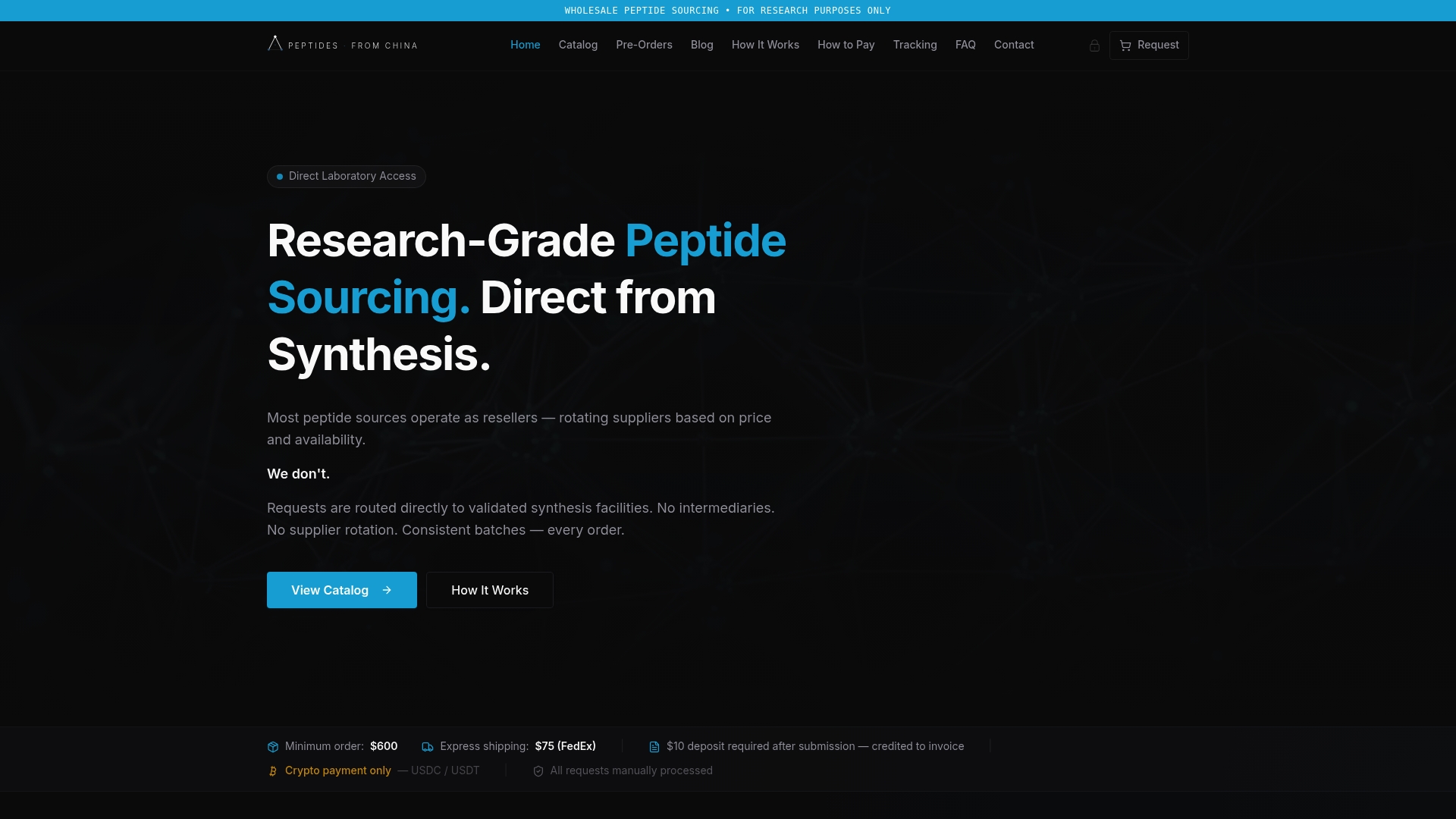
Researchers sourcing compounds such as VIP peptide can access batch documentation directly, with COA data traceable to the issuing laboratory. For procurement teams building a formal supplier audit checklist, the platform’s documentation resources and contract guidance provide a practical starting point for structuring the qualification process.
FAQ
What documents are required to qualify a peptide vendor?
A complete qualification packet requires a batch-specific COA with HPLC purity and mass spectrometry data, a Safety Data Sheet, vendor quality certifications, and a signed procurement agreement. Missing any of these documents is grounds to pause procurement.
How often should peptide vendor qualification be repeated?
Qualification should be reviewed every two to three years under normal conditions, and immediately following any quality deviation, manufacturing site change, or ownership transition.
What makes a COA unreliable for peptide procurement?
A COA is unreliable when it lacks a traceable lot number, omits the issuing laboratory’s identity, reports purity as a pass/fail rather than a numeric value, or cannot be matched to a specific production batch.
Why does the vendor’s sourcing model matter for qualification?
Direct manufacturers can provide verifiable batch traceability and synthesis platform details. Resellers purchasing from undisclosed sources cannot guarantee that consecutive orders came from the same manufacturing process, which undermines batch consistency.
When should pricing be discussed during vendor qualification?
Pricing discussions should begin only after all analytical, regulatory, and logistical criteria have been evaluated and cleared. Introducing cost comparisons earlier creates pressure to rationalize quality gaps.