Peptide Synthesis Explained: Methods and Process Guide
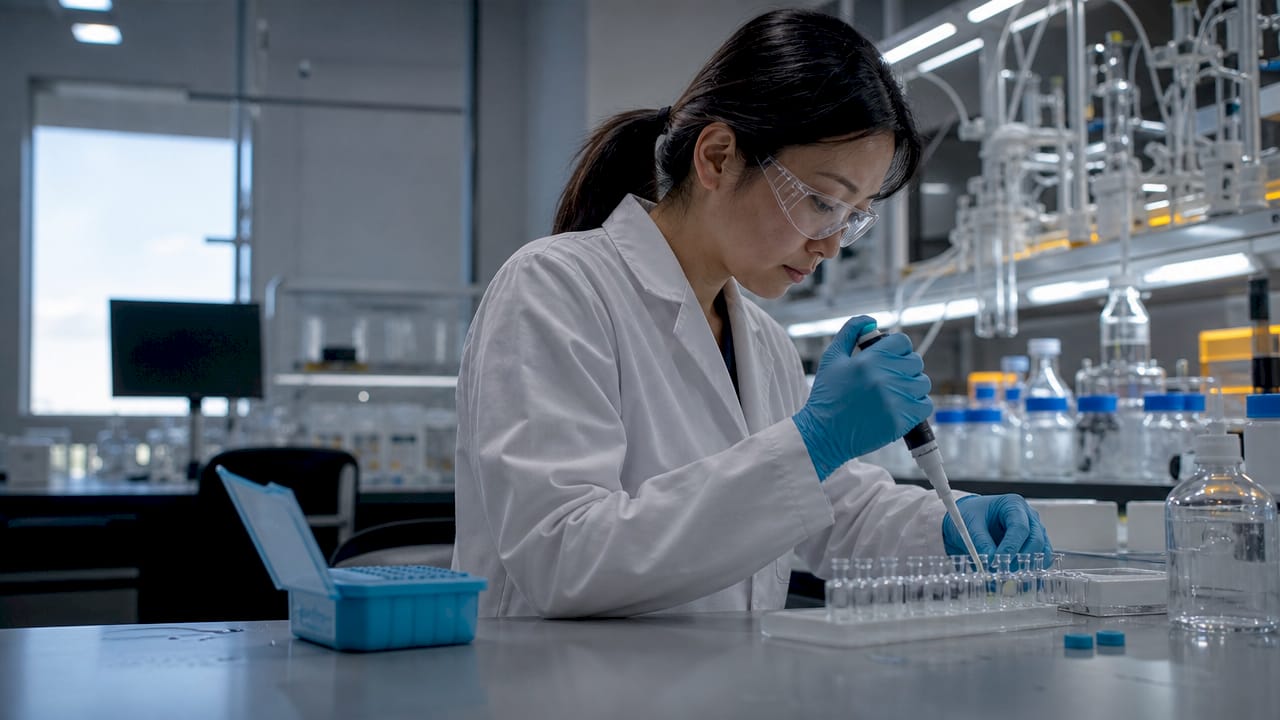
Peptide synthesis is defined as the chemical process of assembling amino acids into peptides through the controlled formation of peptide bonds. The dominant laboratory method is solid-phase peptide synthesis (SPPS), a technique invented by Robert Bruce Merrifield in 1963 and recognized with the Nobel Prize in Chemistry. SPPS anchors peptides on insoluble resin, allowing each amino acid to be added sequentially while byproducts are washed away between steps. This approach made routine synthesis of peptides up to 50–100 amino acids practical for the first time. Protecting groups, which temporarily block reactive sites on amino acids, are central to the entire process. Without them, uncontrolled side reactions would produce unusable mixtures rather than defined sequences.
What are the primary peptide synthesis methods?
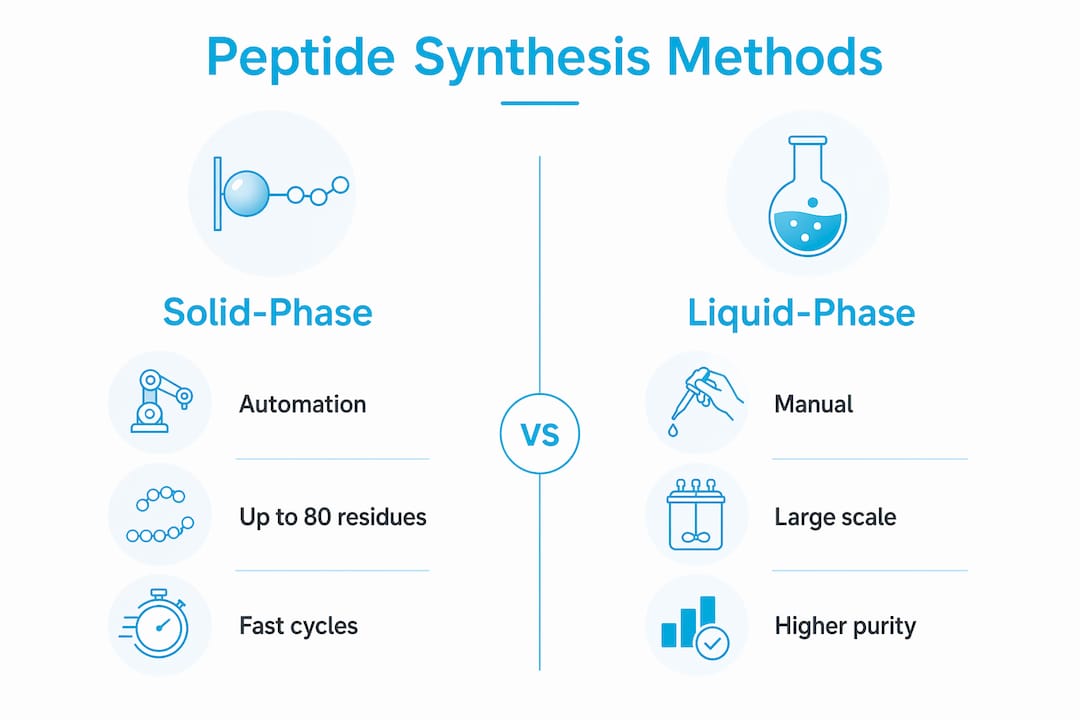
Three methods cover the full range of peptide synthesis needs: solid-phase peptide synthesis (SPPS), liquid-phase peptide synthesis (LPPS), and chemo-enzymatic peptide synthesis (CEPS). Each targets a different range of peptide length and complexity.
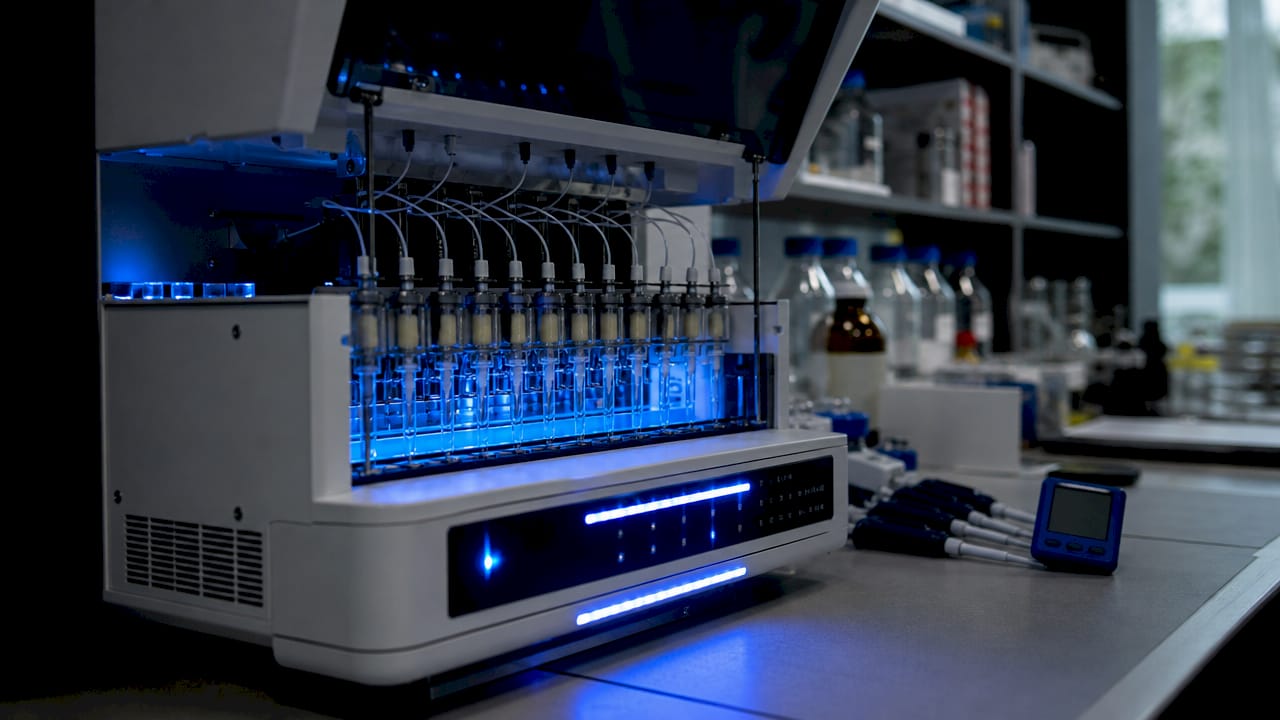
SPPS is the dominant method for peptides up to 80 amino acids. It uses a standardized six-step cycle and is the standard in most research laboratories. LPPS, also called solution-phase synthesis, works best for short peptides under 10 residues and for large-scale production where resin costs become prohibitive. CEPS uses peptiligase enzymes to ligate shorter peptide fragments into sequences exceeding 100 residues, making it the preferred route for long or cyclic peptides that exceed SPPS practical limits.
Method Best for Scalability Key limitation SPPS Up to 80 residues Moderate Resin cost, aggregation risk LPPS Under 10 residues High Complex purification CEPS Over 100 residues Moderate to high Enzyme availability
SPPS suits the majority of research peptide applications.
LPPS remains relevant for bulk production of dipeptides and tripeptides.
CEPS provides scalable synthesis of complex sequences where SPPS yield and purity fall short.
Pro Tip: When selecting a synthesis method, match the method to the peptide length first. Attempting SPPS on sequences above 80 residues without fragment condensation strategies will produce poor yields and difficult purification.
How is the solid-phase peptide synthesis process performed?
SPPS follows a defined six-step cycle that repeats until the full sequence is assembled. Each cycle adds one amino acid to the growing chain anchored to an insoluble resin support.
Attachment: The first amino acid is covalently linked to the resin via its C-terminus. This anchor holds the peptide in place throughout the entire synthesis.
Deprotection: The temporary protecting group on the N-terminus is removed. In Fmoc chemistry, a base such as piperidine cleaves the Fmoc group. In Boc chemistry, trifluoroacetic acid (TFA) performs this step.
Coupling: The next amino acid, with its N-terminus protected and its carboxyl group activated, reacts with the free amine on the resin-bound chain. Coupling reagents such as HATU or DIC facilitate this reaction.
Repetition: Steps 2 and 3 repeat for each residue in the target sequence, building the peptide from C-terminus to N-terminus.
Cleavage: Once the full sequence is assembled, the peptide is released from the resin. Cleavage requires a TFA cocktail with scavengers such as triisopropylsilane, applied for 2–4 hours, to prevent damage to sensitive residues.
Purification: Crude peptide collected after cleavage typically reaches 60–85% purity. Multi-stage reversed-phase high-performance liquid chromatography (RP-HPLC) removes truncated sequences and modified byproducts to achieve research-grade purity.
Protecting group strategies: Fmoc vs. Boc
The choice between Fmoc and Boc chemistry affects both safety and equipment requirements. Fmoc/tBu protection chemistry is now preferred in most laboratories because it avoids the anhydrous hydrogen fluoride cleavage required by Boc chemistry. HF cleavage demands specialized equipment and carries significant safety risks. Fmoc uses a base-labile N-terminal protecting group, simplifying the process and reducing laboratory hazards. Orthogonal protecting group strategies control which protections are removed at each stage without disturbing others, and this selectivity is what makes stepwise synthesis reliable.
Pro Tip: Crude purity after cleavage varies significantly by sequence. A 10-residue peptide may cleave at 85% crude purity, while a 40-residue peptide with difficult sequences may come in below 60%. Plan purification budgets accordingly before synthesis begins.
What synthesis challenges affect peptide production?
The primary challenge in peptide synthesis is not bond formation itself. Orthogonal protection strategies and sequence-specific behavior create the most significant technical difficulties.
Aggregation: Certain sequences form secondary structures during synthesis, causing the growing chain to fold and block reagent access. This leads to incomplete coupling and truncated products.
Low coupling efficiency: Coupling efficiency must exceed 99% per residue to maintain acceptable final yield. A 98% efficiency across a 50-residue peptide produces a full-length yield below 37%. The loss compounds with every additional residue.
Sequence-induced failures: Aggregation and secondary structure formation during SPPS cause synthesis failures that require method optimization, such as using chaotropic additives or pseudoproline dipeptides to disrupt problematic folding.
Protecting group side reactions: Incomplete deprotection or premature removal of permanent protecting groups generates sequence errors that are difficult to detect without rigorous analytical verification.
Purification complexity: Crude peptide purity post-cleavage depends heavily on sequence length and complexity. Longer and more hydrophobic sequences require more purification stages, increasing cost and time.
Pro Tip: For sequences known to aggregate, pseudoproline dipeptide building blocks inserted at strategic positions can break up secondary structure and restore coupling efficiency without altering the final deprotected sequence.
Researchers sourcing synthesized peptides externally should request batch-specific analytical data, including HPLC chromatograms and mass spectrometry confirmation, for every lot. Purity certificates without underlying raw data provide limited assurance of actual sequence integrity. Guidance on evaluating peptide supplier quality covers the specific criteria that distinguish reliable manufacturers from resellers who repackage without independent verification.
Why is peptide synthesis important in research and applied science?
Peptide synthesis gives researchers direct control over sequence, length, and chemical modification. That control is the foundation of modern biochemistry, drug development, and molecular biology.
Therapeutic development: Synthetic peptides serve as drug candidates, hormone analogs, and receptor ligands. GLP-1 agonists and signaling peptides used in metabolic research are produced entirely through controlled synthesis.
Functional studies: Researchers use defined synthetic sequences to probe enzyme active sites, map protein-protein interactions, and study post-translational modifications without the variability of biological extraction.
Diagnostic tools: Synthetic peptides serve as antigens in immunoassays and as calibration standards in mass spectrometry-based proteomics.
Cyclic and modified peptides: Advances in CEPS and on-resin cyclization now make it practical to produce cyclic peptides and peptides with non-natural amino acids, expanding the chemical space available for drug discovery.
Batch verification in research: The importance of peptide synthesis quality extends directly to reproducibility. A peptide with 90% purity and an uncharacterized impurity profile will produce inconsistent biological results across experiments.
A 2025 review highlights that sustainable synthesis innovations are accelerating alongside growing therapeutic peptide demand, with photocatalysis, electrochemistry, and enzymatic methods reducing solvent waste. This shift reflects both environmental pressure and the practical need to reduce reagent costs at scale. For researchers working with peptide ingredient applications, understanding the synthesis origin of a peptide directly informs how to interpret its biological activity data.
Key Takeaways
Peptide synthesis requires method selection matched to sequence length, coupling efficiency above 99% per residue, and rigorous purification to reach research-grade purity.
Point Details SPPS is the standard method SPPS handles sequences up to 80 residues using a six-step cycle from attachment to purification. Coupling efficiency is critical Efficiency below 99% per residue causes exponential yield loss across longer sequences. Crude purity requires purification Post-cleavage purity of 60–85% requires RP-HPLC to reach research-grade standards. Fmoc chemistry is preferred Fmoc/tBu avoids hazardous HF cleavage, reducing equipment burden and safety risk. CEPS extends synthesis range Chemo-enzymatic synthesis handles sequences above 100 residues where SPPS yield fails.
The gap between synthesis theory and sourcing reality
Peptide synthesis looks clean on paper. A six-step cycle, defined chemistry, and a purification step at the end. The reality in production is considerably messier, and researchers who treat peptide procurement as a commodity purchase tend to discover this the hard way.
Sequence-specific behavior is the variable that textbooks underemphasize. Two peptides of identical length can behave completely differently during SPPS. One assembles cleanly at 99.5% coupling efficiency per step. The other aggregates at residue 18, drops coupling efficiency to 94%, and produces a crude product that is more truncated sequences than target peptide. The final HPLC trace looks fine if the supplier only runs a short gradient. It looks very different under a 60-minute analytical method.
The industry shift toward green synthesis methods is real and worth watching. Enzymatic ligation and electrochemical activation reduce solvent volumes substantially, and that matters both for cost and for the environmental footprint of large-scale therapeutic peptide production. But these methods are not yet routine at the research scale. Most research peptides in 2026 still come from Fmoc SPPS, and the quality variation between synthesis facilities is significant.
Researchers should ask for raw HPLC data, not just a purity percentage. They should ask which coupling reagent was used and whether double coupling was applied on difficult residues. These questions separate facilities that understand synthesis from those that run automated synthesizers without monitoring individual coupling steps.
The growing emphasis on research peptide sourcing verification reflects a real gap in the market. Batch traceability and independent analytical confirmation are not optional for reproducible research. They are the minimum standard.
— Sam Levin
PeptidesFromChina: research-grade peptides with traceable sourcing
Researchers who understand the synthesis process know that purity certificates alone do not confirm sequence integrity or batch consistency.
Products are subject to the manufacturer’s applicable quality-control procedures and specifications. Manufacturer-side analytical documentation may be available depending on the product and batch. PeptidesFromChina is not an independent analytical testing laboratory. The catalog includes research compounds sourced through established manufacturing channels. Learn more: research-grade Epithalon. Learn more: KPV peptide. Learn more: peptide catalog.
FAQ
What is peptide synthesis in simple terms?
Peptide synthesis is the laboratory process of chemically linking amino acids in a defined sequence to produce a peptide. The most common method is solid-phase peptide synthesis (SPPS), developed by Robert Bruce Merrifield in 1963.
What is solid-phase peptide synthesis?
Solid-phase peptide synthesis is a method where the growing peptide chain is anchored to an insoluble resin support, allowing reagents and byproducts to be washed away between each coupling step. SPPS handles sequences up to approximately 80 amino acids.
How long does peptide synthesis take?
Synthesis time depends on sequence length and method. A 20-residue peptide via automated SPPS typically takes 1–2 days for assembly, followed by cleavage and purification that can add another 1–3 days depending on the purification protocol.
Why does coupling efficiency matter so much?
Coupling efficiency below 99% per residue causes exponential yield loss across longer sequences. A 98% efficiency rate across a 50-residue peptide produces a full-length product yield below 37%, with the remainder consisting of truncated sequences that must be removed by purification.
What purity level is needed for research peptides?
Most biochemical research applications require peptide purity above 95%, verified by RP-HPLC and confirmed by mass spectrometry. Crude post-cleavage purity of 60–85% is not sufficient for reliable biological assays without further purification.